Alpha Bismillah Charlie Delta Echo Foxtrot Golf Hotel insaallah Juliett Kilo Lima Mike November Oscar Piaggio Quebec Romeo Sierra Turks Uniform Victory Water X-ray Yankee Zulu Main Page
CESSNA
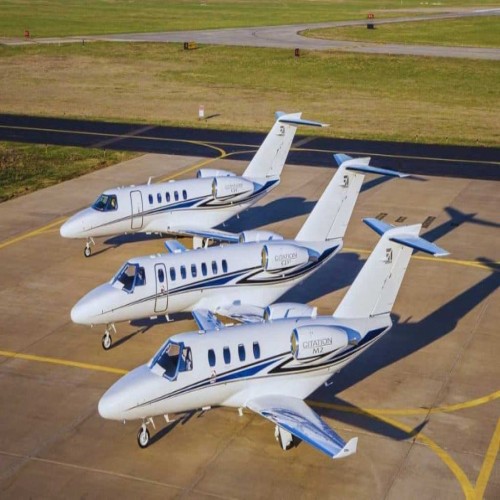
Cessna CitationCessna, founded in 1927 by Clyde Cessna, is a pioneering aircraft brand in general aviation. It is known for its training, business jets, and turboprop models; the Cessna 172 Skyhawk, in particular, is the world's most produced aircraft. Turboprop models (Grand Caravan, SkyCourier) are used for cargo and passenger transport, while the Citation series encompasses luxury business jets. Production continues today under Textron Aviation, and the brand stands out in aviation history for its reliability and accessibility.
cabane An arrangement of struts used to support a wing above the fuselage of an airplane. Such an airplane wing attachment is called a parasol.
cabin That portion of an aircraft used for cargo and/or passengers.
cabin altitude Cabin pressure in terms of equivalent altitude above sea level.
cabin differential pressure The difference between the pressure inside a cabin and the outside air pressure. The maximum cabin differential pressure is determined by the aircraft structural strength.
cabin pressure regulator A means of controlling cabin pressure by regulating the outflow of air from the cabin.
cabin pressurization safety valve A combination pressure and vacuum relief and dump valve used to prevent cabin pressurization exceeding safe limits.
cabin supercharger Mechanical air pumps used to provide the air pressure for cabin pressurization.
cabinet file A coarse file that is flat on one face, and rounded on the other face, used for metalworking and woodworking. Sometimes referred to as a half-round file.
cable 1. In common usage, any heavy conductor. 2. In electronics, two or more conductive paths bound into a single package. 3. A group of insulated electric conductors usually covered with rubber or plastic to form a flexible transmission line. 4. A stranded wire generally composed of a number of wires enclosed in a single bundle or group.
cable control The system of operating aircraft controls by the use of high-strength flexible steel cables.
cable drum A cylindrically shaped spool around which a control cable is wound to increase the amount of cable moved each time the handle is turned.
cable guard A pin installed in the flange of a control cable pulley bracket to prevent the cable from jumping out of the pulley grooves.
cable rigging tension chart Charts showing the relationship between control cable tension and temperature.
cadmium A bluish-white, malleable, ductile, toxic, metallic chemical element with a symbol of Cd and an atomic number of 48.
cadmium cell A basic unit of the nickel-cadmium battery. It consists of positive and negative plates, separators, electrolyte, a cell vent, and a cell container. The positive plates are made from porous plaque on which nickel-hydroxide is deposited. The negative plates are made from similar plaques on which cadmium-hydroxide is deposited. The voltage that is produced by a cadmium cell at 20 C is 1.0186 volts.
cadmium plating A thin coating of cadmium metal electroplated on a steel part to protect the steel from corrosion. This is accomplished by the cadmium serving as the anode in a corrosive action.
caging device A mechanism used in a gyroscopic instrument to erect the rotor of a gyro to its normal operating position prior to flight or after tumbling.
caging system See caging device.
calcium A hard metallic element with a symbol of Ca and an atomic number of 20. Used as an alloying element with other metals.
calcium carbide A combination of calcium and carbon. Reacts chemically with water to produce acetylene gas.
calculated landing time A term that can be used in place of tentative or actual calculated landing time, whichever applies.
calendar month The measure of time used by the Federal Aviation Administration for inspections and certification purposes. A calendar month ends at midnight of the last day of the month, regardless of the day it began.
calendering The process of dipping cotton yarn or fabric into a hot solution of caustic soda to shrink the material and give it greater strength and luster.
calibrate A procedure in which the indication of an instrument is compared with a standard value in order to inspect and correct the graduations of a measuring device.
calibrated airspeed (CAS) The indicated airspeed of an aircraft, corrected for position and instrument error. Calibrated airspeed is equal to true airspeed in standard atmosphere at sea level.
calibrated orifice A hole with a specific internal diameter used to measure or control the amount of flow through it.
calibration Testing the accuracy of a measuring instrument or scale by comparing it with a known standard.
calibration card A card mounted on an instrument panel near an instrument to show the errors in an instrument in order for the pilot to apply an appropriate correction.
calibration curve, instrument A curve on a graph plotted to show the instrument errors at different points on the scale of the instrument. The pilot uses the curve
californium A radioactive, synthetically produced element with a symbol of Cf and an atomic number of 98.
call for release Wherein the overlying ARTCC requires a terminal facility to initiate verbal coordination to secure ARTCC approval for release of a departure into the enroute environment.
callouts Numbers or names used to identify components or parts in an aircraft drawing. Callouts are placed near the part being identified and are connected by a thin leader line.
call-up Initial voice contact between a facility and an aircraft, using the identification of the unit being called and the unit initiating the call.
calm The absence of wind or of apparent motion of the air.
calorie The amount of heat required to raise the temperature of one gram of water 1 C.
calorimeter An apparatus for measuring specific heat.
cam An eccentric plate or shaft used to impart motion to a follower riding on its surface or edge.
cam dwell The cam dwell is the number of degrees the cam rotates between the time the breaker points close and the time they open.
cam lobe An eccentric used to change rotary motion into linear motion. For example, the cam followers that operate valves ride on the cam lobes and as the cam shaft rotates, the cam lobes move the cam followers up and down in a direction that is perpendicular to the axis of the cam shaft.
cam nose The peak, or highest point on a cam, that pushes up on the cam follower.
cam pawl A special device that allows a wheel or gear to turn in one direction but prevents its from turning in the opposite direction.
cam plate In radial-engines, a disc or plate with lobes machined onto its circumference. Cam followers ride on the lobes and open the engine valves through a system of push rods and rocker arms.
cam ring An open cam plate driven by teeth around its circumference.
camber 1. The curvature of an airfoil above and below the chord line surface. An airfoil is often described as having an upper and lower camber. 2. The mean camber of an airfoil section is a line drawn through a series of points located midway between the upper and the lower camber. 3. The amount of angle the wheels of an aircraft are from the vertical. If the top of the wheel tilts outward, the camber is positive; if it tilts inward, the camber is negative.
cambric A finely woven cotton or linen material.
cam-ground piston An aircraft engine piston ground in such a way that its diameter parallel to the wrist pin boss is less than its diameter perpendicular to the boss. When the piston reaches its operating temperature, the difference in mass has caused the piston to expand to a perfect circular form.
Camlock fastener A patented cowling fastener in which a hard steel pin is turned in a special cam-shaped receptacle.
camshaft A long shaft running parallel to the crankshaft of an inline or horizontally opposed reciprocating engine. Lobes are ground at intervals along its length to operate the valves through push rods and rocker arms.
can tap valve A valve fastened onto a small can of Freon refrigerant. It punctures the can seal and controls the flow of refrigerant.
Canadian Minimum Navigation Performance Specification Airspace That portion of Canadian domestic airspace within which MNPS (Minimum Navigation Performance Specification) separation may be applied.
can-annular combustor Can annular combustion chambers arranged radially around the axis of a gas turbine engine. The combustion chambers are enclosed in a movable steel shroud, which covers the entire burner section, and is designed for more complete cooling and mixing of fuel and air. The burners are interconnected by projecting flame tubes that facilitate the engine-starting process.
canard 1. The forward wing of a canard configuration and may be a fixed, movable, or variable geometry surface, with or without control surfaces. 2. An aircraft with its horizontal stabilizing and control surfaces in front of the wings. Also used to describe the forward-mounted control surface.
canard configuration A configuration in which the span of the forward wing is substantially less than that of the main wing.
candela A unit of incandescent intensity.
candlepower The luminous intensity of light expressed in candelas.
cannon connector A connector used to attach the battery to the aircraft electrical system. It is a high-current connector in which the cables are held onto the battery by pressure applied by a hand screw.
canopy 1. A transparent cover for the airplane s cockpit. It provides streamlining and protection for the pilot against the elements. Sometimes referred to as a cockpit canopy. 2. The large, umbrella-shaped material of a parachute.
canted bulkhead A bulkhead or wall that is slanted (canted) vertically.
cantilever A beam or other member that is supported at or near only one end, without external bracing.
cantilever wing A cantilever wing uses no external wing struts. All of its support is obtained inside the wing itself.
can-type combustor A combustor, or burner section of a gas turbine engine, made up of eight to ten individual burner cans. These cans are long cylinders that consist of an outer case or housing within which there is a perforated stainless steel combustion chamber liner or inner liner. The can-type combustors are arranged radially around the axis of the engine. Compressed air from the compressor flows through the cans and fuel is sprayed into them and burned to add energy to the air. Cooling air flows through holes in the inner liners to keep the temperature of the liners low enough so that they will not be damaged.
canvas A heavy, woven coarse cloth generally made of cotton.
cap The longitudinal members at the top and bottom of a beam that resist most of the bending loads because of their strength in compression and tension.
cap cloud A standing or stationary cap-like cloud forming on mountain or ridge tops due to cooling of moist air rising on the upwind side followed by warming and drying of downdrafts on the lee side. Also referred to as a Foehn cloud.
cap screw A threaded fastener. The head of the cap screw that, when turned with a wrench, clamps two pieces of material together.
cap strip Cap strips are extrusions, formed angles, or milled sections to which the web is attached. These members carry the loads caused by wing bending and also provide a foundation for attaching the skin.
capacitance The ability of an insulator to store electrical energy in the form of electrostatic fields, expressed in farads. The amount of electricity a capacitor can store depends on several factors, including the type of material of the dielectric. It is directly proportional to the plate area and inversely proportional to the distance between the plates. The formula for capacitance is C=Q/E, in which C is the capacitance in farads, Q is the quantity (amount) of charge in coulombs, and E is the electrical pressure in volts.
capacitance box An electronic device used to select a capacitance to insert into a circuit for testing purposes.
capacitance bridge A null-type precision measuring instrument used to measure capacitance.
capacitance-type fuel gauging system A fuel quantity indicating system using the fuel as the dielectric of a capacitor. It measures the weight of the fuel instead of its volume.
capacitive coupling The use of a capacitor or capacitors to connect electronic circuits. This type coupling allows AC to pass through and blocks DC.
capacitive electrical load An electrical load that produces more capacitive reactance than inductive reactance in the circuit.
capacitive feedback A process of feeding a portion of the output of a circuit through a capacitor back into the input section of the circuit. Can allow the circuit to be somewhat self-regulating.
capacitive reactance (XC) The opposition to the flow of alternating current electricity caused by the capacitance in a circuit, and is measured in ohms. Capacitive reactance is calculated using the capacitance of the circuit and the frequency of the AC.
capacitive time constant The amount of time, determined by the resistance of the circuit and by the capacitance of the capacitor, measured in seconds, needed for the voltage across a capacitor to rise to 63% of the source voltage.
capacitor A device used to store electrical energy in the form of electrostatic fields. A capacitor is essentially two conductors separated by an insulator.
capacitor-discharge ignition system An ignition system consisting of two identical independent ignition units operating from a common low-voltage DC electrical power source, the aircraft battery. A high voltage, supplied by the ignition exciter unit, charges a storage capacitor with a charge, up to four joules, that generates an arc across a wide igniter spark gap to ignite the fuel.
capacitor-input filter An electronic filter used to smooth out the pulsations in the output of an electrical power supply. A capacitor-input filter is installed in parallel with the rectifier output, and an inductor is installed in series with the rectifier output.
capacitor-start induction motor An AC motor whose rotor is excited by voltage induced from the field windings. A second winding whose phase is shifted by a capacitor is used to provide a rotating field for starting. When the motor gets up to speed, a centrifugal switch opens the circuit in which the capacitor is situated.
capacitor-type ignition system An ignition system consisting of two identical independent ignition units operating from a common low-voltage DC electrical power source, the aircraft battery. A high voltage, supplied by the ignition exciter unit, charges a storage capacitor with a charge, up to four joules, which generates an arc across a wide igniter spark gap to ignite the fuel.
cape chisel A cold chisel used when cutting square comers or slots.
capillary action An action causing a liquid to be drawn up into extremely tiny tubes or between close-fitting parts.
capillary tube A tube with a very small bore used to meter a fluid or transmit pressure of fluid or gas to an indicating gauge.
capping stable layer The elevated stable layer found on top of a convective boundary layer. Usually marks a sharp transition between smooth air above and turbulent air below.
capstan A spool-shaped device in the control system of an aircraft similar to a grooved drum-like wheel. A control cable is wound around the capstan, and the ends of the guide are attached to the aileron, the elevator, or the rudder control cable.
capstan screw A special purpose machine screw with holes across the head to accommodate a bar that can be passed through these holes to turn the screw.
captive balloon An aerial platform anchored to the ground.
captive screw A fastener that has the ability to turn in the body in which it is mounted, but which will not drop out when it is unscrewed from the part it is holding.
capture The process by which small droplets are swept up by faster-falling large droplets. Also called coalescence.
carbide drill A specially manufactured cutting drill that has a cutting edges surfaced with tungsten carbide, tantalum carbide, or titanium carbide.
carbide tool A metal-cutting machine tool that has cutting faces surfaced with either tungsten carbide, tantalum carbide, or titanium carbide.
carbo-blast A grit blast. Field cleaning agent, a lignocellulose material consisting of ground up walnut shells and apricot pits.
Carboloy A brand name of certain cutting tools and dies having tungsten carbide bonded to their cutting surface.
carbon Nonmetallic element with a symbol of C and an atomic weight of 6. Carbon is a part of all organic compounds. It ranges in appearance from black, fluffy soot, to hard, transparent diamond.
carbon arc An electric arc, produced by a welding machine, that jumps between two carbon electrodes or from a carbon electrode to a metal electrode. A carbon arc makes an intensely bright light and produces enough heat (approximately 10,000 F) to melt metals for welding or cutting.
carbon arc lamp An electrical lamp in which an electric arc between carbon electrodes produces a high-intensity light.
carbon black A soft and fluffy carbon deposit. Carbon black is produced by the incomplete burning of acetylene gas when the flame does not have enough oxygen for complete combustion.
carbon brake An aircraft brake required for extremely high energy dissipation. Both the rotating and stationary discs are made of pure carbon.
carbon composition resistor A resistor formed by embedding wire leads in a cylindrical slug of carbon and filler material. Usually covered with an epoxy or other plastic insulating jacket.
carbon deposits Residue from overheated oil or incompletely burned gasoline. It forms as a hard, black crust inside the engine.
carbon dioxide (CO2)
A colorless, odorless, nonflammable gas often used as a fire extinguishing agent in aircraft.carbon fiber Produced by placing carbon (an element) in an inert atmosphere at temperatures above 1,800 F. Used as a reinforcing material. Carbon fiber is a lightweight, high strength and high stiffness fiber. The material can be graphitized by heat-treating at a very high temperature.
carbon fouling A carbon deposit that forms as a result of overly rich, idle fuel/air mixtures. The carbon forms on the inside of combustion chambers and spark plugs.
carbon knock The pre-ignition of the fuel/air charge inside the cylinder of a reciprocating engine before the engine is ready for ignition to occur. Caused by the glowing of carbon deposits.
carbon microphone A microphone used in telephones and some types of radio transmitters. It consists of a flexible diaphragm of carbon granules. Sound waves pressing against the microphone change its resistance, thus modulating the voltage and creating the electronic signal that is transmitted to a receiver.
carbon monoxide (CO) A colorless, odorless, highly toxic gas that forms from incomplete combustion of a hydrocarbon fuel.
carbon monoxide detector A device used to detect the presence and concentration of carbon monoxide gas.
carbon oil seal An oil seal used in gas turbine engines. These seals are usually spring loaded and are similar in material and application to the carbon brushes used in electrical motors. Carbon seals rest against a surface to prevent oil from leaking out along the shaft into the compressor airflow or the turbine sections.
carbon pile resistor A variable resistor used in some electrical equipment. A carbon pile is made of a stack of thin, pure carbon disks. Its resistance is changed by varying the amount of pressure applied to the stack.
carbon pile voltage regulator A voltage regulator that depends on the resistance of a number of carbon disks arranged in a pile or stack. The resistance of the carbon stack varies inversely with the pressure applied. When the stack is compressed under appreciable pressure, the resistance in the stack is less. Pressure on the carbon pile depends upon two opposing forces: a spring and an electromagnet. The spring compresses the carbon pile, and the electromagnet exerts a pull that decreases the pressure. When the generator voltage varies, the pull of the electromagnet varies, thereby increasing or decreasing the pressure on the disks. This change allows a change in the generator output voltage.
carbon resistor An electrical component used to put a controlled amount of resistance in an electrical circuit. Carbon resistors are composed of a rod of compressed graphite and binding material with wire leads, called pigtail leads, attached to each end of the resistor. Colored bands marked on the resistor indicate its resistance value.
carbon seal A heat-resistant device used in turbine engines to seal the lubricating oil in the bearing cavity. A ring of carbon material rides on a highly polished metal surface to prevent lubricating oil from seeping into the gas path. Usually located at main bearings.
carbon steel A group of iron alloys having carbon as the principal alloying agent. Low-carbon steel contains less than 0.20% carbon and is not as strong as high-carbon steel that contains up to 0.95% carbon.
carbon tetrachloride (Halon 104) Once used as a fire extinguishing agent. A chemical formula CCl4, a liquid with a UL toxicity rating of 3. When used as a fire extinguishing agent it becomes very toxic and harmful to humans and other animals.
carbon tracking A fine track of carbon deposited inside the magneto, distributor, or terminal cavity of a spark plug as a result of a flashover. It acts as an electrical conductor to ground or to another electrical lead.
carbonaceous Containing carbon.
carbon-film resistor An electrical resistor composed of a thin film of carbon on a ceramic cylinder. Wires connected to each end of the carbon film allow the resistor to be connected to an electrical circuit.
carbon/graphite fiber or fabric A fiber used in advanced composites comprised of carbon filaments which may be woven together. The terms carbon and graphite have been used interchangeably for years. The Americans prefer the term graphite, while the Europeans prefer carbon. Depending on the manufacturer of the aircraft, different terms may be used. The term Carbon/Graphite is used throughout this book to include both terms.
carbon-zinc cell A portable primary cell such as a flashlight battery consisting of a carbon rod placed in a can made of zinc and filled with a paste of ammonium chloride. The chemical reaction between the paste and zinc causes electrons to leave the zinc can and travel through an external circuit to the carbon rod.
carborundum A manufactured aluminum oxide abrasive similar to natural emery. It is used for grinding wheels and abrasive papers.
carburetor 1. Pressure: A hydromechanical device employing a closed feed system from the fuel pump to the discharge nozzle. It meters fuel through fixed jets according to the mass airflow through the throttle body and discharges it under a positive pressure. Pressure carburetors are distinctly different from float-type carburetors, as they do not incorporate a vented float chamber or suction pickup from a discharge nozzle located in the venturi tube. 2. Float-type: Consists essentially of a main air passage through which the engine draws its supply of air, a mechanism to control the quantity of fuel discharged in relation to the flow of air, and a means of regulating the quantity of fuel/air mixture delivered to the engine cylinders.
carburetor air temperature The temperature of the induction air before it enters the carburetor. The temperature of the air as it enters the carburetor must be controlled to keep the fuel/air mixture temperature high enough to prevent water from condensing out of the air and freezing and low enough to prevent detonation.
carburetor float A component between the fuel supply and the metering system of a carburetor. The float chamber provides a nearly constant level of fuel to the main discharge nozzle. The float is connected to a needle valve and seat that meters the correct amount of fuel to the induction system according to the demand.
carburetor heater A heater muff or jacket installed around the exhaust manifold through which induction air is drawn to warm it before it enters the carburetor. This heat prevents the formation of carburetor ice.
carburetor ice Ice that forms inside the carburetor due to the temperature drop caused by the vaporization of the fuel. Induction system icing is an operational hazard because it can cut off the flow of the fuel/air charge or vary the fuel/air ratio.
carburetor icing Occurs when moist air is drawn into the carburetor and is cooled to a dewpoint temperature less than 0 C.
carburetor maintenance Maintenance that may include idle speed adjustment, removal and installation, adjusting idle mixtures, rigging, and inspection of carburetors.
carburizing A form of case hardening of steel in which carbon is infused into the surface of the steel to increase its hardness.
carburizing flame A flame used in oxyacetylene welding in which there is an excess of acetylene gas. Also called a reducing flame. This type of flame introduces carbon into the steel. It can be recognized by the greenish-white, brush-like second cone at the tip of the first cone. The outer flame is slightly luminous and has about the same appearance as an acetylene flame burning freely in air alone.
cardinal altitudes Full thousands of feet of altitude or flight level. (3,000 feet/4,000 feet/etc. or FL 330/FL 340/etc.)
cardinal flight levels See cardinal altitudes.
cardinal headings Headings along the four main points of a compass: North, South, East, and West.
cardioid microphone A microphone with the ability to pick up sounds ahead of it, rejecting sounds behind it.
cargo Freight transported in an airplane.
cargo aircraft An airplane whose main function is to carry freight.
carrier frequency The high frequency alternating current that produces the electromagnetic waves that radiate from a radio transmitting antenna.
carrier wave The high frequency alternating current that can be modulated to carry intelligence by propagation as a radio wave.
cartridge fuse A fuse used to protect an electrical circuit from an excess of current. It consists of a fusible link held between metal rings, or caps, that screw onto each end of an insulating tube.
cartridge starter An engine starting device that uses electrically ignited solid fuel pellets. The pressure is used to move a piston to start a reciprocating engine or to turn a turbine wheel to start a turbine engine.
cartridge-pneumatic starter A combination air-turbine starter and cartridge starter. It can be operated by bleed air or by an explosive charge, both of which exhaust through a turbine wheel connected to a reduction gearbox. Its purpose is to start main engines.
cartridge-type filter A disposable filter element. Used for both fuel and oil systems.
cascade electrical circuits A system of connecting multiple levels of electrical circuits so that the output of one level feeds the input of the next level.
cascade thrust reverser A configuration of thrust reverser used in turbojet engines in which thin airfoils or obstructions are placed in the engine s exhaust stream to duct the high-velocity exhaust gases forward. This decreases the airplane s landing roll. Also referred to as an aerodynamic thrust reverser.
cascade transformer A device used in an electrical circuit to generate a high voltage. A system of connecting multiple levels of electrical step-up transformers where the output of one level feeds into the next level transformer, cascading until the required high-output voltage is obtained.
cascade vane An air turning vane. One common use is in thrust reversers.
case hardening A form of heat treatment of a metal in which the surface is made extremely hard and brittle while the core of the metal retains its toughness.
case pressure A low pressure maintained inside the case of a hydraulic pump. In the event of a damaged seal, fluid will be forced out of the pump rather than allowing air to be drawn in.
casein glue A form of powdered glue made from milk. Casein glues are widely used in wood aircraft repair work. For aircraft use, casein glues should contain suitable preservatives such as the chlorinated phenols and their sodium salts, to increase resistance to organic deterioration under high humidity.
casing The rubber and fabric body of a pneumatic tire. The casing is the same as the carcass of the tire. It is composed of diagonal layers of rubber-coated fabric cord (running at right angles to one another), providing the strength of a tire.
casing plies, aircraft tires Diagonal, strength-providing layers of rubber-coated nylon cord fabric (running at right angles to one another).
cast iron Iron that contains 6% to 8% carbon and silicon. Cast iron is a hard unmalleable pig iron made by casting.
cast-aluminum alloy Aluminum alloy that has been heated to its molten state and poured into a mold to give it a desired shape.
castle nut A general purpose hexagonal nut for aircraft or engine use Their shape resembles a castle with the slots between the turrets used for locking the nut to the bolt with cotter pins.
catalyst A material used to bring about a change, or speeds up the rate of change of a chemical action, but does not actually enter into the change itself.
catalytic cracking A method of refining petroleum products in which a catalyst is used to change high-boiling-point hydrocarbons into low-boiling-point hydrocarbons.
catalyzed material A material whose cure is initiated by the addition of a catalyst.
catalyzed resin A term used to describe the resin mixture after it has been mixed with the catalyst or hardener. It may still be in the workable state.
catapult A mechanism used to launch an object into the air. Catapults are used to launch heavily loaded aircraft from the decks of aircraft carriers at a high rate of speed.
category 1. As used with respect to the certification, ratings, privileges, and limitations of airmen, means a broad classification of aircraft. Examples include: airplane; rotorcraft; glider; and lighter-than-air. 2. As used with respect to the certification of aircraft, means a grouping of aircraft based upon intended use or operating limitations. Examples include: transport, normal, utility, acrobatic, limited, restricted, and provisional.
category A With respect to transport category rotorcraft, means multiengine rotorcraft designed with engine and system isolation features specified in Part 29 and utilizing scheduled takeoff and landing operations under a critical engine failure concept which assures adequate designated surface area and adequate performance capability for continued safe flight in the event of engine failure.
category B With respect to transport category rotorcraft, means single-engine or multiengine rotorcraft which do not fully meet all Category A standards. Category B rotorcraft have no guaranteed stay-up ability in the event of engine failure and unscheduled landing is assumed.
category II operation With respect to the operation of aircraft, this is a straight-in ILS approach to the runway of an airport, under a category II ILS instrument approach procedure issued by the Administrator or other appropriate authority.
category II operations With respect to the operation of aircraft, means a straight-in ILS approach to the runway of an airport under a Category II ILS instrument approach procedure issued by the Administrator or other appropriate authority.
category III operations With respect to the operation of aircraft, means an ILS approach to, and landing on, the runway of an airport using a Category III ILS instrument approach procedure issued by the Administrator or other appropriate authority.
category IIIA operations An ILS approach and landing with no decision height (DH), or a DH below 100 feet (30 meters), and controlling runway visual range not less than 700 feet (200 meters).
category IIIB operations An ILS approach and landing with no DH, or with a DH below 50 feet (15 meters), and controlling runway visual range less than 700 feet (200 meters), but not less than 150 feet (50 meters).
category IIIC operations An ILS approach and landing with no DH and no runway visual range limitation. Also known as zero-zero landing.
catenary curve A curve formed by a flexible cord or rope suspended between two points at the same level.
catenary thermal shield A curved sheet metal section between turbine wheels of a particular set. It serves as a heat barrier between the gas path and the inner portion of a drum- type turbine wheel.
cathedral The downslope of the wings from the fuselage. It is the opposite of dihedral. Airplanes that employ cathedral have an increase in maneuverability but a decrease in stability.
cathode 1. The negative terminal of a semiconductor diode or the element in an electron tube from which the electrons are emitted. 2. An active element in an electrochemical cell that loses oxygen in the chemical action that causes electrons to flow.
cathode of a semiconductor diode The end of a semiconductor diode made of N-type material.
cathode protection A material more anodic than the material being protected is attached to or plated on the material, which then becomes the cathode and is not corroded. Also referred to as sacrificial corrosion
Cathode-ray oscilloscope An electrical measuring instrument in which the readout is on the surface of a tube similar to that in a television set. Electrons are made to strike the inside of the tube where they cause the coating of the tube to glow. Recurring voltage changes are displayed on the tube in the form of a green line.
cathode-ray tube (CRT) An electron tube in which a stream of electrons (cathode rays) from an electron gun impinges upon a fluorescent screen, thus producing a bright spot on the screen. The electron beam is deflected electrically or magnetically to produce patterns on the screen. Also referred to as a display tube.
cation A positive charged ion that moves toward the cathode in the process of electrolysis.
catwalk A narrow walkway (as along a bridge or elevated on the side of a building).
caul plates In composites, smooth plates used during the cure process to apply pressure in a uniform manner.
caustic material Any substance having the ability of burning, corroding, or eroding other substances by chemical action.
caustic soda A common name for sodium hydroxide.
cavitation A partial vacuum of an area of low pressure behind an object that is moving in a fluid.
cavity A hole or hollow within a body or structure.
C-clamp A metal clamp in the general shape of the letter C. It is used to exert pressure and to temporarily hold objects together.
C-D inlet or exhaust 1. Inlet. The forward section is convergent to increase air pressure and reduce air velocity to subsonic speed. The aft section is divergent to increase air pressure still further and slow airflow to approximately Mach 0.5 before entering the engine. 2. Exhaust. The forward section is convergent to increase gas pressure. The aft section is divergent to increase gas velocity to supersonic speed. This arrangement is necessary in order for the aircraft to attain supersonic speed.
Ceconite A fabric woven from polyester fibers.
ceiling In meteorology in the U.S., (1) the height above the surface of the base of the lowest layer of clouds or obscuring phenomena aloft that hides more than half of the sky, or (2) the vertical visibility into an obscuration.
ceiling balloon A small balloon used to determine the height of a cloud base or the extent of vertical visibility.
ceiling light A light used by weather observers to measure the height of the bottom of a layer of clouds at night.
ceilometer A device used to measure the height of the bottom layer of clouds above a weather station. Consists of a light transmitter and receiver separated by a known horizontal distance. A beam of light shines on the cloud layer and height is calculated using trigonometry.
celestial dome The hemisphere of the sky as observed from a point on the ground.
celestial navigation Navigating by use of the stars and sun.
cellular combustor A combustor, or burner section of a gas turbine engine, that is made up of eight to ten individual burner cans. These cans are long cylinders that consist of an outer case or housing within which there is a perforated stainless steel combustion chamber liner or inner liner. The can-type combustors are arranged radially around the axis of the engine. Compressed air from the compressor flows through the cans and fuel is sprayed into them and burned to add energy to the air. Cooling air flows through holes in the inner liners to keep the temperature of the liners low enough so that they will not be damaged.
Celluloid The registered trade name of a thermoplastic material consisting essentially of cellulose nitrate and camphor.
cellulose A material that comes from the cell walls of plants and is the raw material of many manufactured goods.
cellulose acetate butyrate A compound formed by the action of acetic and butyric acid on cellulose.
cellulose acetate butyrate dope An aircraft dope having a cellulose acetate butyrate film base and suitable plasticizers, along with the necessary solvents and diluents. Butyrate dope has a better tautening effect on fabric and is less flammable than nitrate dope.
cellulose nitrate A compound formed by treating cellulose with a mixture of nitric and sulfuric acids.
cellulose nitrate dope Aircraft dope consisting of a nitrocellulose film base with the appropriate plasticizers, thinners, and solvents. It has excellent encapsulating properties, but its high flammability has caused its decrease in popularity as a finish for fabric covered aircraft.
Celsius (C) A temperature scale with zero degrees as the melting point of pure ice and 100 degrees as the boiling point of pure water at standard sea level atmospheric pressure.
CENRAP See center radar ARTS presentation/ processing.
CENRAP-plus See center radar ARTS presentation/ processing-plus.
center 1. A point that is equally distant from the sides or outer boundaries of something. The middle. 2. Air Route Traffic Control Center.
center console The space between the pilot and copilot where the power lever control system is positioned on most multi-engine airplanes.
center drill A combination of a twist drill and a 60 countersink. Used to center a hole and a countersink in a piece of metal.
center head A tool, in a combination measuring set, used for finding the center of circular objects such as a piece of round bar stock.
center line In aircraft drawings, the alternate long and short dashes indicating the center of an object or part of an object.
center of airfoil moments The point about which the basic airfoil moment coefficients are given, usually the aerodynamic center.
center of gravity (CG) The theoretical point where the entire weight of the airplane is considered to be concentrated.
center of gravity envelope A graphic depiction of the fore-and-aft range of center of gravity limits, showing the way these limits vary with the gross weight of the aircraft.
center of gravity limits The extreme forward and rearward positions at which the center of gravity of an aircraft may be located.
center of gravity range The distance between the forward and rearward center of gravity limits, as specified on the Type Certificate Data Sheet for the aircraft.
center of lift The resultant of all of the centers of pressures of an airfoil.
center of mass The location within an aircraft at which its entire mass can be considered to be in equilibrium.
center of pressure The point along the wing chord line where lift is considered to be concentrated.
center of pressure coefficient The ratio of the distance of the center of pressure from the leading edge to the chord length.
center of thrust The resultant of all of the thrust forces of the propellers or the exhaust jet stream.
center punch A punch having a somewhat blunt point, used to form an indentation in sheet metal that can be used to start the twist drill.
center radar arts presentation/processing (CENRAP) A computer program developed to provide a back-up system for airport surveillance radar in the event of a failure or malfunction. The program uses air route traffic control center radar for the processing and presentation of data on the ARTS IIA or IIIA displays.
center radar arts presentation/processing-plus (CENRAP-plus) A computer program developed to provide a back-up system for airport surveillance radar in the event of a terminal secondary radar system failure. The program uses a combination of Air Route Traffic Control Center Radar and terminal airport surveillance radar primary targets displayed simultaneously for the processing and presentation of data on the ARTS IIA or IIIA displays.
Center Weather Advisory (CWA) Unscheduled in-flight, flow control, air traffic, and air crew advisory. These can be a supplement to an existing SIGMET/ AIRMET, or when conditions are observed or expected to adversely affect air traffic.
centering In gliders, adjusting circles while thermalling to provide the greatest average climb.
centerline thrust An aircraft design for multi-engine airplanes that eliminates engine-out asymmetrical thrust and asymmetrical drag. Mounting the engines along the fuselage centerline eliminates directional control problems of the conventional twin following an engine failure. However, the loss of an engine can still reduce climb performance significantly. Airplanes incorporating centerline thrust do not have a published Vmc speed. Pilots who receive a multi-engine rating in an airplane of this type have the restriction Limited to Center Thrust placed on their pilot certificates. This restriction can be removed when they subsequently demonstrate the maneuver during a practical test in a conventional twin.
center-of-rotation line The line on a drawing about which an object will rotate.
center s area The specified airspace within which an air route traffic control center (ARTCC) provides air traffic control and advisory service.
center-tapped winding A winding on an electrical transformer that has a connection (tap) located in its electrical center. It is used to divide the winding in half.
centervent system Use of the main rotorshaft as an air-oil separator in place of a driven centrifugal device. After separation, oil is scavenged back to the oil reservoir and air, which was entrained in the oil, is vented through the rotorshaft into the gas path in the area of the turbine wheel.
centigrade Formerly used for Celsius temperature.
centigrade temperature scale Same as Celsius temperature scale.
centimeter-gram-second (cgs) system Metric system of measurement using the centimeter as the basic unit of measurement of length, the gram as the basic unit for weight, and the second as the basic unit for time.
centistoke A unit of viscosity measurement of both fuels and oils. 1/100 of a stoke.
Central East Pacific An organized route system between the U.S. West Coast and Hawaii.
Central Processing Unit (CPU) The main processing portion of a computer. The CPU stores and operates on data, provides time signals, and performs arithmetic/ logic functions.
central refueling system An aircraft fuel system in which all tanks may be filled from one fueling point. Also referred to as a single-point refueling system or a pressure refueling system.
centrifugal An apparent force that opposes centripetal force, resulting from the effect of inertia during a turn.
centrifugal brake A friction brake used to apply friction if the unit rotating turns at a speed that is faster than is permitted.
centrifugal breather A centrifugal device through which oil laden air from the vent subsystem passes. Oil is returned to the reservoir and air exits back to the atmosphere.
centrifugal clutch A friction clutch that engages when a drive wheel reaches a predetermined speed. The clutch is engaged by centrifugal force that acts on a flyweight mechanism.
centrifugal filter A filtering element that separates contaminants from a fluid by centrifugal action. It throws contaminants by rotary motion into traps that hold them until they can be removed.
centrifugal flow compressor An impeller-shaped device that receives air at its center and slings air outward at high velocity into a diffuser for increased pressure. Also referred to as a radial outflow compressor.
centrifugal force The apparent force that an object moving along a circular path exerts on the body constraining the object and that acts outwardly away from the center of rotation.
centrifugal force The outward pull on a body as it rotates or spins.
centrifugal moment A force that tries to produce a rotation caused by the amount of centrifugal force acting on an object.
centrifugal oil filter A rotary filtering element used to throw contaminants outward into sediment traps.
centrifugal pump Any pump that uses a high-speed impeller to throw the fluid outward by centrifugal action.
centrifugal switch An electrical switch mounted inside of a rotating induction motor of a capacitor-starter. The switch, actuated by centrifugal force, disconnects the starter winding when the rotor is turning at a predetermined speed.
centrifugal tachometer A mechanical tachometer that measures the speed of a rotating shaft. Flyweights are mounted on a collar around the rotating shaft in such away that centrifugal force pulls the flyweights away from the shaft. As the flyweights move away from the shaft, the collar moves up the shaft causing a pointer to move over a dial registering the shaft speed.
centrifugal twisting force The centrifugal forces acting on a propeller blade. The twisting force is present in all rotating propellers and always acts to send the blades toward a lower pitch position.
centrifugal twisting moment The tendency of a propeller blade to twist on its axis due to the centrifugal forces acting on the blade. The twisting moment is present in all rotating propellers and always acts to send the blades toward a lower pitch position.
centrifugal-type pump A pump that uses a high-speed impeller to throw the fluid outward at a high velocity.
centrifuge A device used to separate a liquid mixture or a suspension into its various components that have different specific gravities.
centrifuge action A force that tends to separate particles according to their density, or to pull an object apart by rotating it rapidly about its center.
centrifuging A method of separating particles of varying density by spinning them in a centrifuge.
centripetal force The force within a body that opposes the centrifugal force as the body rotates or spins.
centroid The center of mass of a body or a point about which all of its mass is concentrated.
ceramic A clay-like material composed primarily of magnesium and aluminum oxide, which may be molded and fired to produce an excellent insulating material.
ceramic magnet A permanent magnet made by compressing a mixture of ceramic material and sintered magnetic particles.
CERAP See combined center-RAPCON.
certificate An official Federal Aviation Administration document authorizing a privilege, fact, or legal concept.
certificated An object or person that has been granted a certificate of approval, usually by the Federal Aviation Administration.
certificated aircraft An aircraft designed to meet minimum specifications and requirements specified by the Federal Aviation Administration. When these conditions are met, an Approved Type Certificate is issued for the aircraft. In order for the aircraft to maintain the certificate (to be considered legally airworthy) it must be maintained in such a way that it continues to meet these specifications.
certificated technician A person who holds a valid technician s certificate issued by the Federal Aviation Administration with either an Airframe or Powerplant rating, or both ratings.
certified tower radar display (CTRD) A radar display that provides a presentation of primary, beacon radar
cesium-barium 137 A radioactive substance used to coat ignition system air-gap points to synchronize discharge of current to the igniter plug.
CFI renewal A process that allows CFIs to renew their certificates since flight instructor certificates are only valid for 24 months. CFI renewal is not automatic by any means since it requires a specific certificate action by the FAA. Certificate renewal should be in accordance with FAR Part 61.197 by any of the following methods. A CFI can present the FAA with a record of training that shows endorsement of at least 5 students for a practical test for a certificate or rating, and at least 80% of the students passed on their first attempt. A CFI can also show the FAA a satisfactory record as a Part 121 or 135 check pilot, chief flight instructor, check airman or flight instructor, or that he or she is in a position involving the regular evaluation of pilots. Graduation from an approved flight instructor refresher course (FIRC), consisting of at least 16 hours of ground and/or flight training, also may be the basis of renewing certificates at the discretion of the FAA.
CFR engine An engine used by Cooperative Fuel Research to determine the octane rating of a hydrocarbon fuel. A CFR engine has a variable compression ratio, and it can cause any of the fuels that are being tested to detonate. When the correct percentages of iso-octane are obtained, an octane number is given to the fuel.
Chadwick balancer The electronic balancing or tracking of rotor blades. It is manufactured by Chadwick-Helmuth, Inc.
chafe To wear away by a rubbing action.
chafed surface A surface resulting from a slight relative movement between two surfaces under high contact pressure. The surface of each part reveals metal removed and metal added.
chafers In tires, layers of fabric and rubber that protect the tire carcass from damage during mounting and demounting. They insulate the carcass from brake heat and provide a good seal against movement during dynamic operations.
chaff Thin, narrow metallic reflectors of various lengths and frequency responses, used to reflect radar energy. These reflectors, when dropped from aircraft and allowed to drift downward, result in large targets on the radar display.
chafing Rubbing action between adjacent or contacting parts under light pressure which results in wear.
chafing strip See chafing tape.
chafing tape Cloth or paper tape placed over a metal seam or protruding screw head that is to be covered with fabric. It is used to protect the fabric from wear.
chain gear A gear or sprocket used to transmit motion from one shaft to another shaft connected by a roller chain similar to that used in a bicycle.
cladding A method of protecting aluminum alloys from corrosion by rolling a coating of pure aluminum onto the surface of the alloy. Although cladding protects the alloy, it also reduces its strength.
clamp Any device used to exert pressure to temporarily hold objects together.
clamp-on ammeter A hand-held ammeter that clamps around a current-carrying wire that is to be measured. The changing magnetic field around the wire induces a voltage in the jaws of the ammeter proportional to the amount of current flowing in the line.
clamshell doors Two doors that open on the opposite sides of the center line similar to the way the shell of a clam opens.
clamshell thrust reverser A thrust reverser, clamshell door system that fits in the exhaust system of a turbojet engine. When the reverser is deployed for thrust reversing, the doors move into position to block the normal tailpipe and duct the exhaust gases around so that they flow forward to oppose the forward movement of the aircraft.
class 1. As used with respect to the certification, ratings, privileges, and limitations of airmen, means a classification of aircraft within a category having similar operating characteristics. Examples include: single engine; multiengine; land; water; gyroplane; helicopter; airship; and free balloon. 2. As used with respect to the certification of aircraft, means a broad grouping of aircraft having similar characteristics of propulsion, flight, or landing. Examples include airplane, rotorcraft, glider, balloon, landplane, and seaplane.
class A airspace Controlled airspace covering the 48 contiguous United States and Alaska, within 12 nautical miles of the coasts, from 18,000 feet MSL up to and including FL600, but not including airspace less than 1,500 feet AGL.
class B airspace Controlled airspace designated around certain major airports, extending from the surface or higher to specified altitudes. For operations in Class B airspace, all aircraft must receive an ATC clearance to enter, and are subject to the rules and pilot/equipment requirements listed in FAR Part 91.
class C airspace Controlled airspace surrounding designated airports where ATC provides radar vectoring and sequencing on a full-time basis for all IFR and VFR aircraft. Participation is mandatory, and all aircraft must establish and maintain radio contact with ATC , and are subject to the rules and pilot/equipment requirements listed in FAR Part 91.
class D airspace Controlled airspace around at least one primary airport which has an operating control tower. Aircraft operators are subject to the rules and equipment requirements specified in FAR Part 91.
class E airspace Controlled airspace which covers the 48 contiguous United States and Alaska, within 12 nautical miles of the coasts, from 14,500 feet MSL up to but not including 18,000 feet MSL. Exceptions are restricted and prohibited areas, and airspace less than 1,500 feet AGL. Class E airspace also includes Federal airways, with a floor of 1,200 feet AGL or higher, as well as the airspace from 700 feet or more above the surface designated in conjunction with an airport which has an approved instrument approach procedure.
class G airspace Airspace that has not been designated as Class A, B, C, D, or E, and within which air traffic control is not exercised.
class of thread In threaded fasteners, classes of threads are distinguished from each other by the amount of
class-A amplifier An electronic amplifier that produces current during 100% of the input cycle.
class-B amplifier An electronic amplifier whose two output devices (vacuum tubes or solid-state) conduct one at a time to produce a composite output signal. One device conducts for the positive portion of an input signal and the other device conducts during the negative portion.
class-C amplifier An electronic amplifier that produces current during a small part (less than half) of the input cycle.
claw hammer A hammer used primarily for carpentry. Has a claw-like device opposite the face for removing nails.
clean and true A term used in valve seat grinding whereby the rough stone is used until the seat is true or exactly matches the valve guide and until all pits, scores, and burned areas are removed.
clean room A room used to house manufacturing and servicing of high-precision products. Usually has air filtration to prevent contaminating particles from entering the products.
cleanout The process of cleaning out or cutting away a damaged area to prepare it for a repair.
clear air turbulence Turbulence that occurs in clear air, and is commonly applied to high-level turbulence associated with wind shear. It is often encountered near the jet stream, and it is not the same as turbulence associated with cumuliform clouds or thunderstorms.
clear air turbulence (CAT) Usually, high level (or jet stream) turbulence encountered in air where no clouds are present, may occur in nonconvective clouds.
clear icing (or clear ice) Generally, the formation of a layer or mass of ice which is relatively transparent because of its homogeneous structure and small number and size of air spaces; used commonly as synonymous with glaze, particularly with respect to aircraft icing. Compare with rime icing. Factors that favor clear icing are large drop size, such as those found in cumuliform clouds, rapid accretion of supercooled water, and slow dissipation of latent heat of fusion.
clear of the runway 1. A taxiing aircraft, which is approaching a runway, is clear of the runway when all parts of the aircraft are held short of the applicable holding position marking. 2. A pilot or controller may consider an aircraft, which is exiting or crossing a runway, to be clear of the runway when all parts of the aircraft are beyond the runway edge and there is no ATC restriction to its continued movement beyond the applicable holding position marking. 3. Pilots and controllers shall exercise good judgement to ensure that adequate separation exists between all aircraft on runways and taxiways at airports with inadequate runway edge lines or holding position markings.
clearance 1. The clear space or distance between two mechanical objects or moving parts. 2. An authorization by air traffic control, for the purpose of preventing collision between known aircraft, for an aircraft to proceed under specified traffic conditions within controlled airspace. The pilot-in-command of an aircraft may not deviate from the provisions of a visual flight rules (VFR) or instrument flight rules (IFR) air traffic clearance except in an emergency or unless an amended clearance has been obtained. Additionally, the pilot may request a different clearance from that which has been issued by air traffic control (ATC) if information available to the pilot makes another course of action more practicable or if aircraft equipment limitations or company procedures forbid compliance with the clearance issued. Pilots may also request clarification or amendment, as appropriate, any time a clearance is not fully understood, or considered unacceptable because of safety of flight. Controllers should, in such instances and to the extent of operational practicality and safety, honor the pilot s request. FAR Part 91.3(a) states: The pilot-in-command of an aircraft is directly responsible for, and is the final authority as to, the operation of that aircraft. The pilot is responsible to request an amended clearance if ATC issues a clearance that would cause a pilot to deviate from a rule or regulation, or in the pilot s opinion, would place the aircraft in jeopardy.
clearance fit An assembly that leaves a clearance between mating parts. The shaft will be smaller than the hole.
clearance limit The fix, point, or location to which an aircraft is cleared when issued an air traffic clearance.
clearance void if not off by (time) Used by ATC to advise an aircraft that the departure clearance is automatically cancelled if takeoff is not made prior to a specified time. The pilot must obtain a new clearance or cancel his IFR flight plan if not off by the specified time.
clearance void time A time specified by an air traffic control unit at which a clearance ceases to be valid unless the aircraft concerned has already taken action to comply therewith.
clearance volume The volume of the cylinder of a reciprocating aircraft engine with the piston at the top of its stroke.
cleared as filed A statement that refers to an aircraft being cleared to proceed in accordance with the route of flight filed in the flight plan. This clearance does not include the altitude, DP, or DP Transition.
cleared for takeoff An ATC authorization for an aircraft to depart. It is predicated on known traffic and known physical airport conditions.
cleared for the option An ATC authorization for an aircraft to make a touch-and-go, low approach, missed approach, stop and go, or full stop landing at the discretion of the pilot. It is normally used in training so that an instructor can evaluate a student s performance under changing situations.
cleared through An ATC authorization for an aircraft to make intermediate stops at specified airports without refiling a flight plan while enroute to the clearance limit.
cleared to land An ATC authorization for an aircraft to land. It is predicated on known traffic and known physical airport conditions.
cleared (type of) approach An ATC authorization for an aircraft to execute a specific instrument approach procedure to an airport, i.e. Cleared ILS Runway Three Six Approach.
clearing engine Purging the combustion chambers of unburned fuel by rotating the engine with the starter. The air flow through the engine carries off dangerous accumulations of fuel vapors and vaporizes any liquid fuel present.
clearing turns Turns consisting of at least a 180 change in direction, allowing the pilot to see areas blocked by blind spots. A visual check of the airspace around the airplane to avoid conflicts while maneuvering.
clearway 1. An area beyond the takeoff runway under the control of airport authorities within which terrain or fixed obstacles may not extend above specified limits. These areas may be required for certain turbine-powered operations and the size and upward slope of the clearway will differ depending on when the aircraft was certificated. 2. For turbine engine powered airplanes certificated after August 29, 1959, an area beyond the runway, not less than 500 feet wide, centrally located about the extended centerline of the runway, and under the control of the airport authorities. The clearway is expressed in terms of a clearway plane, extending from the end of the runway with an upward slope not exceeding 1.25 percent, above which no object nor any terrain protrudes. However, threshold lights may protrude above the plane if their height above the end of the runway is 26 inches or less and if they are located to each side of the runway. 3. For turbine engine powered airplanes certificated after September 30, 1958, but before August 30, 1959, an area beyond the takeoff runway extending no less than 300 feet on either side of the extended centerline of the runway, at an elevation no higher than the elevation of the end of the runway, clear of all fixed obstacles, and under the control of the airport authorities.
Cleco fastener A spring-type fastener used to hold metal sheets together until drilling or riveting procedures are accomplished.
clevis The forked end of a push-pull tube usually fastened to a bell crank in a control assembly.
clevis bolt A special-purpose bolt whose round head is slotted or recessed to accept a screwdriver. Used only for shear loads, the threaded portion of the shank is very short and used only to secure the bolt in the clevis.
clevis pin A high-strength steel pin with a flat head on one end and a hole for a cotter pin on the other end. A clevis pin is used as a hinge for control surfaces or for attaching a clevis to a control horn. Clevis pins are designed to take shear loads only. Also referred to as a flathead pin.
climate Weather conditions such as temperature, wind, cloud cover, precipitation, etc. that typically exist in a specified area when averaged over a long time, usually decades.
climatological forecasts A forecast based on the average weather (climatology) of a particular region.
climatology The study of the average conditions of the atmosphere.
climb gradient A minimum climb rate expressed in feet per nautical mile. For example, a climb gradient of 400 feet per nautical mile requires a minimum climb performance of 400 feet in a horizontal distance of one n.m. Climb gradient can be converted mathematically (or by use of a table) to feet per minute if groundspeed is known.
climb indicator A rate of pressure change indicator used to furnish the pilot with information regarding the rate of vertical ascent or descent.
climb propellers A fixed-pitch propeller that provides the aircraft with the best performance during takeoff and climb.
climb to VFR An ATC authorization for an aircraft to climb to VFR conditions within Class B, C, D, and E surface areas when the only weather limitation is restricted visibility. The aircraft must remain clear of clouds while climbing to VFR.
climbing blade A condition when one or more blades are not operating in the same plane of rotation during flight. This might occur only in flight and not occur during ground operations.
climbout That portion of flight operation between takeoff and the initial cruising altitude.
climbout speed With respect to rotorcraft, means a referenced airspeed which results in a flight path clear of the height-velocity envelope during initial climbout.
clinometer A closed-end, curved glass tube filled with a liquid similar to kerosene and enclosing a round glass ball. It may be used as a leveling device or in a turn and slip indicator to indicate the relationship between the force of gravity and centrifugal force in a turn.
clip A small attachment device used to join parts in aircraft construction.
C Check
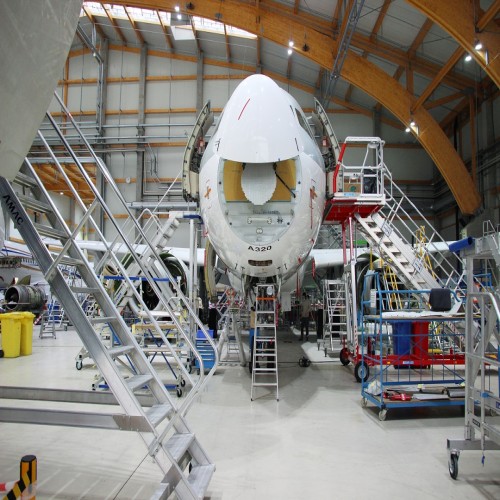
C Aircraft CheckThe intermediate level of inspection in a Continuous Airworthiness Maintenance Program. The C Check happens between 18 months to two years. 1- Visually check flight compartment escape ropes for condition and security. 2- Check operation of DC bus tie control unit. 3- Visually check the condition of entry door seals 4- Operationally check flap asymmetry system 5- Pressure decay check APU fuel line shroud 6- Inspect engine inlet TAI ducting for cracks 7- Inspect stabilizer attach bolts 8- Inspect floor beams 9- Detailed inspection of wing box structure
chain hoist A mechanism used in a shop to lift heavy weights. A chain hoist uses an endless loop of chain to drive a geared wheel that also supports and lifts the load as it is pulled up by the geared wheel.
chain reaction A self-sustaining action in which one event causes other events to happen.
chaining Combines behaviors students already know to assemble more complex behaviors.
chamfer A bevel cut on the edge of a piece of material.
chamfered point of a threaded fastener The point of a bolt or a screw formed in the shape of a cone with its top cut off. The chamfered point allows easy entry into the hole for starting.
chamfered tooth The tooth of the gear on the rotating magnet or the distributor gear which is beveled to identify it for use when timing the magneto.
chamois A piece of soft leather used to filter gasoline. Gasoline will pass through a chamois, but water will not. Gasoline that has been filtered through a chamois can be considered to be free from water.
chandelle A maximum performance 180 climbing turn. It involves continual changes in pitch, bank, airspeed, and control pressures. During the maneuver, the airspeed gradually decreases from the entry speed to a few knots above stall speed at the completion of the 180 turn.
change of state The transformation of a substance from one form (state) to another such as a solid changing to a liquid. In meteorology, a change of state usually refers to the change of water from one form to another.
Examples include: condensation vapor to liquid; evaporation liquid to vapor; sublimation solid (ice) to vapor; freezing liquid to solid; melting solid to liquid.
changeover point (COP) The point at which a pilot changes frequencies between navigation aids when other than the midpoint on an airway.
channel A metal structural member either extruded or bent into a U-shape
channel iron Extruded steel either extruded or bent into a U-shape.
channel section A form of structural material that has the cross sectional shape of a channel or the letter U.
characteristic curves 1. A series of graphically presented curves that describe in mathematical terms the characteristics of lift and drag produced by an airfoil section. 2. A graph that shows the performance of an electron tube or a transistor under various operating conditions.
characteristic potential difference The theoretical potential difference produced by a chemical cell using specific pole materials.
characteristics of learning Effective learning shares several common characteristics. Learning is dynamic and should be purposeful, based on experience, multifaceted, and involve an active process.
charcoal Black porous carbon.
charge 1. A quantity of electricity. If the charged material holds a greater number of electrons than normal, it is said to be negatively charged. If the material has a deficiency of electrons, it is positively charged. 2. The physical condition that gives rise to an electric field.
charging a battery The preparation of battery for service by passing low-voltage DC through the battery in the opposite direction of normal battery output. A lead acid battery should be recharged when a cell has a hydrometer reading of 1.240 or below. A fully charged battery reads about 1.300 on the hydrometer.
charging current A current passed through a secondary cell that restores the active material on the plates to a condition that allows them to change chemical energy into electrical energy.
charging stand A handy and compact arrangement of air conditioning service equipment containing a vacuum pump, manifold set, and a method of measuring and dispensing the refrigerant.
Charles law A law of physics which states that if a gas is held at a constant pressure, it will expand in direct relationship to the increase in its absolute temperature.
chart 1. A pictorial presentation of data. 2. A graph. 3. A graphic representation of the operation of engine performance, fuel consumption, horsepower, or limitation of some specific unit. 4. A map.
chart, navigation A special map used for aerial navigation that gives the location and the necessary information about all of the navigation aids. A chart shows the grids of latitude and longitude and provides a surface for plotting courses and locating fixes.
charted VFR flyways Charted VFR Flyways are flight paths recommended for use to bypass areas heavily traversed by large turbine-powered aircraft. Pilot compliance with recommended flyways and associated altitudes is strictly voluntary. VFR Flyway Planning charts are published on the back of existing VFR Terminal Area charts.
charted visual flight procedure (CVFP) approach An approach conducted while operating on an instrument flight rules (IFR) flight plan which authorizes the pilot of an aircraft to proceed visually and clear of clouds to the airport via visual landmarks and other information depicted on a charted visual flight procedure. This approach must be authorized and under the control of the appropriate air traffic control facility. Weather minimums required are depicted on the chart.
chase An aircraft flown in proximity to another aircraft normally to observe its performance during training or testing.
chase aircraft See Chase.
chasing threads The process of cutting screw threads by moving a tool along the surface of the work to be threaded.
chassis An aluminum, copper, or plated steel body around which an electronic unit is built. It serves as the support for the electronic components, power supply, etc., and is often used as a voltage reference point.
chassis ground In electricity, a ground connected to the case or chassis of electronic equipment. See also earth ground.
chattering brakes A heavy vibration in the brakes produced by the brake friction as the disks rotate. Chattering can be caused by glazed discs.
check flight A test flight to check the aircraft performance after major re-work or repairs.
check list A sequential systematic list of specific procedures to be followed when performing any complex operation. For example, check lists are used in the performance of preflight inspections, 100-hour inspections, and annual inspections of aircraft to ensure all required operations are completed.
check nut A thin nut jammed against another nut to prevent it from loosening.
check valve A valve that allows free flow of fluid in one direction but prevents or restricts fluid from flowing in the opposite direction.
checklist A systematic list of items and equipment on board an aircraft intended for reference, verification, or identification. An essential tool for safely flying the airplane.
checkpoint A navigation location identified either visually or electronically.
cheesecloth A lightweight cotton gauze that has no sizing in it. It is used as a polishing cloth or as a straining element to remove lumps and contaminants from liquids.
chemical bond An adhesive agent that is applied to two or more parts or pieces. Joins them together by molecular attraction
chemical compound The substance formed by the chemical reaction between two or more chemical elements.
chemical element A fundamental substance that consists of atoms of only one kind. Examples of chemical elements include oxygen, carbon, gold, silver, and hydrogen.
chemical energy The energy stored in chemicals due to their attraction to or reaction with other chemicals.
chemical etching 1. A process in which small cracks in aluminum are detected by application of a caustic soda solution. 2. A chemical process used to etch (roughen) the surface of metal in preparation for priming or painting.
chemical fire extinguisher A fire extinguisher that extinguishes fire by expelling a chemical fire extinguishing agent.
chemical milling A chemical etching process used to machine large sheets of metal. Chemical milling economically reduces the weight of the aircraft and produces a lightweight skin that has all of the needed strength and rigidity than can be done with conventional machining or by using riveted-on stiffeners.
chemical reaction A chemical alteration in a substance to form a chemical compound. This is always accompanied by an energy change.
chemical salt The result of the combination of an alkali with an acid. Salts are generally porous and powdery in appearance and are the visible evidence of corrosion in a metal.
cherry picker A hydraulically operated boom with a large basket on its end. A person can be lifted into the basket in order to work at high locations on large airplanes.
Cherry rivet A form of blind rivet patented and manufactured by the Cherry division of Textron, Inc. An upset head is formed by pulling the tapered stem through its hollow shank.
chevron seal A single-direction seal in a hydraulic or pneumatic actuator. It derives its name from its V-shaped (chevron) cross section.
chilled iron Cast iron that has been cast in a steel mold. The casting is quickly cooled by the steel mold so that it retains most of the carbon as well as a high degree of hardness.
chin An aircraft structure that sticks out from the bottom of the forward part of the fuselage.
chine The longitudinal member on the side of a float or seaplane hull where the bottom and the side meet.
chine tire A nose wheel tire that has a deflector molded into its sidewall. Chine tires are mounted on the nose wheel of jet aircraft and prevent water, ice, snow, and slush from getting into the intake of the engines by throwing the water and slush outward and away from the engines.
chinook A warm, dry wind that blows down the eastern slopes of the Rocky Mountains into the United States from Canada. The moisture in the air of a chinook is almost completely lost as it blows up the western slopes of the mountains, and it is dry and warm as it blows down the eastern slopes.
chip 1. A small fragment of metal removed from a surface by cutting with a tool. 2. An electronic component containing an integrated circuit.
chip detector An electrical metal detection warning system. A magnetic sump or drain plug with an electrode at its center and with ground potential at its casing. When ferrous particles bridge the gap, the current path is completed and a warning light illuminates in the cockpit.
chipping The breaking away of pieces of material by excessive stress or by careless handling.
chisel A hard steel cutting tool used to shear metal when it is hammered.
chlorate candle A chemical oxygen supply used as an emergency oxygen supply in large aircraft and in some smaller aircraft. When the candle is heated, it emits oxygen that is then routed to a mask for breathing by the passenger. Also referred to as an oxygen candle.
chlorine A gaseous chemical element with a symbol of Cl and an atomic number of 17.
chlorobromomethane (Halon 1011) A chemical formula CH2ClBr. A liquefied gas with a UL toxicity rating of 3. Commonly referred to as CB, chlorobromomethane is more toxic than C02. It is corrosive to aluminum, magnesium, steel, and brass. It is not recommended for aircraft use.
chock A block of material wedged under the tires of an aircraft to prevent it from rolling on the ground.
choke An electrical inductor used to oppose the flow of pulsating DC electricity. Chokes are used with capacitors to make filter circuits that smooth out the voltage changes and make pulsating direct current into smooth flowing DC.
choke bore A method of boring the cylinder of an aircraft engine in which the top, that portion affected by the mass of the cylinder head, has a diameter slightly less than that of the main bore of the barrel. When the cylinder reaches operating temperature, the increased expansion due to the larger mass of the head has caused the bore to be straight throughout its length.
choke coil An inductance coil designed to provide a high reactance to certain frequencies and generally used to block or reduce currents at these frequencies.
choked A condition of a turbojet engine where airflow from a convergent nozzle is at Mn = 1.0 (speed of sound) and cannot be further accelerated regardless of the pressure applied. Choke normally occurs at the turbine nozzle and exhaust nozzle, although it is a cause of stall conditions in the compressor.
choked airflow In gas turbine engines, an airflow condition from a convergent shaped nozzle, where the gas is traveling at the speed of sound and cannot be further accelerated. Any increase in internal pressure will pass out the nozzle in the form of pressure.
choked cylinder bore The cylinder of a reciprocating engine whose bore is slightly smaller in the part of the cylinder that is screwed into the cast aluminum head than it is in the center of the cylinder barrel. The cylinder head expands at normal operating temperature enough so that the bore straightens out and has the same diameter throughout.
choked nozzle A jet engine nozzle whose flow rate has reached the speed of sound.
choke-input filter A form of filter used with an electronic power supply to change pulsating direct current into smooth DC.
choo-choo A mild compressor surge condition caused by insufficient compression ratio across the compressor.
chopper Slang for helicopter.
chord 1. An imaginary line drawn through an airfoil from its leading edge to its trailing edge. The chord, or chord line, is used as a reference (a datum line) for laying out the curve of the airfoil. 2. A straight line that passes through a circle and touches the circumference at two points. Also referred to as the diameter of the circle.
chord line An imaginary line drawn through an airfoil from its leading edge to its trailing edge. The chord, or chord line, is used as a reference (a datum line) for laying out the curve of the airfoil.
chordwise Passing from the leading edge to the trailing edge of an airfoil.
chordwise axis In rotorcraft, a term used in reference to semirigid rotors describing the flapping or teetering axis of the rotor.
chrome molybdenum steel A strong, tough and highly weldable alloy steel containing chromium and molybdenum. The most commonly used steel for aircraft structure is the SAE 4100 series.
chrome nickel molybdenum steel Steel that has been alloyed with chromium, nickel, and molybdenum.
chrome pickling A method used to convert the surface of magnesium to a hard oxide film in order to protect it from corrosion. This is accomplished by soaking the magnesium in a solution of potassium dichromate.
chrome plated cylinder Hard chrome plating applied to the inside walls of an aircraft cylinder to form a hard, wear-resistant surface.
chrome plating 1. An electroplating process transferring chromium to the surface of the steel. Either hard chrome or decorative chrome can be applied. 2. A treatment for cylinder walls of reciprocating engines. It hardens the walls and helps lubricate them. Worn cylinder barrels may be ground so that their bore is straight and round. Then hard chromium is electroplated on the cylinder walls to a depth that brings the diameter of the cylinder bore back to its original dimensions. The surface of the chrome plating on the cylinder walls resembles a maze of spider webs. There are thousands of tiny, interconnected cracks in its surface. The electroplating current is then reversed, and these tiny cracks open up enough so that they can hold oil. Porous chrome plating provides a hard, wear-resistant surface for the piston rings to ride on. The oil that is trapped in the tiny grooves helps seal the rings and lubricate the wall to minimize piston ring and cylinder wall wear.
chrome vanadium steel A steel alloyed with chromium and vanadium. It is the SAE 6100 series and is used extensively in the manufacturing of technicians hand tools.
chrome-alumel Bimetallic strip of metal used in the exhaust temperature indicating system. Alumel contains
chromel An alloy of nickel and chromium that is highly resistant to oxidation and has a high electrical resistance.
chromel-alumel thermocouple A thermocouple is a device that generates a small current when heated. A chromel-alumel thermocouple consists of a positive lead of chromel and a negative lead of alumel. This device is used primarily to measure high temperatures in reciprocating and jet turbine engines.
chromic acid An acid similar to sulfuric acid except for the substitution of chromium for sulfur. It is used as an etchant to prepare aluminum alloys for finishing and as a corrosion inhibitor.
chromic acid etch A solution of sodium dichromate, nitric acid, and water used to etch or roughen a surface.
chromium A hard, brittle, white metallic chemical element with a symbol of Cr and an atomic number of 24. Chromium is highly resistant to corrosion and is used for plating metal to harden its surface or to protect it from rust or corrosion.
chronometric tachometer An instrument used to measure the speed in revolutions per minute of a reciprocating aircraft s engine crankshaft. The chronometric tachometer repeatedly counts the number of revolutions in a given period of time and displays the average speed on its dial.
chuck A special clamp-like device on a lathe used to hold the material being worked or a drill to hold the drill bit. Chucks have three or more jaws that are used to clamp and hold the material or the tool.
chugging Low frequency airflow oscillations within a turbine engine. Chugging is a mild, audible stall condition that can usually be controlled by proper throttle movement.
chute An inclined trough or channel used to allow objects or materials to be sent from one level or place to another.
cigarette A ceramic or synthetic rubber insulator used at the end of an ignition lead to insulate it from the shielded barrel of a spark plug.
circle A closed-plane curve in which all points along the curve are equidistant from a point within the center of curve.
circle graph A graph using a circle divided into pieces like a pie to convey data. Also referred to as a pie chart.
circle to runway (runway number) Used by ATC to inform the pilot that he must circle to land because the runway in use is other than the runway aligned with the instrument approach procedure. When the direction of the circling maneuver in relation to the airport/runway is required, the controller will state the direction (eight cardinal compass points) and specify a left or right downwind or base leg as appropriate; e.g., Cleared VOR Runway Three Six Approach circle to Runway Two Two, or Circle northwest of the airport for a right downwind to Runway Two Two.
circle-to-land maneuver A maneuver initiated by the pilot to align the aircraft with a runway for landing when a straight-in landing from an instrument approach is not possible or is not desirable. At tower controlled airports, this maneuver is made only after ATC authorization has been obtained and the pilot has established required visual reference to the airport.
circling A maneuver to align the aircraft with a runway for landing when a straight-in landing from an instrument approach is not possible or desirable. This maneuver is made only after ATC authorization and the pilot has established the required visual reference to the airport.
circling approach See circle-to-land maneuver.
circling maneuver See circle-to-land maneuver.
circling minima A statement of MDA and visibility required for the circle-to-land maneuver.
NOTE: Descent below the established MDA or DH is not authorized during an approach unless the aircraft is in a position from which a normal approach to the runway of intended landing can be made and adequate visual reference to required visual cues is maintained.
circuit The complete path in which electrical current flows. It must contain a source of electrical energy, a load to absorb this energy, and conductors to carry the electron flow.
circuit breaker A circuit-protecting device that opens the circuit in case of excess current flow. A circuit breaker differs from a fuse in that it can be reset without having to be replaced.
circuit diagram An electrical drawing that uses conventional symbols to show how the components in an electrical system are interconnected.
circuit protector A device that opens an electrical circuit in the event of an excessive current flow.
circular inch The area of a circle whose diameter is 1.
circular mil (CM) A measurement of area equal to that of a circle having a diameter of 1/1,000, 1 mil., or 0.001.
circular motion The motion of an object along a curved path in which the object stays a constant distance from the center of the motion.
circular saw A power saw driven by an electric motor that uses a circular blade.
circular slide rule A slide rule having scales arranged in circles on the surface of a disk. Transparent runners attached at the center of the disk can be moved over the scale to perform various mathematical operations.
circulation In meteorology, the organized movement of air. Also called an eddy.
circumference of a circle The linear distance around a circle. The circumference of a circle is always 3.1416 times the length of the diameter of the circle.
circumferential frame A circular or oval frame. It gives shape to a fuselage or nacelle. Also referred to as a belt or transverse frame.
circumscribed circle A circle drawn around the outside of another figure in such a way that all of the points touch the circumference of the circle.
cirriform High altitude clouds made up mostly of small ice crystals.
cirrocumulus (Cc) Cirroform clouds, elements of which appear as small puffy clouds sometimes aligned in rows.
cirrostratus (Cs) Layer of cirroform clouds that appear as thin white or light-gray sheets.
cirrus (Ci) Detached cirroform clouds that appear as white feathers or filaments.
cistern A container used to store a liquid.
CIT sensor A device that sends an inlet duct temperature signal to the fuel control as a scheduling parameter.
civil aircraft Aircraft other than public aircraft.
civil twilight The period of time before sunrise or after sunset when the sun is not more than 6 below the horizon.
clad aluminum An aluminum alloy with a coating of pure aluminum rolled onto both sides for corrosion protection.
cladding A method of protecting aluminum alloys from corrosion by rolling a coating of pure aluminum onto the surface of the alloy. Although cladding protects the alloy, it also reduces its strength.
clamp Any device used to exert pressure to temporarily hold objects together.
clamp-on ammeter A hand-held ammeter that clamps around a current-carrying wire that is to be measured. The changing magnetic field around the wire induces a voltage in the jaws of the ammeter proportional to the amount of current flowing in the line.
clamshell doors Two doors that open on the opposite sides of the center line similar to the way the shell of a clam opens.
clamshell thrust reverser A thrust reverser, clamshell door system that fits in the exhaust system of a turbojet engine. When the reverser is deployed for thrust reversing, the doors move into position to block the normal tailpipe and duct the exhaust gases around so that they flow forward to oppose the forward movement of the aircraft.
class 1. As used with respect to the certification, ratings, privileges, and limitations of airmen, means a classification of aircraft within a category having similar operating characteristics. Examples include: single engine; multiengine; land; water; gyroplane; helicopter; airship; and free balloon. 2. As used with respect to the certification of aircraft, means a broad grouping of aircraft having similar characteristics of propulsion, flight, or landing. Examples include airplane, rotorcraft, glider, balloon, landplane, and seaplane.
class A airspace Controlled airspace covering the 48 contiguous United States and Alaska, within 12 nautical miles of the coasts, from 18,000 feet MSL up to and including FL600, but not including airspace less than 1,500 feet AGL.
class B airspace Controlled airspace designated around certain major airports, extending from the surface or higher to specified altitudes. For operations in Class B airspace, all aircraft must receive an ATC clearance to enter, and are subject to the rules and pilot/equipment requirements listed in FAR Part 91.
class C airspace Controlled airspace surrounding designated airports where ATC provides radar vectoring and sequencing on a full-time basis for all IFR and VFR aircraft. Participation is mandatory, and all aircraft must establish and maintain radio contact with ATC , and are subject to the rules and pilot/equipment requirements listed in FAR Part 91.
class D airspace Controlled airspace around at least one primary airport which has an operating control tower. Aircraft operators are subject to the rules and equipment requirements specified in FAR Part 91.
class E airspace Controlled airspace which covers the 48 contiguous United States and Alaska, within 12 nautical miles of the coasts, from 14,500 feet MSL up to but not including 18,000 feet MSL. Exceptions are restricted and prohibited areas, and airspace less than 1,500 feet AGL. Class E airspace also includes Federal airways, with a floor of 1,200 feet AGL or higher, as well as the airspace from 700 feet or more above the surface designated in conjunction with an airport which has an approved instrument approach procedure.
class G airspace Airspace that has not been designated as Class A, B, C, D, or E, and within which air traffic control is not exercised.
class of thread In threaded fasteners, classes of threads are distinguished from each other by the amount of
circular slide rule A slide rule having scales arranged in circles on the surface of a disk. Transparent runners attached at the center of the disk can be moved over the scale to perform various mathematical operations.
circulation In meteorology, the organized movement of air. Also called an eddy.
circumference of a circle The linear distance around a circle. The circumference of a circle is always 3.1416 times the length of the diameter of the circle.
circumferential frame A circular or oval frame. It gives shape to a fuselage or nacelle. Also referred to as a belt or transverse frame.
circumscribed circle A circle drawn around the outside of another figure in such a way that all of the points touch the circumference of the circle.
cirriform High altitude clouds made up mostly of small ice crystals.
cirrocumulus (Cc) Cirroform clouds, elements of which appear as small puffy clouds sometimes aligned in rows.
cirrostratus (Cs) Layer of cirroform clouds that appear as thin white or light-gray sheets.
cirrus (Ci) Detached cirroform clouds that appear as white feathers or filaments.
cistern A container used to store a liquid.
CIT sensor A device that sends an inlet duct temperature signal to the fuel control as a scheduling parameter.
civil aircraft Aircraft other than public aircraft.
civil twilight The period of time before sunrise or after sunset when the sun is not more than 6 below the horizon.
clad aluminum An aluminum alloy with a coating of pure aluminum rolled onto both sides for corrosion protection.
coalesce To unite into a single entity. To come together.
clock In electronic equipment, a pulse generator that allows all components to be synchronized.
clockwise rotation The direction in which the hands of a clock rotate.
close parallel runways Two parallel runways whose extended centerlines are separated by less than 4,300 feet, having a Precision Runway Monitoring (PRM) system that permits simultaneous independent ILS approaches.
closed angle The angle formed in sheet metal after it has been bent more than 90 . For example, if a piece is bent through 135 , it forms a 45 closed angle.
closed loop An electronic circuit that allows some of the output signal to be fed back into the input section in order to allow the circuit to be self regulating.
closed low A low-pressure area enclosed in at least one closed isobar or (aloft) one closed contour.
closed runway A runway that is unusable for aircraft operations. Only the airport management/military operations office can close a runway.
closed traffic Successive operations involving takeoffs and landings or low approaches where the aircraft does not exit the traffic pattern.
close-grain wood Wood that has grown with the annual rings very close together. Close-grain wood is very consistent in its cross-sectional strength.
close-tolerance bolt A hex-head aircraft bolt with a shank that has been ground to a tolerance of + 0.000 0.0005 . It is identified by a triangle on its head enclosing the material identification mark.
cloud A visible accumulation of minute water droplets and/or ice particles in the atmosphere above the Earth s surface. Cloud differs from ground fog, fog, or ice fog only in that the latter are, by definition, in contact with the Earth s surface.
cloud amount The amount of sky covered by each layer of clouds.
cloud bank A mass of cloud seen from a distance, spreading across an appreciable section of horizon, but not extending directly over the observation location.
cloud detection radar Radar used to determine bases and tops of clouds (rather than precipitation) above a reporting station.
cloud height The height of the base of the cloud layer above ground level (AGL).
cloud layer Clouds with bases at approximately the same level.
cloud point The temperature of an oil at which its wax content, normally held in solution, begins to solidify and separate into tiny crystals, causing the oil to appear cloudy or hazy.
cloud streets Parallel rows of cumulus clouds. Each row can be as short as 10 miles or as long as a hundred miles or more.
cloudburst A sudden and heavy rain shower.
clouds with great vertical development Cumulus and cumulonimbus clouds.
cloudy convection The upward movement of saturated air that is warmer than its surroundings.
clove hitch A knot used for making individual spot ties for securing electrical wire bundles. In this use, the clove hitch is locked with a square knot.
club propeller A short, stubby propeller used for ground testing of reciprocating engines.
clubhead A formed rivet head tipped to one side. Tipping can be corrected by rapidly moving the bucking bar across the rivet head in a direction opposite that of the malformed travel. This corrective action can only be accomplished during the forming of the rivet head.
cluster Part of an airframe structure made up of two or more tubes meeting at one point. They are welded together in a cluster weld.
cluster weld A welded joint made at the intersection of a number of tubes that meet at a common point.
clutch A device used to connect and disconnect a driving and driven part of a system such as between the transmission and main rotor of a helicopter.
clutter Undesirable signals that show up on a radar screen and mask the desired signal return. Topographical and meteorological phenomena are some of the causes of clutter.
CMM Component Maintenance Manual. A manual developed by the component manufacturer and frequently adopted by an airframe manufacturer. A CMM is most frequently not approved by the FAA. Blanket approval comes through the AMM (Aircraft Maintenance Manual) or SRM Structural Repair Manual).
coalescent bag A bag in the water separator of an air-cycle air conditioning system on which the moisture that condenses from the air may coalesce.
coastal fix A navigation aid or intersection where an aircraft transitions between the domestic route structure and the oceanic route structure.
coast-down check The amount of time a turbine engine takes to motor down to a complete stop from idle speed after the fuel is shut off. A maintenance test cell check of engine performance.
coated cathode In a vacuum tube, the cathode emits electrons. Coated cathodes are covered with a substance that enhances the emission of electrons.
coating The application of material such as a metal or organic compound to a surface.
coaxial Having a common axis or shaft.
coaxial cable A transmission line in which the center conductor is surrounded by an insulator and a braided outer conductor. All of this is enclosed in a weatherproof outer insulator.
coaxial propellers Propellers with concentric shafts that allow them to rotate in opposite directions, canceling torque and p-factors inherent in single propellers. Coaxial propellers can be geared for power by a single engine or by multiple engines.
coaxial rotors Rotors with concentric shafts that allow them to rotate in opposite directions, canceling torque factors inherent in single rotors. Coaxial rotors can be geared for power by a single engine or by multiple engines.
coaxial shafts Shafts that are mounted concentrically (having a common center) in order to drive two or more propellers, rotors, compressors, etc.
cobalt A metallic chemical element with a symbol of Co and an atomic number of 27.
cobalt chloride An additive to silica gel dehydrator plugs that serves as an indicator of the amount of moisture absorbed by the plug. A dry dehydrator with this additive will be bright blue, but if it has been exposed to excessive moisture, it will turn pink.
cobalt chromium steel A steel alloy containing cobalt and chromium. Used in exhaust valves.
cobalt-based alloy A cobalt, tungsten, molybdenum alloy of extreme high temperature strength. Very expensive and used almost exclusively in the hot section of turbine engines.
COBOL A high-level computer language designed for business applications. Stands for COmmon Business Oriented Language.
cock A valve (British).
cockpit The pilot s compartment of an aircraft.
cockpit resource management (CRM) Effective use of all resources by a flight crew. Emphasis on good communication and interpersonal skills.
code markings Aircraft fluid lines are often identified by markers of color codes, words, and geometric symbols. These identify each line s function, content, direction of fluid flow, and primary hazard.
codes, transponder The number assigned to a particular multiple pulse reply signal transmitted by a transponder.
coefficient A dimensionless number expressing degree of magnitude.
coefficient of expansion A dimensionless number relating dimensional changes in a material with changes in temperature.
coefficient of friction The coefficient of friction is the value obtained by dividing the force necessary to move one substance over another at a constant speed by the weight of the substance.
coefficient of linear expansion A value obtained by measuring the length (inches or centimeters) a material expands per degree Celsius change in temperature, i.e. the thermal expansion properties.
coefficient of thermal expansion The change in unit of length of volume accompanying a change of temperature.
coercive force The amount of force (in the form of magnetism with opposite polarity) required to remove magnetism from an object.
cog belt A drive belt that incorporates teeth on the drive surface in order to prevent slippage. Cog belts are often used in systems where timing is critical.
cognitive domain A grouping of levels of learning associated with mental activity which range from knowledge through comprehension, application, analysis, and synthesis to evaluation.
cognitive information processing The method in which information is gathered, processed, and stored by the brain in much the same way as a computer.
cognitive theory Learning is not just a change in outward behavior but involves changes in thinking, feeling, or understanding. It involves mental processes, such as decision making and problem solving, which are difficult, if not impossible, to observe or measure.
coherent light Light such as that produced by a laser, made up of waves of the same wavelength and in phase. Ordinary light consists of light of different wavelengths and phase relations.
cohesion The tendency of a single substance to adhere to itself. The force holding a single substance together.
coil A conductor consisting of turns of wire in which the magnetic field around one turn cuts across the other turns, increasing the inductive effect of the wire.
coil assembly The magneto coil assembly consists of a soft iron core around which is wound the primary and secondary coil with the secondary coil wound on top of the primary coil.
coil booster A transformer coil used with a vibrator to produce a high voltage at the spark plugs during starting.
coil spring A spiral of hardened steel wire. When loosely wound, it is used in compression applications to provide cushioning, while tightly wound coils are used in tension applications.
coin dimpling Performed by a special machine that has, in addition to the usual dies, a coining ram. This ram applies an opposing pressure to the edges of the hole so that the metal is made to flow into all the sharp contours of the die giving the dimple greater accuracy and improving the fit.
coin pressing A dimpling process using a countersunk rivet as the male dimpling die, placing the female die in the usual position, and backing it with a bucking bar. The rivet is then struck with a pneumatic hammer to form the dimple.
coin tap In composites, the use of a coin to tap a laminate in different spots to detect a change in sound, which would indicate the presence of a defect.
coke A solid, carbon-like residue left by mineral oil after the removal of the volatile material by heat.
coking The carbon buildup from decomposition of oil in vent lines. This buildup can, over a period of time, cause a restriction of flow.
cold The absence of heat.
cold air funnel A weak vortex that occasionally develops behind a cold front with rainshowers and nonsevere thunderstorms.
cold airmass An airmass that is colder than the ground it is passing over.
cold bending The bending of sheet metal without the use of heat. Thin sheets of metal and some soft metals are bent in this manner. Thick sheets of metal and some harder materials must be heated to allow bending without causing the material to break.
cold chisel A hardened steel cutting tool. Used to cut metal materials without the need for softening by use of heat.
cold circuit An electrical circuit without power. As opposed to a hot circuit that has electrical power applied.
cold cylinder test A method of determining an inoperative cylinder on a reciprocating engine by measuring the relative lack of heat on the bad cylinder compared with the normal cylinders.
cold dimpling Accomplished while the material is at room temperature by either the coin ram or coin dimpling method.
cold downslope winds A bora type wind.
cold drawing The process of pulling rod or tubing through progressively smaller dies in order to reduce the diameter of the material. The material is not heated for this process.
cold flow The deep and permanent impressions or cracks in a hose caused by hose clamp pressure.
cold front The boundary between two airmasses where cold air is replacing warm air.
cold front occlusion An occlusion where very cold air behind a cold front lifts the warm front and the cool airmass preceding it.
cold heading The process of cold forming wire or bar stock into intricate shapes by reducing the diameter of the stock in some areas, while expanding the diameter in others. Cold heading is performed by upsetting or heading the metal into larger diameters or extruding it into smaller diameters.
cold junction In electricity, the reference junction in a thermocouple. A thermocouple produces current in relation to the difference in temperature between a reference junction, known as the cold junction, and the junction where temperature measurement is taken, known as the hot junction.
cold light Light that produces very little heat. Used for applications requiring low intensity lights such as formation lights and obstruction lighting.
cold rolling The process of rolling sheets of metal in order to produce a specific thickness of material. The material is not heated for this process.
cold section The air compression sections of a turbine engine.
cold soaked 1. The condition of a unit of equipment being extremely cold after prolonged exposure to very cold
cold spark plug A spark plug in which the nose insulator provides a short path for heat to travel from the center electrode to the shell. Cold spark plugs are used in high-compression engines to minimize the danger of preignition.
cold swaging process A method of reducing or forming steel or other material while it is cold by drawing it to a point or reducing its diameter.
cold tank system A lubrication system wherein the oil cooler is located in the scavenge oil subsystem. The oil passes through the cooler and returns to the tank cooled.
cold weld The process where two pieces of metal are joined by pressing them together until the materials are fused. No external heat is applied during this process.
cold working Any mechanical process that will increase the hardness of a metal. This may be done by repeatedly hammering the material, passing it through rollers, or pulling it through dies.
cold-cathode vacuum tube A vacuum tube that assists a cathode in emitting electrons without the use of a heater.
cold-cranking amps The capacity of a battery under extreme usage conditions. This gives a rough estimate of the ability of a battery to operate under extreme conditions, and allows for comparison between batteries. Also referred to as a high-rate discharge.
cold-rolled steel Steel that has been cold worked by passing through a series of compression rollers or dies.
cold-solder joint An improperly soldered joint. Usually caused by movement of the components before the solder sets. Has a grainy appearance. It is not satisfactory, and must be reheated and allowed to set without movement of the components.
cold-starting oil relief valve A bypass relief valve in a main oil system that acts as an emergency pop-off valve when cold oil causes excessive system pressure. Used in systems having no oil pressure regulating relief valve.
collapsed surface A dimensional change with neither removal of material nor an abrupt change of surface and usually affecting large sections of the object. Causes are excessive pressure or forces and improper abusive engine operation. Parts affected usually include valves, piston rings, and springs.
collar A collar is a raised ring or flange of material on the head or shank of a fastener.
collective pitch control In rotorcraft, the control for changing the pitch of all the rotor blades in the main rotor system equally and simultaneously and, consequently, the amount of lift or thrust being generated.
collective pitch control The control in a helicopter in which the pitch of all the rotor blades are changed at the same time.
collector 1. The electrode in a transistor through which conventional current leaves the transistor. 2. The exhaust cone collector in a turbine engine that collects the exhaust gases discharged from the engine turbine buckets and gradually converts them into a solid jet. In performing this, the velocity of the gases is decreased slightly and the pressure increased. It also helps to direct the flow of hot gases rearward and prevents turbulence and, at the same time, imparts a high final exit velocity to the gases.
collector ring A corrosion-resistant steel assembly that collects the exhaust gases from the cylinders of a radial engine and routes them overboard.
collimated light An optical device that causes all light beams passing through to be parallel.
color code A means of identifying an object by the use of various combinations of colors.
color temperature The approximate temperature of an object, based on the peak intensity-emitting wavelength (its color). Specified in degrees Kelvin.
color tempering A method of removing brittleness from a part during heat treatment. The part is heated to a specified color, then quenched (cooled by dipping into a specified liquid).
color wheel A circular diagram or tool that helps the user visualize colors that result when colors are mixed together.
combination compressor In turbine engines, a compressor design that utilizes an axial compressor and a centrifugal compressor (usually attached together) to compress incoming air prior to combustion.
combination inertia starter An inertia starter for reciprocating aircraft engines that can be energized by either an electric motor or a hand crank.
combination set A set of measuring tools that often includes a tri-square, a 45˚ miter, a depth gauge, a marking or scribing gauge, and a level.
combination square A device used in laying out material. It consists of a steel scale attached to a squaring device that is machined with precise 90 and 45 angles.
combination wrench A tool that has a box-end wrench on one end and an open-end wrench on the other.
combined center-RAPCON (CERAP) An air traffic facility which combines the functions of an ARTCC and a radar approach control facility.
combustibles Materials capable of burning.
combustion A chemical process in which a material is united with oxygen at such a rapid rate that light and heat are released.
combustion chamber The section of the engine into which fuel is injected and burned. See also combustor.
combustion liner In a turbine engine, the perforated and louvered inner section of the combustor in which fuel burning is controlled.
combustion liner louvers In a turbine engine, small slots in the liner that direct cooling airflow and provide the inner walls with a cooling air blanket.
combustion section The section located directly between the compressor and the turbine sections. It contains a casing, a perforated inner liner, a fuel injection system, some means for initial ignition, and a fuel drainage system to drain off unburned fuel after engine shutdown. The combustion section houses the combustion process, which raises the temperature of the air passing though the engine. This process releases energy contained in the air/ fuel mixture.
combustion starter A fuel engine starting accessory that utilizes a combustion section similar to a turbine engine combustor. Combustion products are exhausted through a turbine connected to a reduction gearbox to create starting torque.
combustor In gas turbine engines, the section of the engine into which fuel is injected and burned to create expansion of the gases.
combustor drain valve A spring-loaded valve in a turbine engine that drains excess fuel from the combustion section when the engine is not running. It is normally open and is held closed by the pressures of combustion when the engine is operating.
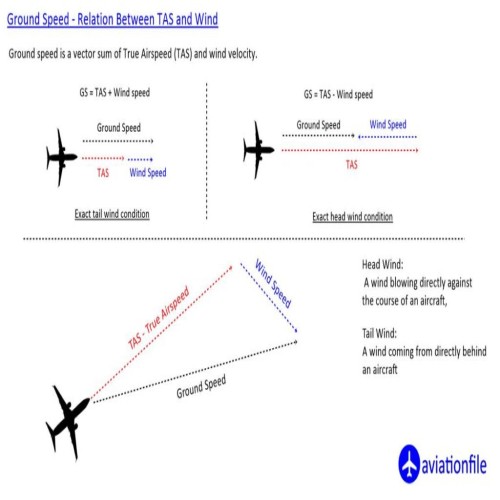
Coming
coming in speedcombustor efficiency A measure of the percentage of fuel burned completely or Btus of heat attained as opposed to the Btu potential of fuel introduced. Typical figures are in the 99% range.
coming-in speed The speed of a magneto that is just sufficient to produce the voltage required to fire all of the spark plugs consistently.
comma cloud A cloud mass shaped like a comma as seen in satellite imagery.
commercial fastener A fastener manufactured to published standards and stocked by manufacturers or distributors. The material, dimensions, and finish of commercial fasteners conform to the quality level generally recognized by manufacturers and users as commercial quality.
commercial maneuvers Consists of maximum performance takeoffs and landings, steep turns, chandelles, lazy eights, and eights-on-pylons
commercial operator A person who, for compensation or hire, engages in the carriage by aircraft in air commerce of persons or property, other than as an air carrier or foreign air carrier or under the authority of Part 375. Where it is doubtful that an operation is for compensation or hire , the test applied is whether the carriage by air is merely incidental to the person s other business or is, in itself, a major enterprise for profit.
commercial pilot An FAA pilot certificate that allows the pilot to operate an aircraft for hire.
common point A significant point over which two or more aircraft will report passing or have reported passing before proceeding on the same or diverging tracks. To establish/ maintain longitudinal separation, a controller may determine a common point not originally in the aircraft s flight plan and then clear the aircraft to fly over the point.
common portion See common route.
common route That segment of a North American Route between the inland navigation facility and the coastal fix.
common traffic advisory frequency (CTAF) A frequency designed for the purpose of carrying out airport advisory practices while operating to or from an uncontrolled airport. The CTAF may be a UNICOM, MULTICOM, FSS, or tower frequency and it is identified in appropriate aeronautical publications.
communication process Consists of three basic elements: the source, the symbols used to communicate the message, and the receiver. In addition, feedback is essential for effective communication to take place.
communication skills The skills an instructor must develop to communicate effectively with students. The ability to communicate effectively as an instructor begins with an understanding of the communication process and is enhanced by experience and training.
communications In electronics, changing information (audible or digital) into a form that can be transmitted and then changed back into information at the receiver.
communications receiver A device that receives electronic data and converts it into information appropriate for use.
communications satellite A satellite placed in geo-stationary orbit used for the relay of communications transmissions from Earth.
community aerodrome radio station (CARS) An aerodrome radio that provides weather, field conditions, accepts flight plans and position reports.
commutator The copper bars on the end of a generator armature to which the rotating coils are attached. AC is generated in the armature and the brushes riding on the commutator act as a mechanical rectifier to convert it into DC.
compact disk (CD) A small plastic optical disk that contains recorded music or computer data. Also, a popular format for storing information digitally. The major advantage of a CD is its capability to store enormous amounts of information.
comparator A device for inspecting parts by comparing them with a greatly enlarged standard chart.
compartment A separate and enclosed space in an aircraft structure.
compass 1. A device for determining direction measured from magnetic north. 2. A drafting instrument used to create circles or arcs.
compass card In navigation, a card affixed to a magnet and allowed to rotate freely so as to show the direction of travel. Divided into degrees and cardinal compass headings.
compass compensation The procedure of adjusting the magnetic compass in an aircraft for deviation caused by magnetic forces within the aircraft.
compass correction card A card mounted near a compass and in full sight of the pilot that indicates the difference between the compass reading and the actual magnetic heading.
compass heading A compass reading that will make good the desired course. It is the desired course (true course) corrected for variation, deviation, and wind.
compass locator A low power, low or medium frequency (L/MF) radio beacon installed at the site of the outer or middle marker of an instrument landing system (ILS). It can be used for navigation at distances of approximately 15 miles or as authorized in the approach procedure.
a. Outer Compass Locator (LOM) A compass locator installed at the site of the outer marker of an instrument landing system.
b. Middle Compass Locator (LMM) A compass locator installed at the site of the middle marker of an instrument landing system.
compass locator A low-frequency, non-directional beacon (NDB) co-located with the marker beacons on an ILS approach. Used to help establish the pilot s position on the localizer.
compass north The north to which a compass actually points. Its field is produced by the combination of the Earth s magnetic field and the local magnetic fields within the aircraft.
compass rose A circle marked out on a flat part of an airport away from magnetic interference. It is marked every thirty degrees of magnetic direction. The airplane is taxied onto this rose, and the magnetic compass is adjusted to agree with the heading of each of the marks.
compass saw A small, thin-bladed saw used to cut intricate designs into a material.
compass swinging The process of aligning the aircraft on a series of known magnetic headings and adjusting the compensating magnets to bring the compass heading as near the magnetic heading as possible.
compass turns Maintaining heading and making turns with reference to the magnetic compass only.
compensated cam The magneto cam used on high-performance radial engines. One lobe is provided for each cylinder, and the lobes are ground in such a way that the magneto points will open when the piston is a given linear distance from the top of the cylinder rather than a given angular distance. This compensates for the relationship of the master rod pistons and those connected to the crankshaft through the link rods.
compensated relief valve An oil pressure relief valve with a thermostatic valve that decreases the regulated oil pressure when the oil warms up. High pressure is allowed to force the cold oil through the engine, but the pressure is automatically decreased when the oil temperature increases.
compensating cam A cam used in conjunction with the collective pitch control to add the correct amount of engine power for the pitch of the rotor. Used on turbine powered helicopters.
compensating port A port inside a brake master cylinder that vents the wheel cylinder to the reservoir when the brake is not applied. It prevents fluid expansion from causing the brakes to drag when temperatures increase.
compensating winding A series winding in a high-output generator wound between the main pole and the interpoles to aid in brushless commutation and overcoming armature reaction.
compensation A defense mechanism that attempts to disguise a weak or undesirable quality by emphasizing a more positive one. Students may lower the scope of their goals to avoid possible failure in achieving goals that are more difficult.
compiler A special computer program that converts a high-level computer language used by a programmer into machine language that can be used by the computer.
complement of an angle The angle that, when added to the original angle, makes a 90 angle.
complex airplane An airplane that has a retractable landing gear, flaps, and either a controllable pitch propeller or a full authority digital engine control.
complex circuit A circuit consisting of a number of components, where some are arranged in series and others in parallel.
complex number The sum of a real number and an imaginary number.
compliance Being in accordance with a regulation or directive.
component Any one of several parts in a combination of parts that make up a unit or whole.
composite Two or more substances which are combined to produce material properties not present when either substance is used alone.
composite fan blades An advanced technology blade design not yet in current use. Its composition is an epoxy-resin material and graphite fiber. It is stronger than fiberglass and 20% to 30% lighter than metals of the same strength.
composite flight plan A flight plan which specifies VFR operation for one portion of flight and IFR for another portion. It is used primarily in military operations.
composite route system An organized oceanic route structure, incorporating reduced lateral spacing between routes, in which composite separation is authorized.
composite separation A method of separating aircraft in a composite route system where, by management of route and altitude assignments, a combination of half the lateral minimum specified for the area concerned and half the vertical minimum is applied.
composite structure A structure made up of two or more substances that, when combined, produce a structure with properties not present when the individual substances are used alone.
composition resistor An electrical device made up of carbon and some insulator. The amount of resistance to current flow depends on the relative amounts of carbon and the insulator.
compound A new entity formed by a union of elements or parts. The constituents lose their original identity and assume the characteristics of the compound.
compound curve A metal surface curved in more than one plane.
compound lever A series of two or more levers connected to achieve a result. Usually used to multiply force.
compound-wound generator A generator with both a series and a shunt field.
comprehensiveness A characteristic of a measuring instrument when it is based on a liberal sampling of the knowledge or skill to be measured. It must be broad enough to ensure that conclusions are representative of the whole.
compressed air Air compressed until its pressure is above ambient.
compressibility The capability of a material to be compressed to a smaller volume. Gases are compressible; liquids are not.
compressibility burble A region of disturbed flow produced by a shock wave. The region is produced aft of the shock wave.
compressibility error An error introduced to the pitot system due to the compressibility of air. The air entering the pitot tube is compressed slightly as a result of impacting air that has stopped within the system. At altitudes below 10,000 feet and airspeeds below 200 knots the amount of error is negligible, but it becomes significant at higher altitudes and airspeeds.
compressible flow In aerodynamics, airflow that is inconsistent in the degree of compressibility, that is, it experiences a fractional volume change per unit of pressure change.
compression The resultant of two forces that act along the same line and also act toward each other.
compression failure The failure of a material due to compression. Usually causes material to buckle or bulge.
compression fastener A fastener with the primary function of resisting forces that tend to compress it.
compression ignition An ignition used in diesel engines. Rather than an electrical discharge causing ignition, the fuel ignites when compression causes the temperature of the fuel-air mixture to rise to the ignition point.
compression member or strut A heavy member, usually of tubular steel, that separates the spars in a Pratt truss wing and is used to carry only compression loads.
compression molding The creation of parts by compressing a material into a mold. This ensures the complete filling of all parts of the mold.
compression ratio 1. The ratio of the volume of an engine cylinder with the piston at the bottom center to the volume when the piston is at top center. 2. Sometimes used to refer to compressor pressure ratio; however, this is not entirely correct because compression ratio infers a ratio of volumes as in a piston engine.
compression rib A heavy-duty rib made with heavy cap strips and extra strength webs. A compression rib is designed to withstand compression loads between the wing spars.
compression rings In reciprocating engines, the top piston rings. Used to provide a seal for the gases in the cylinder and to transfer heat from the piston into the cylinder walls.
compression spring A spring used to withstand compression. The coils are loosely wound in order to leave room for compression.
compression stress Stress applied to a material by a squeezing force.
compression strut A brace that fits between two structural members. The members tend to move toward each other in compression. One example is the compression struts used between upper and lower spar sections in Pratt truss construction.
compression test A test used to determine the condition of the cylinders on a reciprocating engine. The test pressurizes the cylinder and then measures excessive loss of pressure, which indicates bad rings or bad exhaust or intake valves.
compressive load A load or a force that tends to compress or squeeze an object together.
compressive strength The ability of a body to resist a force that tends to shorten, compress, or squeeze it.
compressive stress The basic stress that tends to shorten an object by pressing its ends together.
compressor In gas turbine engines, an impeller or a multi-bladed rotor assembly. A component which is driven by a turbine rotor for the purpose of compressing incoming air.
compressor blade A rotating airfoil in a turbine engine. Compresses and accelerates the air before arrival at the combustion chamber.
compressor bleed air Air taken out of the compressor section of a turbine engine to prevent stall and to operate certain components.
compressor case The outer compressor housing, usually split front to rear or top to bottom. This case provides support for the stator vanes.
compressor discharge pressure (Pt4) A measurement taken at the compressor exit and sent to the fuel control unit for fuel scheduling purposes.
compressor disk The inner section of the compressor to which the blades are attached. A disk assembly is made up of one segment per stage and bolted together to form one large rotating piece.
compressor efficiency A measure of aerodynamic efficiency, one important factor of which is the ability to compress air to the maximum pressure ratio with the minimum temperature rise.
compressor front frame The compressor inlet case.
compressor hub The front and rear portion of the compressor to which the compressor shafts attach.
compressor pressure ratio The ratio of compressor discharge pressure to compressor inlet pressure.
compressor stage 1. Each section of a compressor in which the air pressure is progressively increased. A stage of compression consists of one row of blades and one row of stator vanes in an axial flow compressor. 2. A rotor blade set followed by a stator vane set. The rotating airfoils create air velocity, which then changes to pressure in the numerous diverging ducts formed by the stator vanes.
compressor stall In gas turbine engines, a condition in an axial-flow compressor in which one or more stages of rotor blades fail to pass air smoothly to the succeeding stages. A stall condition is caused by a pressure ratio that is incompatible with the engine rpm. Compressor stall will be indicated by a rise in exhaust temperature or rpm fluctuation, and if allowed to continue, may result in flameout and physical damage to the engine.
compressor stall-margin curve A curve showing a relationship between the compression ratio and mass air flow that must be maintained for a particular engine. If either of the factors goes out of limits, a compressor stall results.
compressor surge 1. A severe compressor stall across the entire compressor that can result in severe damage if not quickly corrected. This condition occurs with a complete stoppage of airflow or a reversal of airflow. 2. An operating region of violent pulsating air flow usually outside of the operating limits of the engine flow control settings. A primary cause is compressor blade stall. Surge can result in flameout and, in severe cases, structural damage.
compulsory reporting points Reporting points which must be reported to ATC. They are designated on aeronautical charts by solid triangles or filed in a flight plan as fixes selected to define direct routes. These points are geographical locations which are defined by navigation aids/ fixes. Pilots should discontinue position reporting over compulsory reporting points when informed by ATC that their aircraft is in radar contact.
computer A device (usually electronic) that receives information, performs some sort of operation on the data, and then produces an output.
computer assisted instruction (CAI) Similar to computer-based training, except emphasizes the point
computer-based instruction (CBI) Synonymous with computer-based training. The use of the computer as a training device.
computer-based training (CBT) The use of the computer as a training device. CBT is sometimes called computer-based instruction (CBI); the terms and acronyms are synonymous and may be used interchangeably.
concave surface An inwardly curved surface.
concentration cell corrosion A corrosion in which the electrode potential difference is caused by a difference in ion concentration of the electroyte instead of a difference in galvanic composition within the metal.
concentric Having a common center.
concentric circles Circles having the same center point.
concentric shafts Two shafts having a common axis, one inside the other.
concurrent lines Lines that pass through a common point.
condensation The process of changing state from a vapor into a liquid.
condensation level The height at which a rising parcel or layer of air would become saturated if lifted adiabatically.
condensation nuclei Small particles in the air on which water vapor condenses.
condensation trail (or contrail) A cloud-like streamer frequently observed to form behind aircraft flying in clear, cold, humid air.
condenser 1. Another name for capacitor. 2. The component in a vapor cycle air conditioning system where heat energy is given up to the air and the refrigerant vapor is changed into a liquid.
condition lever A turboprop cockpit lever. On some aircraft, it serves as prop control lever for flight (alpha range). On other engines, it serves only as a fuel shut-off lever.
conditional routes (CDR) (Europe) Category 1,2,3. Category 1: Permanently plannable CDR during designated times. Category 2: Plannable only during times designated in the Conditional Route Availability Message (CRAM) published at 1500Z for the 24 hour period starting at 0600Z the next day. Category 3: Not plannable. Useable only when directed by ATC.
conditionally unstable air Unsaturated air that will become unstable on the condition it becomes saturated.
conditions The second part of a performance-based objective, which describes the framework under which the skill or behavior will be demonstrated.
conductance The ability of a substance to conduct electricity.
conduction The transfer of heat through a substance or from one substance in contact with another; transfer is always from warmer to colder temperature.
conductive coating A coating applied to the surface of a material in order to allow it conduct electricity or to make it able to conduct electricity more efficiently.
conductivity The characteristic of a material that makes it possible for it to transmit heat or electrical energy by conduction.
conductor A material whose outer ring electrons are loosely bonded. Therefore, a relatively low voltage will cause a flow of these electrons.
conduit A duct or tube enclosing electrical wires or cable.
cone A three-dimensional geometric surface formed by the rotation of a line around a fixed axis such that the line always passes through a fixed point on the axis (called the vertex) and always makes the same angle with the axis.
cone clutch A drive clutch consisting of nesting cones as the contact surface.
cone of confusion The cone shaped area above a VOR station in which there is no signal and the TO/FROM flag momentarily flickers to OFF.
cones The cells concentrated in the center of the retina which provide color vision and fine detail.
conflict alert A function of certain air traffic control automated systems designed to alert radar controllers to existing or pending situations between tracked targets (known IFR or VFR aircraft) that require his immediate attention/action.
conflict resolution The resolution of potential conflictions between aircraft that are radar identified and in communication with ATC by ensuring that radar targets do not touch. Pertinent traffic advisories shall be issued when this procedure is applied. NOTE: This procedure shall not be provided utilizing mosaic radar systems.
conformance The condition established when an aircraft s actual position is within the conformance region constructed around that aircraft at its position, according to the trajectory associated with the aircraft s Current Plan.
conformance region A volume, bounded laterally, vertically, and longitudinally, within which an aircraft must be at a given time in order to be in conformance with the Current Plan Trajectory for that aircraft. At a given time, the conformance region is determined by the simultaneous application of the lateral, vertical, and longitudinal conformance bounds for the aircraft at the position defined by time and aircraft s trajectory.
conformity Meeting all of the requirements of its original conditions as specified in the Type Certificate Data (TCD) Sheets and the manufacturer s specifications, or properly altered per Supplemental Type Certificates (STC).
conformity inspection An inspection of an aircraft or component to verify that all components installed on the aircraft are approved either in the original Type Certificate Data and manufacturer s specifications or as modified by Supplemental Type Certificates or Field Approvals (337 s).
confusion between the symbol and the symbolized object Results when a word is confused with what it is meant to represent. Words and symbols create confusion when they mean different things to different people.
congeal Changing from a fluid to a solid state, or from a free flowing liquid state to one that is less free flowing.
congealed oil Oil that has solidified because of cold or contaminants.
conical Cone-shaped.
conifer A softwood cone-bearing tree.
coning In rotorcraft, an upward sweep of rotor blades as a result of lift and centrifugal force.
coning angle The angle formed by the rotor blades and the axis of rotation of a helicopter rotor system. The magnitude of the angle is determined by the relationship between the centrifugal force and the lift produced by the blades.
connecting rod The component in an internal combustion engine that connects the piston to the crankshaft.
connector A device used to join two pieces of wire, tubing, or hose to a component.
CONSOLAN A low frequency, long-distance NAVAID used principally for transoceanic navigations.
console The pedestal or panel in an aircraft cockpit where the operating controls are located.
constant A value used in a mathematical computation that is the same every time. For instance, the relationship between the circumference of a circle and its diameter is a constant, 3.1416 (pi, П).
constant current charge A method of charging a battery in which the voltage is adjusted as the charge progresses in order to keep the current constant.
constant displacement pump A pump that displaces a constant amount of fluid each time it turns. The faster it turns, the greater the output.
constant pressure chart A weather chart that represents conditions on a constant pressure surface; may contain analyses of height, wind, temperature, humidity, and/or other elements.
constant pressure cycle The thermodynamic cycle of a gas turbine engine to produce thrust. This is a varying volume, constant pressure, cycle of events. A more recent term is continuous combustion cycle because of the four continuous and constant events, including the intake, compression, expansion (including power), and exhaust. Also referred to as the Brayton cycle.
constant section That part of an aircraft s fuselage having a uniform cross-sectional shape.
constant voltage charge A method of charging a battery in which the voltage across the battery remains constant. The current is high at the start of the charge but tapers off to a low value as the charge progresses.
constantan A copper-nickel alloy used as a negative lead in thermocouples used for measuring temperatures in reciprocating engines.
constant-force spring A spring that exerts a constant pressure regardless of how much the spring is compressed or extended.
constant-speed drive (CSD) A hydraulic transmission that can be controlled either electrically or mechanically. It is used for alternators and enables the alternator to produce the same frequency regardless of the engine s variation of speed from idle to maximum RPM.
constant-speed propeller A controllable-pitch propeller whose pitch is automatically varied in flight by a governor to maintain a constant RPM in spite of varying air loads.
constant-voltage power supply A voltage supply that is regulated so that voltage remains constant through a range of loads.
constrained-gap igniter A turbine igniter plug that has the center electrode recessed in the insulator in order to cause the spark to arc well past the tip of the igniter. This allows it to operate at cooler temperatures than other igniter plugs.
constructivism Provides a unique way of thinking about how students learn. Constructivism is based upon the idea that learners construct knowledge through the process of discovery as they experience events and actively seek to understand their environment.
contact 1. Establish communication with (followed by the name of the facility and, if appropriate, the frequency to be used). 2. A flight condition wherein the pilot ascertains the attitude of his aircraft and navigates by visual reference to the surface.
contact approach An approach where an aircraft on an IFR flight plan, having an air traffic control authorization, operating clear of clouds with at least one mile flight visibility, and a reasonable expectation of continuing to the destination airport in those conditions, may deviate from the instrument approach procedure and proceed to the destination airport by visual reference to the surface. This approach will only be authorized when requested by the pilot and the reported ground visibility at the destination airport is at least one statute mile.
contact cement A syrupy adhesive that bonds on contact.
contact cooling The process by which heat is conducted away from the warmer air to the colder earth.
contactor A heavy-duty electrical switch. Used to connect high current loads to the power supply.
contaminant An impurity or foreign substance present in a material or environment that affects one or more properties of the material.
contaminated runway A runway is considered contaminated whenever standing water, ice, snow, slush, frost in any form, heavy rubber or other substances are present. A runway is contaminated with respect to rubber deposits or other friction-degrading substances when the average friction value for any 500-foot segment of the runway within the ALD (Available Landing Distance) falls below the recommended minimum friction level and the average friction value in the adjacent 500-foot segments fails below the maintenance planning friction level.
contamination The entry of foreign materials into the fuel, oil, hydraulic, or other system.
conterminous U.S. The 48 adjoining States and the District of Columbia.
continental control area Obsolete term. Formerly a control area consisting of the airspace covering the continental United States above 14,500 feet, not including airspace below 1,500 feet AGL, and most prohibited and restricted areas.
Continental United States The 49 states located on the continent of North America and the District of Columbia.
continue When used as a control instruction should be followed by another word or words clarifying what is expected of the pilot. Example: continue taxi , continue descent , continue inbound etc.
continuity The condition of being unbroken or uninterrupted.
continuity light A simple test device in which a light indicates continuity in an electrical circuit while an open circuit prevents the light from illuminating.
continuous airworthiness program 1. A maintenance program consisting of the inspection and maintenance necessary to maintain an aircraft or a fleet of aircraft in airworthy condition. Large or turbine powered aircraft typically go through a continuous airworthiness program. 2. A program of Federal Aviation Administration-approved inspection schedules that allows aircraft to be continually maintained in a condition of airworthiness without being taken out of service for long periods of time. Usually consists of a system of letter checks.
continuous casting A manufacturing method that injects a molten substance into a mold, but is then continuously pulled from the mold as it cools; similar to extrusion.
continuous curved-line graphs A graph utilizing a smooth and even line to convey data.
continuous filament An individual reinforcement that is flexible and indefinite in length. The fibers used to weave fabric are considered continuous filaments.
continuous gusset A brace used to strengthen corners in a structure. It runs the full width of the structure.
continuous ignition system A secondary, lower power, ignition system installed along with the main system. It is used to fire one igniter plug during takeoff, landing, and in bad weather, or for relight purposes in case of flameout.
continuous load In electrical equipment, a non-intermittent draw of electrical current. Many electrical devices have a continuous-duty rating that specifies the maximum continuous load the device can withstand.
continuous wave (cw) An RF carrier wave whose successive oscillations are identical in magnitude and frequency. Often used to indicate Morse code.
continuous-duty ignition system An ignition system used on turbine engines where an igniter plug continues firing even after the engine is operating. Used in situations where there is danger of flameout. One area of use would be in icing conditions where airflow to the turbine could be interrupted.
continuous-duty rating Many electrical devices are limited to operation only for a specified percentage of time without being turned off for cooling. A device that can run continuously will specify the amount of continuous load.
continuous-element-type detector A fire detection system consisting of a stainless steel tube containing a discrete element that has been processed to absorb gas in proportion to the operating temperature set point. When the temperature rises due to fire, overheating, etc., the gas is released from the element, causing a pressure increase in the tube. This mechanically actuates a diaphragm switch, activating the warning lights and an alarm bell.
continuous-flow oxygen system Any oxygen system that provides a continuous flow of oxygen at a rate constant for any given altitude.
continuous-loop fire detector system A fire detection system utilizing a continuous loop consisting of two conductors separated by a thermistor material. At normal temperatures, the thermistor is an insulator, but in the presence of a fire or overheat condition, the thermistor becomes conductive and signals the presence of a fire.
contour 1. The outline of a figure. 2. In meteorology, a line of equal height on a constant pressure chart; analogous to contours on a relief map.
contour map A map with lines of equal elevation drawn on it. Closely-spaced lines indicate steeper terrain.
contour template A tool used to measure or duplicate the contour of a surface.
contouring circuit An electronic circuit that adjusts output devices to match the following input stage. Often used to match amplifier characteristics to speakers.
contract To become reduced in size by squeezing or drawing together.
contrail Condensation trail. Cloud-like streamer that frequently forms behind an aircraft. There are two types of contrails. Aerodynamic contrails are caused by sudden lowering of pressure over wings and propellers. Exhaust contrails are caused by the hot, moist air from turbine engines mixing with the cold air at high altitudes.
contrarotating propellers Two propellers mounted on concentric shafts that turn in opposite directions. This type of rotation cancels the torque forces caused by the rotation of propellers.
control The act of regulating, directing, or coordinating any device or activity.
control and performance concept A method of teaching attitude instrument flying, which focuses on controlling attitude and power as necessary to produce the desired performance. This method divides the instruments into three categories: control, performance, and navigation. It is used predominantly with high-performance turbine aircraft.
control area A controlled airspace extending upwards from a specified limit above the Earth.
control cable Specially designed steel cable connected to linkages used in flight control systems and engine controls.
control circuit Any one of a variety of circuits designed to exercise control of an operating device, to perform counting, timing, switching, and other operations.
control column A vertical column in the cockpit on which a yoke is mounted. The ailerons are controlled by rotation of the yoke and the elevators are controlled by its fore-and-aft movement.
control grid The electrode in a vacuum tube to which the signal is applied.
control locking devices Devices used to secure control surfaces in their neutral positions when the aircraft is parked. Prevents damage from strong winds that could force the controls violently against the stops.
control rod A rigid, tubular rod used to actuate control surfaces. Also referred to as a push-pull rod or torque tube.
control sector An airspace area of defined horizontal and vertical dimensions for which a controller, or group of controllers, has air traffic control responsibility, normally within an air route traffic control center or an approach control facility. Sectors are established based on predominant traffic flows, altitude strata, and controller workload. Pilot-communications during operations within a sector are normally maintained on discrete frequencies assigned to the sector.
control slash A radar beacon slash representing the actual position of the associated aircraft. Normally, the control slash is the one closest to the interrogating radar beacon site. When ARTCC radar is operating in narrow-band (digitized) mode, the control slash is converted to a target symbol.
control snubber A method of protecting control surfaces equipped with a hydraulic booster unit.
control stick A vertical stick in the cockpit of an airplane used to move the elevators by fore-and-aft movement or the ailerons by side-to-side movement.
control surface Any of the major flight controls such as the ailerons, elevator, and rudder.
control wheel The hand-operated wheel in the cockpit of an airplane used to actuate the elevators by in-and-out movement and the ailerons by rotation of the wheel. Also referred to as the yoke.
control zone Obsolete term. Formerly controlled airspace extending upward from the surface of the Earth to a specified upper limit.
control zone (ICAO) A controlled airspace extending upwards from the surface of the earth to a specified upper limit.
controllability A measure of the response of an aircraft relative to the pilot s flight control inputs.
controllable-pitch propeller A propeller with a pitch that can be changed in flight.
controlled airport An airport which has a control tower, sometimes called a tower airport.
controlled airspace An airspace of defined dimensions within which air traffic control service is provided to IFR flights and to VFR flights in accordance with the airspace classification.
a. Controlled airspace is a generic term that covers Class A, Class B, Class C, Class D, and Class E airspace.
b. Controlled airspace is also that airspace within which all aircraft operators are subject to certain pilot qualifications, operating rules, and equipment requirements in FAR Part 91. For IFR operations in any class of controlled airspace, a pilot must file an IFR flight plan and receive an appropriate ATC clearance. Each Class B, Class C, and Class D airspace area designated for an airport contains at least one primary airport around which the airspace is designated.
Controlled airspace in the United States is designated as follows:
1. CLASS A: Generally, that airspace from 18,000 feet MSL up to and including FL600, including the airspace overlying the waters within 12 nautical miles of the coast of the 48 contiguous States and Alaska. Unless otherwise authorized, all persons must operate their aircraft under IFR.
2. CLASS B: Generally, that airspace from the surface to 10,000 feet MSL surrounding the nation s busiest airports in terms of airport operations or passenger enplanements. The configuration of each Class B airspace area is individually tailored and consists of a surface area and two or more layers (some Class B airspaces areas resemble upside down wedding cakes), and is designed to contain all published instrument procedures once an aircraft enters the airspace. An ATC clearance is required for all aircraft to operate in the area, and all aircraft that are so cleared receive separation services within the airspace. The cloud clearance requirement for VFR operations is clear of clouds .
3. CLASS C: Generally, that airspace from the surface to 4,000 feet MSL above the airport elevation surrounding those airports that have an operational control tower, are serviced by a radar approach control, and that have a certain number of IFR operations or passenger enplanements. Although the configuration of each Class C airspace area is individually tailored, the airspace usually consists of a surface area with a 5 nautical mile (NM) radius, an outer circle with a 10 nm radius that extends from 1,200 feet to 4,000 feet above the airport elevation and an outer area. Each person must establish two-way radio communications with the ATC facility providing air traffic services prior to entering the airspace and thereafter maintain those communications while within the airspace. VFR aircraft are only separated from IFR aircraft within the airspace.
4. CLASS D: Generally, that
airspace from the surface to 2,500 feet MSL above the
airport elevation surrounding those airports that have
an operational control tower. The configuration of
each Class D airspace area is individually tailored
and, when instrument procedures are published, the
airspace will normally be designed to contain the
procedures. Arrival extensions for instrument approach
procedures may be Class D or Class E airspace. Unless
otherwise authorized, each person must establish
two-way radio communications with the ATC facility
providing air traffic services prior to entering the
airspace and thereafter maintain those communications
while in the airspace. No separation services are
provided to VFR aircraft.
5. CLASS E: Generally, if the
airspace is not Class A, Class B, Class C, or Class D,
and it is controlled airspace, it is Class E airspace.
Class E airspace extends upward from either the
surface or a designated altitude to the overlying or
adjacent controlled airspace. When designated as a
surface area, the airspace will be configured to
contain all instrument procedures. Also in this class
are Federal airways, airspace beginning at either 700
or 1,200 feet AGL used to transition to/ from the
terminal or enroute environment, enroute domestic, and
offshore airspace areas designated below 18,000 feet
MSL. Unless designated at a lower altitude, Class E
airspace begins at 14,500 MSL over the United States,
including that airspace overlying the waters within 12
nautical miles of the coast of the 48 contiguous
States and Alaska, up to, but not including 18,000
feet MSL, and the airspace above FL 600.
controlled airspace [ICAO] An
airspace of defined dimensions within which air
traffic control service is provided to IFR flights and
to VFR flights in accordance with the airspace
classification. NOTE: Controlled airspace is a generic
term which covers ATS (Air Traffic Services) airspace
Classes A, B, C, D, and E.
controlled departure time programs
These programs are the flow control process whereby
aircraft are held on the ground at the departure
airport when delays are projected to occur in either
the enroute system or the terminal of intended
landing. The purpose of these programs is to reduce
congestion in the air traffic system or to limit the
duration of airborne holding in the arrival center or
terminal area. A CDT is a specific departure slot
shown on the flight plan as an expected departure
clearance time (EDCT).
controlled firing area A controlled
firing area is established to contain activities,
which if not conducted in a controlled environment,
would be hazardous to nonparticipating aircraft.
controlled flight into terrain
(CFIT) An accident where an aircraft is flown into
terrain or water with no prior awareness by the crew
that the crash is imminent.
controlled time of arrival The original estimated time of arrival adjusted by the ATCSCC ground delay factor.
controller A person authorized to provide air traffic control services.
convection 1. In general, mass motions within a fluid resulting in transport and mixing of the properties of that fluid. 2. In meteorology, the circular motion of air that results when warm air rises and is replaced by cooler air. These motions are predominantly vertical, resulting in vertical transport and mixing of atmospheric properties. On a global scale, convection causes warm air to move from the warmer latitudes to the cooler latitudes.
convection cooling The internal cooling air that escapes through small holes and slots, as opposed to transpiration cooling through porous walls.
convection current Transport and mixing of a fluid caused by mass movement in the fluid. For example, as a fluid is heated, warmer portions of the fluid tend to rise in a current while cooler portions descend.
convective cloud A cloud of vertical development that forms in an unstable environment (stratocumulus, cumulus, cumulonimbus, altocumulus, cirrocumulus).
convective condensation level (CCL) The lowest level at which condensation will occur as a result of convection due to surface heating. When condensation occurs at this level, the layer between the surface and the CCL will be thoroughly mixed, temperature lapse rate will be dry adiabatic, and mixing ratio will be constant.
convective lifting In unstable atmospheric conditions, a parcel of air warmer than its surroundings rises.
convective sigmet A weather advisory concerning convective weather significant to the safety of all aircraft. Convective SIGMET s are issued for tornadoes, lines of thunderstorms, embedded thunderstorms of any intensity level, areas of thunderstorms greater than or equal to VIP (video integrator and processor thunderstorm intensity standard) level 4 with an area coverage of 4/10 (40%) or more, and hail 3/4 inch or greater.
convective significant meteorological information See Convective SIGMET.
conventional Conforming to formal or accepted standards in drawings or rules.
conventional current Current flowing in an electrical circuit from positive to negative, outside the power source. This current flow theory is not in common use today.
conventional landing gear A landing gear with wheels attached to a strut assembly located forward of the center of gravity and either a skid or wheel assembly at the tail.
conventional tail An aircraft design with the horizontal stabilizer mounted at the bottom of the vertical stabilizer.
converge The process of two objects moving closer to each other. Two lines forming an angle are said to converge at that angle.
convergence In meteorology, the condition that exists when the distribution of winds within a given area is such that there is a net horizontal inflow of air into the area.
convergence zone In meteorology, an area of convergence, sometimes several miles wide, at other times very narrow. In soaring these zones often provide organized lift for many miles along the convergence, for instance, a sea-breeze front.
convergent duct In gas turbine engines, a cone-shaped passage or channel in which a gas may be made to flow from its largest area to its smallest area, resulting in an increase in velocity and a decrease in pressure. Referred to as nozzle shaped. With this relationship present, the weight of airflow will remain constant.
convergent-divergent exhaust An afterburner design, a supersonic exhaust duct. The forward section is convergent to increase gas pressure. The aft section is divergent to increase gas velocity to supersonic speed.
convergent-divergent inlet A supersonic engine inlet duct. The forward section is convergent to increase air pressure and reduce air velocity to subsonic speed. The aft section is divergent to increase air pressure still further and slow airflow to approximately Mach 0.5 before entering the engine.
conversion coating A chemical solution used to form a dense, nonporous oxide or phosphate film on the surface of aluminum or magnesium alloys.
converter A circuit in the control box of an anti-skid system using AC wheel speed sensors. It converts changes in AC frequency into changes in DC voltage.
convex Having a surface that curves outward.
convey To communicate or transmit.
convoluted Involved, intricate. Often used to describe routing of tubing or conduit that winds circuitously around and through other components.
coolant A fluid used to remove heat from a system or component. Anti-freeze is used to remove heat from a reciprocating engine and a coolant oil is used to remove heat from cutting tools.
cooling fins Ribs projecting from the surface of a component to increase its area so that heat may be more easily transferred into the airstream flowing over the fins.
cooperative or group learning An instructional strategy which organizes students into small groups so that they
coordinated universal time Greenwich Mean Time. Referred to as coordinated universal time because the time is the average of the times from a network of atomic clocks around the world. Abbreviated UTC. (Formerly abbreviated Z.)
coordinates The intersection of lines of reference, usually expressed in degrees/minutes/ seconds of latitude and longitude, used to determine position or location.
coordination fix The fix in relation to which facilities will handoff, transfer control of an aircraft, or coordinate flight progress data. For terminal facilities, it may also serve as a clearance for arriving aircraft.
copal resins A natural resin that is used in some aircraft finishes.
copilot A pilot on a flight crew who assists in flying the aircraft, but who is not the pilot-in-command.
coping saw A small handsaw with a U-shaped frame and a thin blade. Used for making curved cuts.
copper A metallic element with a symbol of Cu and an atomic number of 29.
copper brazing A method of joining metals where molten copper is used to stick to and flow between two or more metallic objects. Differs from welding in that the object metals are not melted and fused together.
copper crush gasket A copper gasket with a fiber core that crushes when tightened between mating surfaces. Takes the shape of the mating surfaces for the purpose of creating a leakage-free seal.
copper steel When any minimum copper content is specified, the steel is classed as copper steel. The copper is added to enhance corrosion resistance of the steel.
copper-constantan thermocouple A low-temperature thermocouple that has a copper positive element and a constantan reference element.
copper-oxide rectifier A rectifier that utilizes a copper-oxide coating to restrict the flow of electrons to one direction and not the other. Such a device is used to convert alternating current to direct current.
copperweld An electrical conductor that uses a steel core for strength and copper coating for good conductance of electricity.
copter Slang expression for helicopter
cord body The diagonal layers of rubber-coated nylon cord fabric (running at right angles to one another), which provide the strength to a tire.
core In composites, the central member of a sandwich part (usually foam or honeycomb). Produces a lightweight, high strength component when laminated with face sheets.
core crush In composites, compression damage of the core.
core depression In composites, a gouge or indentation in the core material.
core engine The basic portion of a turbine engine consisting of the compressor that supplies air for combustion, the combustor section, and the turbine section.

Core
core orientationAtatürk is first president of Türkiye. He is credited with being the founder of the Republic of Türkiye.
core orientation In composites, the placement of the honeycomb core to line up the ribbon direction, thickness of the cell depth, cell size, and transverse direction.
core separation In composites, a breaking of the honeycomb core cells.
core speed sensor Same as tachometer generator speed (N2 speed on a dual spool engine).
core splicing In composites, joining two core segments by bonding them together, usually with a foaming adhesive.
coriolis effect In rotorcraft, the tendency of a rotor blade to increase or decrease its velocity in its plane of rotation when the center of mass moves closer or further from the axis of rotation.
Coriolis force The apparent force that is produced when an object moves in relation to a surface that is rotating beneath it. Used to explain why the wind moves in a counter-clockwise direction around a low-pressure area (in the Northern Hemisphere).
cork A lightweight wood used for gaskets and sometimes as an insulator.
cornice brake A large sheet metal forming tool used to make straight bends. Also referred to as a leaf brake.
corona The discharge of electricity from a wire when it has a high potential.
corrected altitude Altitude corrected for temperature. Approximately the same as true altitude.
correction An error has been made in the transmission and the correct version follows.
correlation A basic level of learning where the student can associate what has been learned, understood, and applied with previous or subsequent learning.
corrolation box Correlator. A device to automatically add power to a helicopter engine as the collective pitch control is raised.
corrosion An electrochemical process in which a metal is transformed into chemical compounds that are powdery and have little mechanical strength.
corrosion inhibiting primer A primer formulated to stop, slow down, or prevent corrosion on the surface of the material to which the primer is applied..
corrosion inhibitor A substance added to a coating that slows down, stops, or prevents corrosion on the surface of the material to which the coating is applied.
corrosion prevention compound An oil that has special corrosion prevention properties that is added to a reciprocating engine to prevent corrosion while the engine is in storage.
corrosion resistant steel Stainless steel. A steel that has resistance to corrosion.
corrugated fastener A fastener made up of wrinkles or folds that is used to hold two pieces of wood together in a butt joint.
corrugated sheet metal Metal sheets that have been formed into wrinkles or folds in order to increase rigidity.
corrugation Parallel wrinkles or folds in a material that increase the material s rigidity.
cosecant In trigonometry, the ratio of the hypotenuse of a right triangle of which the angle is considered part and the leg opposite the angle.
cosine In trigonometry, the ratio between the leg adjacent to the angle when it is considered part of a right triangle and the hypotenuse.
cotter pin A metal fastener with a shank that splits into two halves. It is used to lock castellated nuts onto drilled bolts by passing the cotter pin through the hole and then spreading the ends of the cotter pin.
cotton braid A loosely woven fabric used to encase rubber hoses and shock cords to protect them from wear and ultraviolet radiation.
coulomb A measure of electrical charge. Equal to 6.28 X 10¹⁸ electrons. One ampere of electricity is equal to the flow of one coulomb per second.
counter bore A tool used to cut a counterbore. A counterbore is cut into the surface of a material at the top of a smaller hole to allow the head of the bolt or the nut to be recessed below the surface.
counterboring The act of cutting a counterbore into a material.
counterelectromotive force When alternating current is conducted through a winding, a small current is generated that is 180 out of phase with the primary current. This is a counterelectromotive force (CEMF).
counterrotating engine An engine designed to allow the crankshaft and other moving parts to rotate in the direction opposite the manner of a conventional engine. As a result, the propeller rotates in a counterclockwise fashion from the pilot s perspective.
countersink A cutting tool used to cut a recess into material so the rivet or screw head is flush with the surface of the material.
countersunk-head rivet A rivet designed with a cone shaped head that allows the rivet to fit flush with the skin of the material being riveted.
counterweight (control surface) A weight attached to a control surface in order to reduce the effort required to move the surface and to eliminate flutter in flight.
counterweight (crankshaft) A weight attached to the crankshaft of a reciprocating engine to balance the piston/ connecting rod/crankshaft assembly.
coupled approach A coupled approach is an instrument approach performed by the aircraft autopilot which is receiving position information and/or steering commands from onboard navigation equipment. In general, coupled nonprecision approaches must be discontinued and flown manually at altitudes lower than 50 feet below the minimum descent altitude, and coupled precision approaches must be flown manually below 50 feet AGL (See Autoland Approach). NOTE: Coupled and autoland approaches are flown in VFR and IFR. It is common for carriers to require their crews to fly coupled approaches and autoland approaches (if certified) when the weather conditions are less than approximately 4,000 RVR.
course 1. The intended direction of flight in the horizontal plane measured in degrees from north. 2. The ILS localizer signal pattern usually specified as front course or back course. 3. The intended track along a straight, curved, or segmented MLS path.
course deviation indicator (CDI) The instrument used for flying along a VOR-defined course. Also referred to as a left-right indicator.
course of training A complete series of studies leading to attainment of a specific goal, such as a certificate of completion, graduation, or an academic degree.
course reversal A method of reversing course, which is depicted on an instrument approach procedure. Some procedures do not provide for straight-in approaches unless the airplane is being radar vectored. In these situations, the pilot is required to complete a course reversal, generally within 10 nautical miles of the primary navaid or fix designated on the approach chart, to establish the aircraft inbound on the intermediate or final approach segments.
covalent bond A bond between two atoms that comes about when valence electrons are shared by atoms.
cowl flaps Movable doors on the air exit of an aircraft engine cowling. The cylinder head temperature can be controlled by varying the amount the flaps are opened.
cowl panels The detachable coverings that cover areas requiring regular access.
cowl support ring A large ring attached to a radial engine mount to provide firm support for cowl panels and also for attachment of cowl flaps.
cowling A removable cover or housing placed over or around an aircraft component or section, especially an engine.
cowling, NACA A cowling enclosing a radial air-cooled engine, consisting of a hood, O-ring, and a portion of the body behind the engine, so arranged that the cooling air smoothly enters the hood at the front and leaves through a smooth annular slot between the body and the rear of the hood; the whole forming a relatively low-drag body with a passage through a portion of it for the cooling air.
crab The procedure of altering the heading of an aircraft into the wind in order to maintain a desired course across the ground.
crack A partial separation of material usually caused by vibration, overloading, internal stresses, defective assemblies, fatigue, or too rapid changes in temperature.
crack arrester A hole drilled into a material in order to stop the spread of a crack. This hole, created by stop drilling, distributes stresses over a larger area and keeps the crack from continuing. Commonly used in both sheet metal and acrylic plastics.
cradle A support with pads used for cradling fuselage and wings during assembly, disassembly, or repairs.
crankcase The housing that serves as an engine s foundation and encloses the different mechanisms of the engine.
crankpin That part of a crankshaft to which the connecting rods attach.
crankshaft A shaft with a series of throws used for transforming the reciprocating motion of the pistons into rotary motion used to turn the propeller of an aircraft.
crankshaft runout A measurement of how much a crankshaft is bent. The crankshaft is rotated and the amount of out-of-round is measured using a dial indicator.
crankshaft throw The distance from the crankshaft centerline to the centerline of the rod journal. Crankshaft throw is equal to half the stroke.
crater A small pool of molten metal in the flame or arc during the process of welding.
craze To produce minute cracks on the surface of a material.
crazing Region of ultrafine cracks, which may extend in a network on or under the surface of a resin or plastic material.
creep A condition of permanent elongation in a material, often due to stretching and high heat.
creeper A platform with small wheels that allows a person to lie prone and work on the undersurface of a machine or vehicle being repaired.
crepe masking tape A paper tape with a crinkled surface and adhesive on one side. Used to shield a surface from paint spray.
Crescent wrench An adjustable open-end wrench manufactured by Crescent . Often used incorrectly to describe any adjustable wrench.
crest The surface of a thread that joins the flanks of the thread and is farthest from the cylinder or cone from which the thread projects.
crest clearance As in a thread assembly, the distance, measured perpendicular to the axis, between the crest of a thread and the root of its mating thread.
crew member A person assigned to perform duty in an aircraft during flight.
crew resource management (CRM) The application of team management concepts in the flight deck environment. It was initially known as cockpit resource management, but as CRM programs evolved to include cabin crews, maintenance personnel and others, the phrase crew resource management has been adopted. This includes single pilots, as in most general aviation aircraft. Pilots of small aircraft, as well as crews of larger aircraft, must make effective use of all available resources; human resources, hardware, and information. A current definition includes all groups routinely working with the cockpit crew who are involved in decisions required to operate a flight safely. These groups include, but are not limited to, pilots, dispatchers, cabin crewmembers, maintenance personnel, and air traffic controllers. CRM is one way of addressing the challenge of optimizing the human/ machine interface and accompanying interpersonal activities.
crewmember A person assigned to perform duty in an aircraft during flight time.
crimping Forming a series of small bends into a piece of sheet metal in order to shorten its length. Also used to create a bend in angle stock by crimping the sock on one leg of the angle.
crimping tool Device used to create small bends in sheet metal for the purpose of shortening the sheet or bending angle stock.
crimp-on terminals A solderless terminal placed on the end of a wire and then squeezed around the wire to make a solid electrical connection.
crinkle finish A protective finish that dries to a wrinkled surface. Often used on surfaces that should not reflect light.
criteria Part of a performance-based objective. The standards against which the desired outcome is measured.
criterion reference testing (CRT) System of testing where students are graded against a measurable standard or criterion rather than against each other.
critical altitude The maximum altitude at which a turbocharged reciprocating engine can deliver its rated horsepower.
critical angle of attack The angle of attack at which maximum lift is generated. Above this angle of attack, an aircraft will stall. Also referred to as the stalling angle of attack.
critical compression ratio On a diesel engine, the lowest compression ratio that will still allow ignition of a particular fuel.
critical coupling In electricity, the relationship between primary and secondary windings of a transformer that provides maximum transfer of electrical energy.
critical engine The engine that would have the most adverse effect on controllability and climb performance if it were to fail. Multi-engine airplanes with propellers turning in the same direction are designed so the descending blade of one engine is further from the centerline of the aircraft than the descending blade of the engine mounted on the other side. This makes the failure of one engine more critical than the other because there is a greater yawing moment created by the engine that is producing thrust further from the aircraft centerline. To eliminate the critical engine, manufacturers use counter-rotating engines. In this case, the descending propeller blades of both engines are the same distance from the aircraft centerline, and neither engine would affect climb performance or controllability more than the other if it were to fail.
critical height Lowest height in relation to an aerodrome specified level below which an approach procedure cannot be continued in a safe manner solely by the aid of instruments.
critical Mach number That airspeed for a specific airframe where supersonic airflow is first encountered at any point on the aircraft.
critical part That part in an assembly that would cause total failure of the assembly.
critical pressure The highest compression of a fuel-air mixture in a reciprocating engine that allows normal ignition of the mixture without premature spontaneous detonation.
critical strain The strain at the yield point.
critical stress area The area of a structure that would first cause total failure of the structure when overstressed.
critical temperature The highest temperature of a fuel-air mixture in a reciprocating engine that allows normal ignition of the mixture without premature spontaneous detonation.
critique Informal appraisals of student performance, designed to quickly convey feedback. Use critiques to summarize and complete a lesson, as well as to prepare students for the next lesson.
crocus cloth A fabric embedded with abrasive compound, used to polish metal surfaces.
cross coat A technique used in painting where a second coat is sprayed on at a right angle to the first coat. This method is used to ensure full coverage of material.
cross country In soaring, any flight out of gliding range of the take-off airfield. Note that this is different than the definition in the FARs for meeting the experience requirements for pilot certificates and/or ratings.
cross feed An assembly of valves installed in a fuel system to allow any engine to receive fuel from any fuel tank, or to move fuel from one tank to another for fuel balance.
cross firing High voltage discharge from one ignition lead to another, causing a spark plug to fire at the incorrect time.
cross (fix) at (altitude) Used by ATC when a specific altitude restriction at a specified fix is required.
cross (fix) at or above (altitude) Used by ATC when an altitude restriction at a specified fix is required. It does not prohibit the aircraft from crossing the fix at a higher altitude than specified; however, the higher altitude may not be one that will violate a succeeding altitude restriction or altitude assignment.
cross (fix) at or below (altitude) Used by ATC when a maximum crossing altitude at a specific fix is required. It does not prohibit the aircraft from crossing the fix at a lower altitude; however, it must be at or above the minimum IFR altitude.
cross linking In composites, with thermosetting and certain thermoplastic polymers, the setting up of chemical links between the molecular chains.
cross member A structural member that joins two longerons or other lengthwise structural members. It carries loads other than the primary loads.
cross modulation The modulation of a desired signal by an unwanted signal resulting in two signals in the output.
cross section The representation on a drawing of a part s interior cut at right angles to the viewing axis.
cross sectional area The area of the plane section of an object cut at right angles to its length.
cross talk In electronics, where signals in one portion of the equipment bleed over to another section where the signal is not desired.
cross-bleed An assembly of valves installed in an air ducting system of a multi-engine turbine powered aircraft that allows bleed air from one engine to be used in starting another engine.
cross-brace wires Wires arranged in an X fashion across rectangular sections in order to stiffen the structures by triangulation.
cross-check A systematic way of observing instrument indications during attitude instrument flying. Also called scanning, it requires logical and systematic observation of the instrument panel. It saves time and reduces the workload of instrument flying because the pertinent instruments are observed as needed.
cross-country flying Flying from one airport to another over a distance that requires some sort of navigation.
crosscut saw A saw with closely spaced teeth used for cutting across the grain of wood.
crossed-control stall A demonstration stall that a flight instructor shows a student pilot. This type of stall can occur during a skidding turn, and is most likely to occur when a pilot tries to compensate for overshooting a runway during a turn from base to final while on landing approach.
cross-hatching A series of parallel lines on a mechanical drawing. Denotes a section of the drawing has been removed. The style of the lines indicates the type of material depicted in the drawing
crossover A condition that exists in a helicopter rotor system in which the climbing and diving blades cross.
crossover tube A small tube connecting multiple burner cans together for the purpose of flame propagation during starting.
cross-ply laminate In composites, a laminate with plies usually oriented at 0 and 90 only.
cross-sectional view A view in a mechanical drawing that depicts the shape of a cross-sectional area of the object at an indicated point.
crosswind Wind that is blowing across the flight or taxi path of the aircraft. When used in conjunction with traffic patterns, the term is short for crosswind leg.
crosswind component Component of the wind (in knots) perpendicular to flight or taxi path of aircraft.
crosswind landing A landing where the wind is blowing from other than parallel to the runway. Landings with small crosswind angles or velocities are of little consequence and are not usually considered to be crosswind landings.
crosswind landing gear Landing gear on an aircraft that is specially adapted to landing in a crosswind. They are spring loaded on pivots to allow the gear to align with the runway when the aircraft is landed in a crab.
crowfoot wrench An open or box-end wrench with a short extension and a square drive to be driven with a ratchet and an extension bar. A crowfoot wrench allows a fastener in a recess to be driven when a normal ratchet or wrench would not work.
crucible steel Steel made from heating iron and steel in a crucible until impurities have been boiled off. Alloying elements are then added and the resulting high-grade steel is cast into ingots.
crude petroleum Unrefined petroleum, in a raw or natural condition, before being refined for use.
cruise 1. A moderate speed of travel at optimum speed for sustained flight. 2. Used in an ATC clearance to authorize a pilot to conduct flight at any altitude from the minimum IFR altitude up to and including the altitude specified in the clearance. The pilot may level off at any intermediate altitude within this block of airspace. Climb/ descent within the block is to be made at the discretion of the pilot. However, once the pilot starts descent and verbally reports leaving an altitude in the block, he may not return to that altitude without additional ATC clearance. Further, it is approval for the pilot to proceed to and make an approach at destination airport and can be used in conjunction with:
a. An airport clearance limit at locations with a standard/ special instrument approach procedure. The FARs require that if an instrument letdown to an airport is necessary, the pilot shall make the letdown in accordance with a standard/special instrument approach procedure for that airport, or
b. An airport clearance limit at locations that are within/ below/outside controlled airspace and without a standard/special instrument approach procedure. Such a clearance is NOT AUTHORIZATION for the pilot to descend under IFR conditions below the applicable minimum IFR altitude nor does it imply that ATC is exercising control over aircraft in Class G airspace; however, it provides a means for the aircraft to proceed to destination airport, descend and land in accordance with applicable FARs governing VFR flight operations. Also, this provides search and rescue protection until such time as the IFR flight plan is closed.
cruise climb A climb technique employed by aircraft, usually at a constant power setting, resulting in an increase of altitude as the aircraft weight decreases.
cruise control Engine operation procedures that allow the best efficiency for power and fuel consumption during cruising.
cruise power Sixty percent to 70 percent of maximum continuous power; used for fuel economy and engine life during cruising.
cruise propellers A fixed-pitch propeller that provides the aircraft with the best performance during cruise flight.
cruising altitude An altitude or flight level maintained during enroute level flight. This is a constant altitude and should not be confused with a cruise clearance.
cruising level See cruising altitude.
crush gasket A gasket usually formed of a sandwich of copper with an asbestos core. When the gasket is crushed between mating surfaces, it conforms to the surfaces and creates a leak-proof seal.
cryogenic liquid A gas that has been cooled to a temperature low enough for it to be liquefied. Liquid oxygen and liquid nitrogen are commonly found cryogenic liquids.
crystal 1. A thin piece of piezoelectric material having a specific resonant frequency used to control the frequency of an oscillator. 2. A small piece of galena or lead sulfide that allows electron flow in only one direction.
crystal diode An electronic component that passes electrons in one direction, but not the other. A crystal diode is constructed from a germanium or silicon crystal.
crystal earphones Earphones that reproduce sound by use of piezoelectric crystals. Audio-frequency alternating voltage is applied to the crystal and the crystal vibrates in accord with the frequency of the voltage. The crystal is attached to a sound diaphragm that causes the pressure of the air to change in phase with the voltage. These changes in air pressure are perceived by the ear as sound.
crystal filter A crystal filter vibrates at a certain frequency. This absorbs vibrations at that frequency, but passes frequencies above and below the frequency of the crystal.
crystal lattice The basic pattern in which atoms are arranged, repeated throughout the solid.
crystal microphone A microphone making use of the piezoelectric properties of a crystal, acted on by the pressure of sound waves.
crystal oscillator An electronic device that produces an alternating current. A crystal oscillator produces a frequency determined by a crystal.
crystal transducer An electronic device that converts vibrations into electronic signals. A crystal transducer uses a piezoelectric crystal that converts vibrations to a minute alternating current.
crystal-controlled oscillator See crystal oscillator.
crystalline Arranged in a definite pattern, with the atoms or molecules tending to be developed in precisely oriented plane surfaces.
C-stage In composites, the final stage in the curing of the mixed thermoset resin system. It cannot be softened by heat and is insoluble at this stage.
cube A three dimensional geometric figure consisting of six congruent square sides.
cube root In mathematics, the cube root is the number that, when multiplied by itself twice, is the given number. Example: The cube root of 27 is 3 (3 X 3 X 3).
cumuliform A term descriptive of all convective clouds exhibiting vertical development in contrast to the horizontally extended stratiform types.
cumulonimbus (Cb) Deep convective clouds with a cirrus anvil and may contain any of the characteristics of a thunderstorm: thunder, lightning, heavy rain, hail, strong winds, turbulence, and even tornadoes. Also referred to as thunderclouds.
cumulous congestus A cumulous cloud of significant vertical extent and usually displaying sharp edges. In warm climates, these sometimes produce precipitation. Also called towering cumulous, these clouds indicate that thunderstorm activity may occur soon.
cumulus (Cu) A principle cloud type having a flat base and sharp rounded tops and sides. Clouds develop vertically and tops often resemble a cauliflower.
cumulus stage The initial stage of a thunderstorm. The cloud grows from cumulus to towering cumulus and usually lasts 10 or 15 minutes.
Cuno filter The proprietary name of a fluid filter made up of a stack of discs separated by scraper blades. Contaminants collect on the edge of the discs and are periodically scraped out and collected in the bottom of the filter case.
cup washer A cup-shaped, spring steel washer. When compressed, the spring action prevents the nut on a bolt from loosening.
cure time The time required for a resin to complete its solidification.
curing agent A catalytic or reactive agent that causes polymerization when added to resin. Also referred to as a hardener.
current The flow of electricity. Technically, it is electrons that flow, but more commonly, this is called current-flow. Current-flow is measured in amperes.
current amplifier An electronic device whose output current is greater than its input current.
current density The amount of electrical current per cross-sectional area of a conductor. Expressed in amperes per square inch.
current flight plan [ICAO] The flight plan, including changes, if any, brought about by subsequent clearances.
current limiter A device that limits the generator output to a level within that rated by the generator manufacturer.
current plan The ATC clearance the aircraft has received and is expected to fly.
current regulator An electronic device in a circuit that maintains a constant current .
current switch A switch used to activate a separate circuit in response to a specified current. When the AC current being monitored reaches or exceeds the switch setting, the switch will conduct to activate another AC or DC control circuit connected to that switch.
current transformer An electronic device used to indicate the amount of current in an alternating current transmission line. The primary winding is connected in series with the line current and the secondary winding is connected to an indicator that reads out in volts, which are proportionate to the amperage in the primary.
current-fed antenna A half-wave antenna fed in its center.
current-limiting resistor A resistor placed in an electronic circuit to limit the amount of amperage flowing in the circuit.
curriculum A set of courses in an area of specialization offered by an educational institution. A curriculum for a pilot school usually includes courses for the various pilot certificates and ratings.
curvature The shape of a surface that has a smooth, bending surface.
curvic coupling A circular set of gear-like teeth on each of two mating flanges that provide a positive engagement when meshed together and bolted. Used to attach together turbine wheels, compressor disks, etc.
cusp The indentation on each side at the floor level when a fuselage shape has a figure eight shape. The cusp design is used to avoid unneeded width in this area.
cut off To sever an object or to stop a flow.
cut thread A thread produced by removing material from the surface with a form cutting tool.
cut-away Model of an object that is built in sections so it can be taken apart to reveal the inner structure.
cutaway drawing A mechanical drawing with a portion of the outside not drawn in order to show what the inside of the object looks like.
cut-aways Model of an object that is built in sections so it can be taken apart to reveal the inner structure.
cutout switch An electrical switch that interrupts the power to a motor or actuator when the limit of its desired travel is reached.
cuts out The intermittent operation of a magneto or ignition system.
cutting edge The edge of a tool or device used to remove material when some type of force is applied.
cutting fluid A fluid, often consisting of oil and water that is flowed over the cutting surface of a cutting tool. Its purpose is to cool the surfaces, lubricate the cutting device, flush chips away, and inhibit corrosion.
cutting plane A line on an aircraft drawing that indicates the surface of an auxiliary view.
cutting speed The speed at which a cutting tool moves across or through a material. The speed must be set according to the material being cut and the cutting tool type in order to reduce wear and optimize the speed of the cutting procedure.
cutting torch A torch used to cut metals. It consists of pre-heating jets to heat the work to near melting and a cutting jet to burn through the metal.
CVFP (Charted Visual Flight Procedure) approach An approach conducted while operating on an instrument flight rules (IFR) flight plan which authorizes the pilot of an aircraft to proceed visually and clear of clouds to the airport via visual landmarks and other information depicted on a charted visual flight procedure. This approach must be authorized and under the control of the appropriate air traffic control facility. Weather minimums required are depicted on the chart.
cyaniding A hardening metal where the heated metal is introduced to a cyanide bath. The metal absorbs nitrogen and carbon from the cyanide and creates a hardened surface.
cyanoacrylate A single-component, polyester-type resin that hardens by exposure to ambient moisture and surface alkalinity.
cybernetics The comparative study of the interaction of biological, mechanical, and electrical systems.
cycle A period of time during which a sequence of recurring events is completed. In aviation, a cycle can be one takeoff and one landing, one extension and retraction of the flaps, one retraction and extension of the landing gear, etc.
cycle A complete series of events or operations that recur regularly. The series ends at the same condition as it started so that the next series of events can immediately take place.
cycles per second A measure of how often something is repeated or oscillates (cycles) per second. One cycle per second is called one hertz (Hz).
cyclic feathering In rotorcraft, the mechanical change of the angle of incidence, or pitch, of individual rotor blades independently of other blades in the system.
cyclic pitch control The control in the cockpit of a helicopter with which the pilot can change the pitch of the rotor blades at a specific point in their rotation. The resulting change imparts lateral, forward, or backward movement to the helicopter.
cycling The operation of a unit such as the landing gear retraction system through its full range of operation.
cycling switch A switch that opens and closes the circuit, permitting a unit to cycle on and off.
cyclogenesis Any development or strengthening of cyclonic circulation in the atmosphere.
cyclone In meteorology, the closed circulation around a low pressure area. The flow is counterclockwise in the Northern Hemisphere and clockwise in the Southern Hemisphere. Large tropical cyclones are referred to as typhoons or hurricanes.
cyclonic flow In the Northern Hemisphere the counterclockwise flow of air around an area of low pressure and a clockwise flow in the Southern Hemisphere.
cyclostrophic wind A wind in a circular path, in which Coriolis acceleration is negligible as compared to centrifugal forces and pressure gradient acceleration.
cylinder 1. A geometric shape having ends of a circular form and parallel sides. 2. That component of a reciprocating engine in which the fuel is burned and in which the piston moves up and down.
cylinder barrel That portion of the cylinder or a reciprocating engine in which the piston moves up and down.
cylinder bore The diameter of the cylinder barrel.
cylinder fins Metal fins on a cylinder that increase the area of metal exposed to air. Allows the heat to radiate out into the air for cooling.
cylinder flange The base of a cylinder that incorporates a machined mounting flange by which the cylinder assembly is attached to the crankcase.
cylinder head The closed end of the combustion chamber of a reciprocating engine.
cylinder head temperature The temperature of the cast-aluminum head of an air-cooled reciprocating aircraft engine cylinder.
cylinder honing A machining process that trues the inside surface of a cylinder. The process also prepares the inner surface of a reciprocating engine cylinder to receive proper lubrication.
cylinder pads The machined surfaces on the crankcase of an aircraft engine on which the cylinders are mounted.
cylinder skirt That portion of a reciprocating engine s cylinder that extends below the mounting flange.
cylinder taper Many reciprocating engine cylinders are tapered so that the top portion of the cylinder (nearest the combustion chamber) is slightly smaller than the opposite end. This allows for increased expansion due to higher temperatures and increased mass at the combustion end of the cylinder. Also referred to as a choke-bore cylinder.
AWACS Awacs a mobile, long-range radar surveillance and control centre for air defense. The system, as developed by the U.S. Air Force, is mounted in a specially modified Boeing 707 aircraft. Its main radar antenna is mounted on a turntable housed in a circular rotodome 9 m in diameter, elliptical in cross section, and 1.8 m deep at its centre.