Alpha
Bismillah
Charlie Delta
Echo
Foxtrot Golf Hotel
insaallah Juliett Kilo
Lima Mike November Oscar
Piaggio Quebec Romeo
Sierra Turks Uniform
Victory Water X-ray
Yankee Zulu MainPage

Dasult Aircrafts
Aircraft D CheckThe highest and most thorough level of inspection in a Continuous Airworthiness Maintenance Program. Entails a complete teardown of the aircraft for inspection, repair, and replacement of worn components. the entire program consists of A, C, and D checks. .
Dacron
Polyester fibers made by DuPont, Inc.dado head A woodworking tool used to cut a wide, flat-bottomed groove. Usually consists of two normal blades separated by a wood-chipping blade.
dado plane A narrow, woodworking plane used to cut a wide, flat-bottomed groove in wood.
Dalton s law One of the basic gas laws that explains partial pressures. The law states that the total pressure of a gaseous mixture made up of two or more separate gases is the sum of the partial pressures of each of the gases. This explains why, at high altitudes, the partial pressure of oxygen is not enough to allow the oxygen to enter the blood stream without assistance from supplemental oxygen or pressurization.
dampen To deaden, depress, reduce, or lessen.
damper A device used to limit movement.
damper valve A plate in the flue of a furnace that regulates the draft. The plate fills the flue when turned perpendicular, shutting off the flow of gas. When the plate is turned parallel to the flue, gases can freely flow. In aviation, similar valves control the flow of fluid in a tube.
damper vane A vane in a fuel flow meter used to dampen fluctuations caused by erratic flow.
damper-type combustion air fuel valve An automatically actuated damper-type valve located in the combustion air inlet of an aircraft heater. The valve is held open by fusible links that melt and allow the valve to shut off the combustion air in case of a fire or over-temperature condition.
damping action An action that smoothes out pulsations in the flow of an oscillation.
damping tube A short length of tubing with an extremely small inside diameter inside a manifold pressure gauge. It prevents a pressure surge (caused by the engine backfiring) from damaging the mechanism of the instrument.
danger area A specified or specific area designated as dangerous. Constitutes a potentially hazardous situation to persons or property.
danger area [ICAO] An airspace of defined dimensions within which activities dangerous to the flight of aircraft may exist at specified times. NOTE: The term Danger Area is not used in reference to areas within the United States or any of its possessions or territories.
d Arsonval meter movement Most commonly used meter movement in DC measuring instruments. A movable coil on which a pointer is mounted rotates in the field of a permanent magnet. The amount of current in the coil determines the strength of the coil s electromagnetic field and the amount the pointer is deflected by the magnetic field of the permanent magnet.
dart leaders An individual event in a return stroke that the eye cannot distinguish that occurs following the initial discharge. See lightning.
dash numbers Numbers following, and separated from, a part number by a dash identifying the components of the part.
dashpot A mechanical damper used to cushion or slow down movement by restricting the flow of a viscous fluid.
data Information available on a subject that is processed for the purpose of reasoning, discussion, calculations, etc. Computers process data and provide a desired output.
data base A grouping of data that can be easily searched for specific information and then processed or acted upon.
data block See alphanumeric display.
data plate A permanent identification plate affixed to an aircraft, engine, or component.
data stamp Information stamped on units or components providing information on the correct name, part number, date of manufacture, and cure date, as applicable.
data-plate speed The speed at which the manufacturer determines rated power of a gas turbine engine. Stamped on a data plate affixed to the engine. The engine is required to perform within a certain range of this value throughout its service life.
datum An arbitrary reference line from which all measurements are made when determining the moments used for weight and balance computations. Also called datum line.
Davis wing A wing with a narrow chord and a thick cross-section.
DC amplifier An electronic amplifier whose output is greater than and proportional to its DC input signal.
dead In electricity, having no potential difference or current flow.
dead center Either of the two positions at the ends of a stroke in a crank and connecting rod when the crank throws and rod lie in a straight line. See bottom dead center and top dead center.
dead engine An engine that is not running during flight.
dead reckoning Dead reckoning, as applied to flying, is the navigation of an airplane solely by means of computations based on airspeed, course, heading, wind direction, and speed, groundspeed, and elapsed time.
dead reckoning navigation A method of navigating from one location to another without the use of outside navigation aids. Dead reckoning navigation relies on calculating the effects of predicted winds on the course and speed of the aircraft.
dead short An electrical path with very low resistance, usually disastrous in nature.
dead-stick landing An aircraft landing accomplished without an operative engine. There is no capability to go around from an inaccurate approach.
dead-weight tester A calibration device used to test pressure gauges for accuracy.
de-aeration The process of removing air from a liquid.
de-aerator chamber In hydraulics, an area of a reservoir where de-aeration takes place.
de-aerator tray A container that collects the return oil from the oil system of a turbine engine and allows the air bubbles to separate out of the oil before it returns to the system.
debarkation The unloading of passengers and cargo.
debooster A unit used in the brake system to reduce system pressure and give faster application and release of the brakes.
debug To troubleshoot electronic equipment or computer programs and return to proper operation.
Deca (Deka) A metric prefix indicating ten times the term shown. Example: decameter or decaliter.
decade resistance box An electrical test device that provides the capability to insert selected values of resistance into a circuit.
decades A series of quantities in multiples of 10.
decalage The difference in the angle of incidence of two aerodynamic surfaces of an aircraft. (Between wings of a biplane or between the wing and the horizontal stabilizer).
decarbonizers Potent solvents used to soften the bond of carbon to a metal part.
decay The gradual decrease in the amplitude of a vibration or oscillation.
decelerate To slow down the velocity of an object. Opposite of accelerate.
deceleration The rate of decrease in velocity.
deceleration check A check made on an engine while retarding the throttle from the acceleration check. The RPM should decrease smoothly and evenly with little or no tendency for the engine to after fire.
deci A metric prefix indicating one tenth the term shown. Example: decimeter or deciliter.
decibel (dB) 1. A measure of sound intensity equal to 1/10 of a bel. 2. A unit used to express the ratio between two amounts of electrical or acoustical power and equal to 10 times the logarithm of this ratio.
DECIDE model To assist in teaching pilots the elements of the decision-making process, a six-step model has been developed using the acronym DECIDE.
Detect the fact that a change has occurred.
Estimate the need to counter or react to the change.
Choose a desirable outcome for the success of the flight.
Identify actions, which could successfully control the change.
Do the necessary action to adapt to the change.
Evaluate the effect of the action.
decimal A proper fraction in which the denominator is a power of ten. Usually expressed as a number divided by a decimal (period). Example: 12.345
decimal digit One of the ten Arabic numerals 0, 1, 2, 3, 4, 5, 6, 7, 8, or 9.
decimal number system A number system that uses the base of ten. Each number is expressed with one of the first nine integers or 0 in each place and each place value represents a power of 10.
decimal point The dot that separates a whole number from its decimal fraction. Example: 19.44.
decision altitude/decision height [ICAO] A specified altitude or height (A/H) in the precision approach at which a missed approach must be initiated if the required visual reference to continue the approach has not been established. NOTE 1: Decision altitude (DA) is referenced to mean sea level (MSL) and decision height (DH) is referenced to the threshold elevation. NOTE 2: The required visual reference means that section of the visual aids or of the approach area which should have been in view for sufficient time for the pilot to have made an assessment of the aircraft position and rate of change of position, in relation to the desired flight path.
decision-making process Involves an evaluation of risk elements to achieve an accurate perception of the flight situation. The risk elements include the pilot, the aircraft, the environment, the operation, and the situation.
declination The angular difference between magnetic north and true north caused by the magnetic north pole not being located at the same place as the true north pole. In navigation for aircraft this is called variation.
decoder The device used to decipher signals received from ATCRBS transponders to effect their display as select codes.
decomposing The process of a material being broken down into its basic elements. Example: water breaking down into oxygen and hydrogen by the process of electrolysis.
decontamination The removal or neutralization of undesired material from an area, a piece of equipment, a building, or a person.
decouple To release or disconnect a unit.
dedicated computer A computer that is used only for one function.
deductible The amount that the policyholder is responsible for in the event of a claim.
de-energize To turn off a piece of electrical equipment.
deep cycling A treatment of nickel cadmium batteries in which the battery is completely discharged, the cells shorted out and allowed to rest. The battery is then recharged to 140% of its ampere-hour capacity.
deep discharge The procedure of removing all electrical energy from a battery. After discharging a battery down to a low level, the cells are shorted out with shorting clips until all cells are completely discharged. This allows all cells to be recharged from the same starting condition.
deepening A decrease in the central pressure of a pressure system; usually applied to a low rather than to a high, although technically, it is acceptable in either sense.
defect Any imperfection, fault, flaw, or blemish that may require repair or replacement of a part.
defective Faulty. Not operating normally.
defense mechanisms Subconscious ego-protecting reactions to unpleasant situations.
defense visual flight rules (DVFR) Rules applicable to flights within an ADIZ conducted under the visual flight rules in FAR 91.
deferred item An item on a Minimum Equipment List (MEL) that can be inoperative under specified conditions. When an item is deferred, it is often accompanied by some sort of flight limitation.
deflate To decrease the amount of air or gas held by an object.
deflecting-beam torque wrench A hand-operated torque wrench in which the amount of torque applied to a bolt is indicated by the amount the beam is bent. The indication is read against a fixed scale on the handle of the wrench.
deflection The movement of an electron beam up and down or sideways in response to an electric or magnetic field in a cathode-ray tube.
degauss To remove magnetism or magnetic field from an object or piece of equipment.
degeneration Feedback of a portion of the output of a circuit to the input in such a direction that it reduces the magnitude of the input; also called negative feedback. Degeneration reduces distortion, increases stability, and improves frequency response.
degreaser A solvent used for removing oil or grease from a part.
dehumidify To reduce the amount of water vapor in the air.
dehydrator A piece of equipment or substance used to remove water vapor from the air. Silica gel is often used to absorb water within a closed space.
dehydrator plug A plastic plug with threads screwed into a spark plug opening of an aircraft engine cylinder. These plugs are filled with silica-gel and an indicator to remove moisture from the air inside the cylinder and indicate the condition of preservation of the cylinder.
deicer A system or substance that removes ice from an aircraft structure.
deicer boots Inflatable rubber boots attached to the leading edge of an airfoil. They can be sequentially inflated and deflated to break away ice that has formed over their surface.
deicer tubes The inflatable tubes in the deicer boot.
deicing Removing ice after it has formed.
de-icing equipment Aircraft equipment that is actuated to remove ice from the structure of the aircraft that has already formed.
deicing fluid A liquid (usually heated) that is sprayed on an aircraft to remove ice. Deicing fluid prevents the return of ice for a specified period of time.
delaminate In composites, the separation of layers due to adhesive failure. This also includes the separation of the layers of fabric to a core structure. A delamination may be associated with bridging, drilling, and trimming.
delaminated 1. A condition caused by exfoliation corrosion in which the layers of grain structure in an extrusion separate from one another. 2. Separation of the core and face sheets of a bonded structure along a bond line.
delay indefinite (reason if known) expect further clearance (time) Used by ATC to inform a pilot when an accurate estimate of the delay time and the reason for the delay cannot immediately be determined; e.g., a disabled aircraft on the runway, terminal or center area saturation, weather below landing minimums, etc.
delay time The amount of time that the arrival must lose to cross the meter fix at the assigned meter fix time. This is the difference between ACLT and VTA.
delta Greek letter (Δ) used in weight and balance computations to indicate amount of change.
delta connection A method of connecting three components to form a three-sided circuit, usually drawn as a triangle, hence the term delta.
delta hinge The hinge located at the root end of the rotor blade with its axis parallel to the plane of rotation of the rotor that allows the blade to flap. The flapping blade equalizes lift between the upwind and downwind sides of the rotor disc.
delta winding The connection of the windings of three-phase AC machines. The three windings are connected together to form a loop or a single path through the three windings.
delta wing The triangular wing planform of an aircraft.
demagnetize To remove magnetic properties from an object.
demand oxygen system Any oxygen system in which the delivery of oxygen is metered according to the rate and depth of a user s breathing.
demodulation The recovery of the signal from a radio frequency carrier wave. Also referred to as detection.
demonstration stalls Stalls that the instructor demonstrates mainly as an in-flight portion of stall/spin awareness training. The flight instructor PTS lists these stalls, categorizes them, and explains the knowledge and skill associated with successful performance. Advise student pilots that demonstration stalls are not to be practiced in solo flight. Like other flight maneuvers, perform demonstration stalls at an altitude that allows for recovery above 1,500 ft. AGL.
demonstration-performance method An educational presentation in which an instructor first shows the student the correct way to perform an activity and then has the student attempt the same activity.
demulsibility The measure of an oil s ability to separate from water.
demulsifier A system or substance that causes an emulsion (mixture) of two or more substances to break down into component materials.
denatured alcohol Grain alcohol (ethyl alcohol or ethanol) with substances added to make it unfit for human consumption without affecting its use for other purposes.
denial of reality A psychological defense mechanism where students may ignore or refuse to acknowledge disagreeable realities. They may turn away from unpleasant sights, refuse to discuss unpopular topics, or reject criticism.
denier A numbering system for filaments in the yarn used for weaving. The number is equal to the weight in grams of 9,000 meters of yarn.
denominate number A number associated with a unit of measurement.
denominator The part of a fraction below the line indicating division. It is an indication of the number of parts into which a number is divided.
density The mass of a substance per unit of its volume. The weight per unit volume expressed in pounds per cubic foot.
density altitude Pressure altitude corrected for nonstandard temperature variations.
dent A depression in a surface usually caused by the surface being struck by another object.
dented surface A depression on a surface that usually affects a small area. Cams, tappet rollers, and ball and roller bearings are the parts most often involved.
departure center The ARTCC having jurisdiction for the airspace that generates a flight to the impacted airport.
departure control A function of an approach control facility providing air traffic control service for departing IFR and, under certain conditions, VFR aircraft.
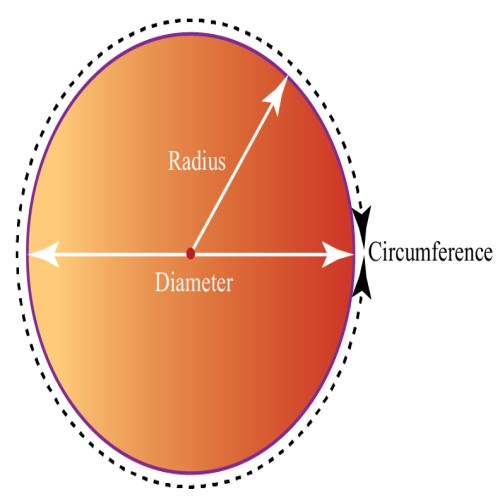
Diameter
DiameterDER
Departure end of runway (DER) The end of runway available for the ground run of an aircraft departure. The end of the runway that is opposite the landing threshold, sometimes referred to as the stop end of the runway.
departure sequencing program A program designed to assist in achieving a specified interval over a common point for departures.
departure time The time an aircraft becomes airborne.
depletion area That area on both sides of the junction of a semiconductor that varies between acting as a conductor and an insulator.
depolarization The absorption of generated gases in a chemical cell especially during the rest periods. This may cause an apparent rejuvenation of the cell.
deposition The direct transformation of a gas to a solid state, where the liquid state is bypassed.
depreservation A procedure that includes a special inspection and cleaning of aircraft parts removed from storage prior to being installed on the aircraft or engine.
depressants Drugs that reduce the body s functioning usually by lowering blood pressure, reducing mental processing, and slowing motor and reaction responses.
depression In meteorology, an area of low pressure, as in a trough. Often used to describe the stage of development of a cyclone, as in tropical depression.
depth gauge A device used to measure the depth of a hole, groove, or depression.
depth micrometer A form of micrometer caliper used to measure the depth of a recess.
derate To reduce the allowable power output of an engine or motor in order to extend the life of the equipment.
derichment An automatic leaning of the fuel-air mixture ratio to a ratio that will produce maximum power regardless of the heat released. Derichment occurs when the anti-detonation injection system injects liquid into the cylinders to remove this excess heat.
descent A reduction in altitude.
descent speed adjustments Speed deceleration calculations made to determine an accurate VTA. These calculations start at the transition point and use arrival speed segments to the vertex.
description of the skill or behavior The first part of a performance-based objective, which explains the desired outcome of instruction in measurable concrete terms.
desiccant 1. Any form of absorbent material. 2. A material used in a receiver-dryer to absorb moisture from the refrigerant.
desiccant bags Cloth containers of a silica gel desiccant packed with an engine or component that is placed in long-term storage.
design load The load for which a member is designed. It is usually obtained by multiplying a basic load by a specified design load factor.
design maneuvering speed (VA) The maximum speed at which you can use full, abrupt control movement without over stressing the airframe.
design size That size from which the limits of size are derived by the application of tolerances. When there is no allowance, the design size is the same as the basic size.
designated Being given the legal right and authority to perform certain specified functions by the Federal Aviation Administration.
designated examiner Any person authorized by the Administrator to conduct a pilot proficiency test or a practical test for an airman certificate or rating issued under FAR Part 61. Also, a person authorized to conduct a knowledge test under FAR Part 61.
desired course 1. True desired course A predetermined desired course direction to be followed (measured in degrees from true north). 2. Magnetic desired course A predetermined desired course direction to be followed (measured in degrees from local magnetic north).
desired track The planned or intended track between two waypoints. It is measured in degrees from either magnetic or true north. The instantaneous angle may change from point to point along the great circle track between waypoints.
destructive testing Testing that results in the destruction of the item being tested. For example, as a part of the certification process, aircraft wing structures are often loaded until they fail.
detail drawing A drawing that describes a single part in detail.
detail view An auxiliary view incorporated into a drawing to show additional details of a part.
detailed inspection item An item of a progressive inspection that requires close and careful inspection. May require disassembly or complete overhaul of a component or part.
detector That portion of an electronic circuit that demodulates or detects the signal.
detents The points along a line of movement of a control where distinct resistance to movement can be felt. These points are usually found at specific levels of importance to the operation of the controlled unit. An example would be the flap control lever, where detents could be assigned either to the number of degrees of travel .
detergent A cleansing material. An oil-soluble substance that holds insoluble matter in suspension. Detergent is sometimes referred to as soap, though detergent is chemically different than soap.
detergent oil A mineral oil to which ash-forming additives have been added to increase its resistance to oxidation. Because of its tendency to loosen carbon deposits, it is not used in aircraft engines.
deteriorate To become worse.
determiners In test items, words that give a clue to the answer. Words such as always and never are determiners in true-false questions. Since absolutes are rare, such words usually make the statement false.
detonation The sudden release of heat energy from fuel in an aircraft engine caused by the fuel-air mixture reaching its critical pressure and temperature. Detonation occurs as a violent explosion rather than a smooth burning process.
DETRESFA (distress phase) [ICAO] The code word used to designate an emergency phase wherein there is reasonable certainty that an aircraft and its occupants are threatened by grave and imminent danger or require immediate assistance.
Deutsch rivet A type of high-strength blind rivet.
developed width Width of the flat layout of a sheet metal part.
developer A powder that has been treated with a penetrating dye. When sprayed on a surface, the powder acts as a blotter, pulling penetrant out of any crack and exposing the crack.
development The main body of an instructional lesson that contains a detailed listing of the subject matter. Developing material in a structured way speeds up the process and makes it easier to follow a logical progression.
deviation A compass error caused by magnetic disturbances from electrical and metal components in the airplane. The correction for this error is displayed on a compass correction card placed near the magnetic compass in the airplane.
deviations 1. A departure from a current clearance, such as an off course maneuver to avoid weather or turbulence. 2. Where specifically authorized in the FARs and requested by the pilot, ATC may permit pilots to deviate from certain regulations.
dew Moisture that has condensed from water vapor. Usually found on cooler objects near the ground, such as grass, as the near-surface layer of air cools faster than the layers of air above it.
dew point The temperature at which air becomes saturated and produces dew or moisture.
Dewar flask A double-wall vacuum chamber used for the storage of liquid oxygen. Similar in principle to a Thermos bottle.
dewaxed oil A pure lubricating oil that has had waxy products removed during the refining process.
dewpoint The temperature to which air must be cooled to become saturated with water vapor.
DF approach procedure Used under emergency conditions where another instrument approach procedure cannot be executed. DF guidance for an instrument approach is given by ATC facilities with DF capability.
DF fix The geographical location of an aircraft obtained by one or more direction finders.
DF guidance Headings provided to aircraft by facilities equipped with direction finding equipment. These headings, if followed, will lead the aircraft to a predetermined point such as the DF station or an airport. DF guidance is given to aircraft in distress or to other aircraft which request the service. Practice DF guidance is provided when workload permits.
DF steer See DF guidance.
diagonal cutting pliers A wire cutting tool that cuts by chiseling action rather than by shearing.
diagram A graphic representation of an assembly or system.
dial An analog style instrument face.
dial indicator A precision linear measuring instrument whose indication is amplified and read on a circular dial.
dial-indicating torque wrench A hand-operated, deflecting beam-type torque wrench that uses a dial indicator to measure the deflection of the beam and reads directly in foot-pounds, inch-pounds, or meter-kilograms of torque.
diamagnetic material A material having extremely low magnetic permeability and considered to be nonmagnetic.
diameter The length of a chord passing through the center of a circular body.
diamond A hard substance consisting of nearly pure carbon. Some are of gem quality while others, of industrial quality, are used as cutting surfaces.
diamond chisel A cutting tool with a diamond shaped cutting face.
dibromodifluoromethane A fire extinguishing agent. Noncorrosive to aluminum, brass, and steel, it is less toxic than CO2. It is one of the more effective fire extinguishing agents available. Halon 1202.
dichromate solution Cr2O7. Used with zinc as zinc dichromate, a protective coating on metal parts. Sometimes referred to as gold iridite and found on many brake components. Also found in sodium dichromate (Na2Cr2O7) and Potassium dichromate (K2Cr2O7). Sodium dichromate is used to protect magnesium parts.
die 1. A tool used to shape or form metal or other materials. 2. A cutting tool used to cut threads on the outside of round stock.
die casting Method by which molten metal is forced into suitable permanent molds by hydraulic pressure in order to improve the grain structure of the resulting casting.
dielectric A material that will not conduct electricity.
dielectric constant Symbol: k. The characteristic of an insulator that determines the amount of electrical energy that can be stored in electrostatic fields.
dielectric qualities Insulating characteristics of a material.
dielectric strength A measure of a dielectric s ability to withstand puncture by electrical stresses.
diesel engine An internal combustion reciprocating engine whose ignition is achieved by the heat of compression rather than with an electrical ignition.
diesel fuel A fuel used in diesel engines. Very close in grade to jet-fuel and kerosene.
dieseling The continued firing of a reciprocating engine after the ignition has been turned off. Ignition is caused by incandescent particles in the combustion chamber.
difference between the symbol and the symbolized object The result of a word being confused with an unintended meaning. Words and symbols do not always represent the same thing to every person. Confusion results when the name of an object is not differentiated from the characteristics of the object itself.
differences training Training given to pilots who wish to transition between similar makes and models of a given manufacturer. For example, transitioning from a C-210 to a P-210 would require differences training for pressurization and turbocharging.
differential aileron travel The increased travel of the aileron moving up over that of the aileron moving down. The up aileron produces extra parasite drag to compensate for the additional induced drag caused by the down aileron. This balancing of the drag forces helps minimize adverse yaw.
differential compression check A test of the condition of an engine cylinder in which the amount of leakage past the piston rings and valves is determined by measuring the pressure drop across a calibrated orifice in the tester.
differential heating The heating of objects that have dissimilar heat capacities. See heat capacity.
differential pressure range of pressurization The range of cabin pressurization in which a constant differential is maintained between cabin pressure and the outside air pressure.
differential pressure switch A diaphragm and electrical microswitch arrangement that senses two pressures. If the difference in the two pressures exceeds a certain value, the microswitch illuminates a warning light.
differential-voltage reverse-current relay Removes a battery from and connects a generator to a load when the generator voltage is higher than the battery voltage. If the generator voltage falls below the battery voltage, the battery will be reconnected.
differentiating circuit A circuit that produces an output voltage proportional to the rate of change in input voltage.
diffuser 1. A duct used on a centrifugal flow turbine engine to reduce the velocity of the air and increase its pressure. 2. The divergent section of a gas turbine engine used to convert velocity energy of compressor discharge air into pressure energy.
diffuser vane A turning or cascading vane in a centrifugal flow engine diffuser used to change air from a radial direction as it leaves the impeller to an axial direction as it moves into the combustor.
diffusion 1. A process where particles of liquids, gases, or solids move from a region of higher concentration to one of lower concentration. 2. The scattering of light by a rough surface or by transmission through a translucent material.
diffusion welding A method of fusing materials to each other that relies on the two materials being pressed together under high pressure and the joint heated to less than melting temperature. The two pieces fuse together without the strength degradation found with normal welding.
digital readouts The presentation of information by an instrument in a digital form such as light emitting diodes or drums, rather than by the movement of a pointer over a numbered dial.
digital voltmeter A voltage measuring device that reads out in digital form rather than an analog dial.
digitize To change an analog reading to digital format (binary) that can be used by a computer.
dihedral The positive acute angle between the lateral axis of an airplane and a line through the center of a wing or horizontal stabilizer.
dikes A common expression for diagonal cutting pliers.
diluent A material used to change the concentration of some other substance without changing the characteristics of the base material. Common diluents include water-used to dilute salt water solutions and water-based paints and paint thinners used to dilute oil-based paints.
diluter-demand oxygen system An oxygen system that delivers oxygen mixed or diluted with air in order to maintain a constant oxygen partial pressure as the altitude changes.
dilution air The portion of combustion secondary air used to control the gas temperature immediately prior to its entry into the turbine nozzle area.
dimension A measurement of length, width, thickness, size, or degree listed within a drawing.
dimension line A light solid line broken at its midpoint for insertion of measurement indications. Dimension lines typically have outward pointing arrowheads at each end to show origin and termination of a measurement.
dimensional inspection The physical measurement of a part against a recognized standard to determine the amount of wear or deformation of the part.
dimmer A device that controls illumination. Can be either a simple rheostat or a variable pulse control.
dimming relay A relay that allows a light or lights in a circuit to be dimmed.
dimming rheostat A rheostat used to control the degree of brilliance of a lighting circuit.
dimpling A process used to indent the hole into which a flush rivet is to be installed. Some metals such as the harder aluminum alloys cannot be dimpled while the metal is cold because it is likely to crack. This type of metal must be hot dimpled. Hot dimpling equipment consists of a pair of electrically heated dies with a pilot that is inserted into the rivet hole. The pilot is passed through the hole and the heated dies are pressed together. The dies heat the metal enough to soften it and force it into the shape of the die.
diode A device that allows a flow of electrons in one direction but not the opposite. Also referred to as an electron check valve.
dip A vertical attraction between a compass needle and the magnetic poles. The closer the aircraft is to the pole, the more severe the effect. In the Northern Hemisphere a weight is placed on the south-facing end of the compass needle; in the Southern Hemisphere a weight is placed on the north-facing end of the compass needle to somewhat compensate for this effect.
dip coating A process of coating various products with a soft, rubber-like, plastic coating applied by dipping the product into a container of plastic coating. Often used to insulate the handles of hand tools.
DIP (Dual Inline Packaging) A standard configuration used for chips, DIP switches, etc., used on computer circuit boards.
dip soldering A process of lowering a printed circuit board onto the top of a container of molten solder in order to solder the leads of components that extend through the board.
dipole antenna A center-fed, half-wave antenna.
dipping A method of paint application in which a part is dipped into a tank of finishing material.
dipstick A bayonet-type gauge used for measuring the quantity of fluid in a reservoir.
direct Straight line flight between two navigational aids, fixes, points or any combination thereof. When used by pilots in describing off-airway routes, points defining direct route segments become compulsory reporting points unless the aircraft is under radar contact.
direct altitude and identity readout The DAIR System is a modification to the AN/ TPX-42 Interrogator System. The Navy has two adaptations of the DAIR System - Carrier Air Traffic Control Direct Altitude and Identification Readout System for Aircraft Carriers and Radar Air Traffic Control Facility Direct Altitude and Identity Readout System for land based terminal operations. The DAIR detects, tracks, and predicts secondary radar aircraft targets. Targets are displayed by
direct control In rotorcraft, the ability to maneuver a rotorcraft by tilting the rotor disc and changing the pitch of the rotor blades.
direct current (DC) A flow of electrons in one direction throughout a circuit.
direct question A question used for follow-up purposes, but directed at a specific individual.
direct shaft turbine A turbine engine in which the compressor and power section are mounted on a common driveshaft.
direct user access terminal service (DUATS) A computer-based program providing NWS and FAA weather products that are normally used in pilot weather briefings.
direct-cranking electric starter A high-torque, direct-current electric motor used to rotate a reciprocating aircraft engine for starting.
direct-current amplifier An electronic amplifier whose output is greater than and proportional to its DC input signal.
direct-current electricity Electricity that flows in one direction only. The current from solar cells, chemical cells (batteries), and thermocouples are direct-current (DC).
direct-current generator Electrical generator that has a DC output rather than an AC output. Since generators naturally produce AC, an electronic rectifier or a commutator (mechanical rectifier) must convert the AC output to DC.
direct-current motor A motor that operates on direct current (DC).
directional antenna An antenna that either transmits or receives signals in a field pattern other than omnidirectional. Usual patterns for waves that are longer than microwaves are either cardioid or figure-eight. Microwave antennae usually have narrow field patterns.
directional gyro An instrument used to determine heading in an aircraft. It does not indicate magnetic direction, but is gyro-stabilized to indicate direction after being set with reference to a magnetic compass.
directional reference In gas turbine engines, an industry standard to describe engine locations. The orientation is to look from the rear towards the front of the engine and use standard twelve hour clock reference points. Right Side and Left Side are also determined in this manner.
directional stability Stability about the vertical axis of an aircraft, whereby an aircraft tends to return, on its own, to flight aligned with the relative wind when disturbed from that equilibrium state. The vertical tail is the primary contributor to directional stability, causing an airplane in flight to align with the relative wind.
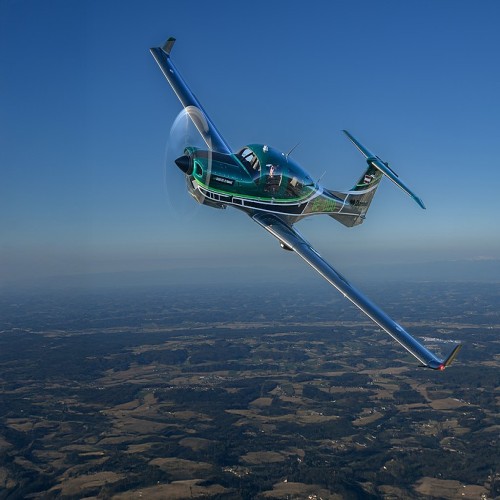
Diamond
Diamond Aircraft Dirigiblesdirigible A lighter-than-air aircraft. Dirigibles are constructed of a lightweight metal framework supporting a fabric gas envelope filled with helium (early dirigibles used flammable hydrogen). Dirigibles are propelled by engine-driven propellers and are capable of being maneuvered as opposed to balloons that drift with the prevailing wind.
disbond In composites, the separation of a bond from one structure to another. Many times this term is used for referring to the separation of the laminate skin to the core structure. It is also used for a separation from a fitting to the skin.
disc area In rotorcraft, the area swept by the blades of the rotor. It is a circle with its center at the hub and has a radius of one blade length.
discharge nozzle The portion of a carburetor that sprays the fuel into the intake airstream. Serves to atomize the fuel for best combustion.
disconnect To remove a load from a source of power or the removal of one electrical device from another by the use of a manually-operated switch or an automatic relay.
discreet Showing good judgment in conduct or speech.
discrete Not linear. A single action rather than action changing through a range.
discrete beacon code See discrete code.
discrete code As used in the Air Traffic Control Radar Beacon System (ATCRBS), any one of the 4096 selectable Mode 3/A aircraft transponder codes except those ending in zero zero; e.g., discrete codes: 0010, 1201, 2317, 7777; non-discrete codes: 0100, 1200, 7700. Non-discrete codes are normally reserved for radar facilities that are not equipped with discrete decoding capability and for other purposes such as emergencies (7700), VFR aircraft (1200), etc.
discrimination 1. In knowledge testing, able to detect small differences in understanding of material tested. 2. In a measuring instrument, means being able to detect small differences in understanding of material between individuals.
discriminator In a radio receiver, a demodulator that derives an audio signal from an incoming frequency- or pulse-modulated RF signal.
disengage To break the connection between mechanical or electronic components.
dish antenna A parabolic-shaped antenna used for transmitting and receiving microwave signals.
disk area A description of an area swept by the blades of a helicopter.
disk brake A brake that achieves brake action with a disk or disks attached to the rotating wheel being squeezed between brake pucks and caliper attached to the aircraft gear structure.
disk loading A ratio of the gross weight of a helicopter to the disk area.
dispersant A substance that keeps particles suspended in solution. An example is ashless dispersant (AD) oil. It contains a substance that causes ash and other contaminants suspended in the oil to be filtered out.
displaced threshold When the landing area begins at a point on the runway other than the beginning of the runway.
display tube An electron tube in which a stream of electrons (cathode rays) from an electron gun impinges upon a fluorescent screen, thus producing a bright spot on the screen. The electron beam is deflected electrically or magnetically to produce patterns on the screen. Also referred to as a cathode ray tube (CRT).
dissimilar metal corrosion Corrosion caused by the different atomic structures of metals. All metals are listed on a nobility chart from the most vulnerable to corrosion (least noble) to the least vulnerable (most noble). Magnesium and Zinc are the most vulnerable to corrosion, while gold and platinum are the least. When two metals are in contact with each other, the farther apart they are on the nobility chart, the more likely dissimilar metal corrosion will occur. All that is necessary is for an electrolyte (usually water) to contact the area where they touch for corrosion to occur.
dissipating stage Thirty minutes or so after a single-cell airmass thunderstorm begins, downdrafts spread throughout the lower levels of the cell. Without the necessary source of energy, (heat and moisture), the end of the thunderstorm is near and the clouds take on a strataform appearance.
dissipation contrail (distrail) A streak of clearing that occurs behind an aircraft as it flies near the top of, or just within a thin cloud layer.
dissolve To change form from a solid to become part of a liquid into which the solid is placed, so as to pass into solution. A crystal of salt dissolves when placed in water to become a new liquid, salt water.
dissymmetry of lift On a helicopter in forward flight, the advancing blade develops more lift at a given angle of attack than does the retreating blade. This is because the effective velocity of the relative wind is greater on the advancing blade. The blades of a helicopter are designed to flap in order to compensate for this.
Distant Early Warning Identification Zone (DEWIZ) An ADIZ (Air Defense Identification Zone) located over the coastal waters of Alaska.
distillate fuel A liquid hydrocarbon fuel that has been condensed from vapors of crude petroleum.
distillation A process whereby a liquid is heated until gases boil off, and the gases are then cooled until they condense back into a liquid. The process is used to purify water or to select certain petroleum products from a base liquid of crude oil. Distillation of individual petroleum products is possible since each boils off at a different temperature.
distilled water Water that has been heated until it boils and is then condensed back into a liquid. The effect purifies the water, leaving the non-water products behind.
distortion An undesired change in the waveform of the output of a circuit as compared with the input.
distractions During training flights, an instructor should interject realistic distractions to determine if students can maintain aircraft control while their attention is diverted.
distractors Incorrect responses to a multiple-choice test item.
distress A condition of being threatened by serious and/or imminent danger and of requiring immediate assistance.
distress frequencies Radio frequencies used for broadcasting distress signals. In aviation, the frequencies are 121.5 MHz, 243.0 MHz, and 406.0 MHz.
distributed pole motor An electric motor that has the stator windings wound into slots in the motor frame rather than on discrete pole shoes.
distributor That part of a high-tension magneto that distributes the high voltage to each spark plug at the proper time. Distributors for low-tension ignition systems distribute the low voltage to the transformers at each spark plug at the proper time for air-fuel ignition.
distributor block A dielectric block in a magneto that contains stationary electrodes to pick up the voltage from a rotating distributor brush or finger and deliver it to the proper ignition lead.
distributor brush A carbon brush used on a low-tension magneto to distribute the voltage to the distributor block as it rotates.
distributor finger A rotating conductor in the distributor of a high-tension magneto that delivers voltage to the distributor electrodes.
distributor valve A device that controls the inflation sequence of deicer tubes.
disturbance In meteorology, another name for an area that shows indications of cyclonic development, along with associated weather such as clouds and precipitation.
disuse A theory of forgetting that suggests a person forgets those things which are not used.
dither signal A varying signal that is mixed into a command signal and increases sensitivity of control. Dithering the commands to a stepper motor enables response with lessened hysteresis. The least significant bit of an analog-to-digital signal converter can be dithered to lessen ambiguity.
diurnal effects A daily variation (may be in temperature, moisture, wind, cloud cover, etc.) especially pertaining to a cycle completed within a 24-hour period, and which recurs every 24 hours.
diurnal variation Daily, especially pertaining to a cycle completed within a 24-hour period, and which recurs every 24 hours.
dive A steep, nose-down descent.
dive brake An auxiliary control that slows an aircraft during descent. Used to limit speed or to minimize shock cooling on reciprocating engines by allowing higher power settings during descent. Also referred to as a speed brake.
dive flaps Devices used on an airplane to produce drag without an attendant increase in lift. Also referred to as speed brakes.
divergence In meteorology, the condition that exists when the distribution of winds within a given area is such that there is a net horizontal flow of air outward from the region. The opposite of convergence.
divergent duct A cone-shaped passage or channel in which a gas can be forced to flow from its smallest area to its largest area resulting in decreased velocity and increased pressure.
diverse vector area In a radar environment, that area in which a prescribed departure route is not required as the only suitable route to avoid obstacles. The area in which random radar vectors below the MVA/MIA, established in accordance with the TERPS criteria for diverse departures obstacles and terrain avoidance, may be issued to departing aircraft.
dividend A number to be divided.
dividers A measuring tool having two movable legs, each with sharp points. Dividers can be used to transfer measurements or to divide straight or uniformly curved lines into an equal number of parts.
diving blade A blade track of a helicopter s main rotor that lowers with an increase in revolutions per minute (RPM).
divisor The number by which a dividend is divided.
DME fix A geographical position determined by reference to a navigational aid which provides distance and azimuth information. It is defined by a specific distance in nautical miles and a radial, azimuth, or course (i.e., localizer) in degrees magnetic from that aid.
DME separation Spacing of aircraft in terms of distances (nautical miles) determined by reference to distance measuring equipment (DME).
dock An enclosed work area where airplanes can be placed for repairs.
docking Placing an airplane in a hangar where dock platforms are used to facilitate maintenance.
DOD FLIP Department of Defense Flight Information Publications used for flight planning, enroute, and terminal operations. FLIP is produced by the National Imagery and Mapping Agency (NIMA) for worldwide use. United States Government Flight Information Publications (enroute charts and instrument approach procedure charts) are incorporated in DOD FLIP for use in the National Airspace System (NAS).
doghouse A mark on a turn and slip indicator that resembles a doghouse. It is located one needle width away from the center and when the pointer aligns with it a standard rate of turn is being made.
dolly A low mobile platform on wheels or casters used for moving heavy aircraft components.
dolly block Variously shaped anvils used to form and finish sheet metal parts.
dolphin flight In gliders, straight flight following speed-to-fly theory. Glides can often be extended and average cross-country speeds increased by flying faster in sink and slower in lift without stopping to circle.
domain Spheres of magnetic influence around molecules of metals containing iron. Magnetic fields.
domains of learning In addition to the four basic levels of learning, psychologists have developed three domains of learning: cognitive, psychomotor, and affective. These domains represent what is to be gained during the learning process, either knowledge, skills, or attitudes.
domestic airspace Airspace which overlies the continental land mass of the United States plus Hawaii and U.S. possessions. Domestic airspace extends to 12 miles offshore.
donor An impurity used in a semiconductor to provide free electrons as current carriers. A semiconductor with a donor impurity is said to be type N.
donor atom An atom of a material that has more electrons than needed for normal covalent bonding. Used with germanium or silicon in semiconductors to create diodes and transistors.
donor impurity The elements added to germanium or silicon to create diodes and transistors.
dope The finishing material used on fabric surfaces that tautens, strengthens, and weatherproofs the fabric.
dope proofing Coating the structural elements of a fabric-covered aircraft to protect them from the solvents in the dope.
dope roping A condition in the application of dope in which the surface dries while the dope is being brushed. This results in a stringy, uneven surface.
doped-in panel An entire panel between ribs and from the trailing edge to the leading edge that is doped in place, but includes rib stitching on sections over the ribs.
doped-on fabric repair Repair of a small section of a fabric structure. Typically applied by doping on a patch over a small hole or tear in the fabric.
doped-on fabric repair The repair of small damage to a fabric covered aircraft by doping a patch directly to the fabric covering using no other attachment
dope-proof paint A paint applied to protect structure from being damaged by the solvents in the dope.
Doppler effect The effect where any oscillating frequency, whether sound or radar beams, are compressed (increased in frequency) as the source and the receiver move closer to each other and decompressed (lowered in frequency) when moving apart.
Doppler radar A radar system that indicates speed by measuring the amount of Doppler shift and equating it to the speed that the measured object is moving toward or away from the measuring point.
dorsal Situated near the rear or on the back of an object.
dorsal fin A fixed vertical control surface on the upper surface of an aircraft. Usually on the rear of an aircraft and tapering into the vertical stabilizer, it increases the directional stability of the aircraft.
double flare On rigid fluid lines, a connecting flare where the tubing is bent back on itself creating a double thickness. Only allowed on soft materials in small diameters.
double magneto A single magneto housing that holds one rotating permanent magnet and one cam with two sets of breaker points, two condensers, two coils, and two distributors. For all practical purposes, this constitutes two ignition systems. Also called a dual magneto.
double spread -The spreading of an adhesive equally divided between the two surfaces to be joined.
double-acting actuator An actuator that uses hydraulic or pneumatic power to move the piston in both directions.
double-acting hand pump A hydraulic hand pump that moves fluid with both the forward and rearward movement of the handle.
double-backed tape Adhesive tape that is sticky on both sides.
double-cut file A file with two sets of parallel grooves, cut at an angle to each other.
double-cut saw A saw with teeth shaped so that it cuts in both the down and return strokes.
double-loop rib-stitching Attachment of fabric to the aircraft structure using a double loop of rib-stitch cord at each stitch.
double-pole, double-throw (DPDT) switch A switch that controls two circuits, selecting either of two positions (and sometimes a third, off position) for each circuit.
double-pole, single-throw (DPST) switch A switch that controls two circuits, selecting either off or on.
doubler plies In composites, a patch that extends over the sanded out area to the existing structure which strengthens the repair. A doubler can also be used where fasteners are used or where there are abrupt load transfers.
double-row radial engine A radial engine having two rows of cylinders and using two master rods attached to a single crankshaft having two throws.
double-sided tape Tape with adhesive on both sides.
double-tapered wing A wing where both the chord and the thickness ratio vary along the span.
double-throw switch A switch that selects one circuit from two possible circuits. Can have a center off position.
dovetail A method of joining two materials where one has a base shaped like a widened, inverted, triangle that fits into a similarly shaped cutout in the adjoining piece. Often found in attaching turbine and compressor blades to rotor disks.
dovetail fit A shape similar to a cabinet maker s interlocking dovetail joint. Primarily used to fit compressor blades into a compressor disk.
Dow 19 treatment An acid treatment for magnesium alloy parts, which produces an oxide film that inhibits the formation of harmful corrosion.
Dow metal A series of magnesium alloys produced by the Dow Chemical Corporation.
dowel A short wood or metal rod used to hold objects together.
downburst A strong downdraft which induces an outburst of damaging winds on or near the ground. Damaging winds, either straight or curved, are highly divergent. The sizes of downbursts vary from 1/2 mile or less to more than 10 miles. An intense downburst often causes widespread damage. Damaging winds, lasting 5 to 30 minutes, could reach speeds as high as 120 knots.
downdraft Any downward flow of air, for example, the flow downwind of buildings or hills, or the sinking air near thunderstorms especially in areas of precipitation.
downdraft carburetor A carburetor mounted on top of the engine in which the flow of air into the engine is downward through the venturi.
downlock pin A landing gear safety device consisting of a pin that, when placed into a hole in the landing gear apparatus, prevents the gear from retracting or collapsing while on the ground. The downlock pin must be removed before flight.
downlocks Mechanical locks that hold a retractable landing gear in the on or down position, preventing its retracting when the hydraulic pressure is released.
downslope wind Wind moving down a slope, the wind can be either a cold downslope wind or a warm downslope wind.
downtime The time an airplane is out of commission.
downwash 1. Air deflected perpendicular to the motion of the airfoil. 2. Air that has been accelerated downward by the action of the main rotor of a helicopter.
downwash angle The angle the air is deflected downward by an airfoil. It is the difference between the angle of air approaching the airfoil and the air leaving it.
downwind The direction in which the wind is blowing.
downwind landing Landing in a direction so that the wind is coming from behind the aircraft.
downwind leg A flight path parallel to the landing runway in the direction opposite to landing. The downwind leg normally extends between the crosswind leg and the base leg.
draftsman A person who makes mechanical drawings.
drag An aerodynamic force on a body acting parallel and opposite to the relative wind. The resistance of the atmosphere to the relative motion of an aircraft. Drag opposes thrust and limits the speed of the airplane.
drag brace 1. In main landing gears, a device that acts as side support for shock strut. 2. An adjustable brace used to position the main rotor in a fixed position preventing movement of the blade at the attached point on semi-rigid rotors.
drag chute A relatively small parachute attached to the rear of an aircraft. Drag chutes are deployed during landing rolls to help slow an aircraft and sometimes in flight to increase drag.
drag coefficient One of the aerodynamic characteristics of an airfoil section that illustrates the increase in induced drag as the angle of attack is increased.
drag demonstration The demonstration of the effects of drag on a multi-engine airplane from landing gear, flaps, and windmilling propellers.
drag hinge The hinge on a helicopter rotor blade parallel to the axis of rotation of the blade. It allows the blade to move back and forth on a horizontal plane, minimizing the blade vibrations.
drag wire A diagonal, load-carrying member of a Pratt truss wing. It runs from the front spar inboard to the rear spar outboard and carries tensile loads that tend to drag back on the wing.
dragging brakes Brakes that have not fully released and that maintain some friction as the wheel rolls. Dragging brakes cause serious overheating.
drain The electrode in a field effect transistor (FET) that corresponds to a collector of the ordinary transistor.
drain can A container to catch fuel drained from the main fuel manifold after shutdown of a turbine engine.
drain hole A hole placed in the lower surface of a wing or other sealed component to provide ventilation and allow the drainage of any accumulated moisture.
drain plug A removable plug located at the lowest point of a system used for drainage purposes.
drain valve A spring-opened and burner pressure-closed mechanical valve located in the lower portion of the combustor outer case, installed to drain off puddled fuel after an aborted start or after shutdown. Also referred to as a drip valve.
drainage wind A shallow, small scale current of cold dense air accelerated down a slope by gravity.
drape In composites, the ability of a fabric or pre-preg to conform to a contoured surface.

Drift
DriftdownDrivefiling.
draw filing A method of hand filing in which the file is grasped with both hands and moved crosswise over the work. Draw filing produces an exceptionally smooth surface.
draw knife A knife with handles on either end, designed to be pulled (drawn) toward the user.
draw set A riveting tool used to force sheets of metal together before they are riveted.
drawing A graphic method of conveying information.
drawing number The number assigned to each drawing in a set of drawings and located in the lower right-hand corner of the title block. It identifies the drawing and is usually associated with the part number of the component or part depicted in the drawing.
drift angle The horizontal angle between the longitudinal axis of an aircraft and its path relative to the ground.
drift magnet A small permanent magnet in a fixed-coil ratiometer indicator. Used to drift or pull the pointer off scale when the instrument is not energized.
drift punch A pin punch with a long straight shank.
driftdown The unavoidable descent due to the loss of an engine when above the engine-out absolute ceiling of an airplane. If the airplane is above its engine-out altitude limits, it is incapable of maintaining altitude with one engine inoperative, and the airplane will drift down to the engine-out absolute ceiling.
drill 1. A rotary cutting tool driven with a drill motor or a drill press. 2. To sink a hole with a drill, usually a twist drill. 3. A pointed, rotating cutting tool.
drill bushing Hardened steel sleeves inserted in jigs, fixtures, or templates to provide a guide for drills so holes will be straight and in the proper location.
drill chuck The clamp on the spindle of a drill motor or drill press into which the drill bit is fastened.
drill jig A device that holds parts or units in the proper position while holes are being drilled.
drill press A power-driven drilling device that includes a table for holding the material, a chuck for holding the drill bit, a motor for driving the chuck, and a means of feeding the drill into the material.
drill rod A high carbon tool steel. It has a combination of hardness and toughness for good wear characteristics.
drilling burrs Sharp ragged particles of metal left by the drill when a hole is made.
drip pan A shallow pan placed beneath an engine to catch dripping fluids.
drip valve A spring-opened and burner pressure-closed mechanical valve located in the lower portion of the combustor outer case, installed to drain off puddled fuel after an aborted start or after shutdown. Also referred to as a drain valve.
drip-stick gauge A stick used as a visual means of checking the fuel level from beneath the wing of a large jet transport aircraft. The stick is released and pulled downward until fuel drips from its end, signifying that the inside is even with the top of the fuel in the tank. The fuel quantity is read where the drip-stick enters the wing.
drive coupling A coupling between the accessory section of an engine and the component that is driven. It is used to absorb torsional shock or to serve as a safety link that will shear in case the component seizes.
drive fit A fit between mating parts in which the part to be inserted into the hole is larger than the hole and therefore must be driven or forced together with the other part. Also referred to as an interference fit.
drive gear In a gear train, the gear nearest the power source. Meshes with and drives (turns) the driven gear.
drive screws Plain-headed, self-tapping screws used for attaching name plates to castings or to plug holes in tubular structures through which rust-preventative oil has been forced.
driven gear In a gear train, the gear being driven (turned) by the drive gear.
driver In electronics, a device that supplies input power to an output device.
driver head A head on a bolt or screw designed for driving the fastener by means of a tool such as a screwdriver or Allen wench rather than a conventional wrench.
drizzle A form of precipitation. Very small water drops that appear to float with the air currents while falling in an irregular path (unlike rain, which falls in a comparatively straight path, and unlike fog droplets which remain suspended in the air).
drogue A device that provides drag to a moving body. For boats, a sea anchor provides drag that stabilizes the position of the boat in relation to current. In aircraft a drogue chute stabilizes or slows the airplane. A drogue receptacle for refueling is a basket-shaped device into which another aircraft can insert a probe to receive fuel from an aerial refueling tanker.
drone An unmanned aircraft guided by remote control. Newest terminology refers to these vehicles as UAVs (Unmanned Aerial Vehicles) and RPVs (Remote Piloted Vehicles).
droop Refers to the RPM loss that occurs when a fuel control flyweight governor speeder spring is extended and weakened. It takes less flyweight force to come to equilibrium with the weaker spring force and consequently slightly less speed results. The inability of the engine power to increase as the rotor pitch is increased causes the rotor to slow down.
droop compensator In helicopters, a device that automatically adds power when collective pitch is increased in order to compensate for the increased load placed on the engine.
droop restraint A device used to limit the droop of the main rotor blades at low RPM.
drop cloth A plastic or fabric sheet used to protect floors, furniture, or other objects from paint drips or overspray from painting operations.
drop forging A process of forcing semi-molten metal to flow into a mold or die under the pressure of repeated hammer blows.
drop hammer A large, heavy, hammer-type, metal-forming machine that uses sets of matched dies to form compound curved sheet metal parts. The metal is placed over the female die and the male die is dropped into it, forcing the metal to conform to the shape of the two dies.
drop tank An externally mounted fuel tank designed to be dropped in flight.
drop-forged part A steel part that has been formed by the drop-forging process.
droplets Tiny drops of liquid.
drop-out voltage In electricity, the minimum voltage that can be applied to a device without it dropping from the circuit. Usually used in referring to relays that de-energize when control voltage drops below a certain drop-out voltage.
dropping resistor A resistor used to decrease the voltage in a circuit.
drum brake A friction device used on some aircraft landing gear. Consists of a cylindrical metal drum attached to the wheel and shoe-shaped friction pads attached to the landing gear. This device is applied against the inner side of the drum when braking action is desired.
dry adiabat A line on a thermodynamic chart representing a rate of temperature change at the dry adiabatic lapse rate.
dry adiabatic lapse rate (DALR) The rate of decrease of temperature with height of unsaturated air lifted adiabatically (not heat exchange). Numerically the value is 3C or 5.4F per 1000 .
dry adiabatic process The cooling of an unsaturated parcel of air by expansion and the warming of a parcel of air by compression.
dry air pump An engine-driven air pump using carbon vanes and that does not require any lubricating oil in the pump for sealing or cooling.
dry bulb A name given to an ordinary thermometer used to determine temperature of the air; also used as a contraction for dry-bulb temperature. Compare wet bulb.
dry clearance Clearance adjusted in adjusting valve tappets without any oil in the tappet body.
dry fiber In composites, a condition in which fibers are not fully encapsulated by resin during pultrusion.
dry ice Frozen carbon dioxide (CO2). Dry ice sublimates from solid to gas without becoming a liquid. It is used for non-mechanical cooling of perishables or for cooling parts for an interference fit.
dry laminate In composites, a laminate containing insufficient resin for complete bonding of the reinforcement.
dry line The moisture boundary, where the moisture content of the air changes rapidly from one side to the other.
dry operation The operation of an aircraft engine equipped with a water injection system, but operating without the benefit of water injection.
dry rot The condition of wood attacked by fungus. Causes brittleness and decay.
dry wash Aircraft cleaning method in which cleaning material is applied by spray, mop, or cloth and removed by mopping or wiping with a clean, dry cloth. It is used to remove airport film, dust, and small amounts of dirt and soil.
dry-bulb temperature The temperature of the air without the effect of water evaporation.
dry-cell battery Common name for a carbon-zinc, single-cell battery. D-, C-, AA-, and AAA-cells are all dry-cell batteries. They are not rechargeable or serviceable.
dry-charge battery The common way of shipping a lead-acid battery. The battery is fully charged, drained, and the cells are washed and dried. The battery is sealed until it is ready to be put into service. Electrolyte is added and the battery is given a freshening charge, making it ready for service.
dry-chemical fire extinguisher An extinguishing agent such as sodium bicarbonate used as a compressed, non-flammable gas as a propellant. Dry-chemical fire extinguishers are usually rated for multiple purpose use.
dry-sump engine An engine in which most of the lubricating oil is carried in an external tank and is fed to the pressure pump by gravity. After it has lubricated the engine, the oil is pumped back into the tank by an engine-driven scavenger pump.
dry-sump system An oil system in which the oil is contained in a separate tank and circulated through the engine by pumps.
dual controls Two sets of flight controls for an aircraft that allow the airplane to be flown from either of two positions.
dual indicator An aircraft instrument that provides two sets of indications on one dial. For example, the oil pressure of both engines can be shown on one indicator using one dial and two pointers.
dual magneto A single magneto housing that holds one rotating permanent magnet and one cam with two sets of breaker points, two condensers, two coils, and two distributors. For all practical purposes, this constitutes two ignition systems.
dual rotor system The rotor system of a helicopter in which there are two separate main rotors spinning in such a direction that they tend to cancel the torque of each other.
dual-spool compressor A turbine engine with two separate compressors, each with its own stage of turbine. The low-pressure compressor is N1 and the high-pressure compressor is N2.
duckbill pliers Flat-nosed pliers used extensively in safety wiring.
duct A hollow tube used to transmit and direct the flow of air through an aircraft.
duct support systems Methods and apparatus used to support cabin air supply ducts.
ducted-fan engine An engine-propeller combination that has the propeller enclosed in a radial shroud. Enclosing the propeller improves the efficiency of the propeller.
ductility The property that allows metal to be drawn into thinner sections without breaking.
ductwork The channels or tubing through which the cabin air supply is distributed.
due regard A phase of flight wherein an aircraft commander of a State-operated aircraft assumes responsibility to separate his aircraft from all other aircraft.
dump chute In an aircraft fuel system, a device designed to carry dumped fuel away from the aircraft to prevent it from being ignited by static electricity or engine exhaust.
dump valve The valve that allows the fuel in a tank to be dumped in flight in order to decrease the landing weight of the aircraft.
duo-servo brakes Brakes that use the momentum of the aircraft to wedge the lining against the drum and assist in braking when the aircraft is rolling either forward or backward.
duplex bearing A matched pair of bearings with a surface ground on each to make contact with the other matched surface. When three bearings are used they are called triplex bearings; when four bearings are used they are called quadplex bearings, and so on. These are usually ball bearings.
duplex fuel nozzle A turbine engine fuel nozzle that has two different spray patterns: one for low airflow and one for high airflow. This keeps the flame pattern centered in the combustor section.
duplex operation In communications, the capability of all stations to transmit and receive simultaneously. Telephone communication is a duplex operation. For radio communication to be a duplex operation, two frequencies are required.
duplexer A circuit that makes it possible to use the same antenna for transmitting and receiving without allowing excessive power to flow to the receiver.
durability The ability to withstand hard wear.
Dural A high strength, low weight alloy consisting of 95% aluminum, 4% copper, and 1% magnesium.
Duralumin The original name of the aluminum alloy now known as 2017. First produced in Germany and used in its Zeppelin fleet of WWI.
dust Small soil particles suspended in the atmosphere.
dust devil An unusual, frequently severe weather condition characterized by strong winds and dust-filled air over an extensive area.. A small vigorous circulation that can pick up dust or other debris near the surface to form a column hundreds or even thousands of feet deep. At the ground, winds can be strong enough to flip an unattended aircraft. Dust devils mark the location where a thermal is leaving the ground.
Dutch roll A combination of rolling and yawing oscillations that normally occurs when the dihedral effects of an aircraft are more powerful than the directional stability.
duty cycle The comparison of the time a piece of equipment can operate to how long it must cool before being operated again. A device that can operate one minute before having to cool off for four minutes would have a 25% duty cycle.
duty runway See runway in use and active runway.
D-value Departure of true altitude from pressure altitude; obtained by algebraically subtracting true altitude from pressure altitude.
DVFR flight plan A flight plan filed for a VFR aircraft which intends to operate in airspace within which the ready identification, location, and control of aircraft are required in the interest of national security.
DVOR (Doppler VOR) Provides increased accuracy compared to a conventional VOR. Employed in areas such as mountainous terrain.
Dwell angle In ignition systems, the time that the ignition points remain closed. During this time, the magnetic field builds in the primary coil. When the points open, the magnetic field collapses, creating a much higher voltage in the secondary coil, which is connected to the spark plugs.
dye A material added to a substance to add or change its color. In aviation, dye is added to aviation fuels to identify the grade of fuel.
dye penetrant inspection An inspection method for surface cracks in which a penetrating dye is allowed to enter any cracks present and is pulled out of the crack by an absorbent developer. A crack appears as a line on the surface of the developer.
dynafocal engine mount A mount that attaches an aircraft engine onto the airframe in which the extended center line of all of the mounting bolts would cross at the center of gravity of the engine and propeller combination.
dynamic Continuous review, evaluation, and change to meet demands.
dynamic balance The condition that exists in a rotating body in which all of the rotating forces are balanced within themselves and no vibration is produced by the body in motion.
dynamic braking A method of slowing the rotation of equipment driven by an electric motor. Braking is accomplished by disconnecting electrical power from the motor and replacing it with a resistance load. The inertia of the motor/equipment causes the motor to become a generator and the resistance absorbs the electrical output of the motor and thus resists and slows the rotation.
dynamic damper A counterweight on the crankshaft of an aircraft engine. It is attached in such a way that it can rock back and forth while the shaft is spinning and absorb dynamic vibrations. In essence, it changes the resonant frequency of the engine/propeller combination.
dynamic factor The ratio between the load carried by any part of an aircraft when accelerating and the corresponding basic load.
dynamic load The effective weight of an aircraft. It is the actual weight of the aircraft multiplied by the load factor (G-load). When an aircraft is sitting on the ramp, the load factor is one and the dynamic load equals the weight of the aircraft. In flight, if the aircraft is experiencing a load factor of two (as it would be if in a level 60 bank turn)
dynamic microphone A device used to convert acoustic pressure waves into electrical waves. Incoming sound impinges a movable diaphragm that has a coil of wire on it. The coil is in a magnetic field and its movement produces an electrical signal that correlates to the sound.
dynamic pressure The product 1/2 p V2, where p is the density of the air and V is the relative speed of the air.
dynamic restrictions Those restrictions imposed by the local facility on an as needed basis to manage unpredictable fluctuations in traffic demands.
dynamic rollover The tendency of a helicopter to continue rolling when the critical angle is exceeded, if one gear is on the ground, and the helicopter is pivoting around that point.
dynamic stability The property of an aircraft that causes it, when disturbed from straight and level flight, to develop forces or moments that restore the original condition of straight and level.
dynamometer An instrument used to measure torque force or power.
dynamotor A machine with two windings on a single armature that simultaneously operates as a motor with one of the windings and as a generator with the other. The armature windings are usually different so that the voltage on the generator side is different from the voltage on the motor side and the machine acts as a rotary transformer.
dynatron effect The area of operation in a tetrode electron tube where plate current decreases as plate voltage increases. This effect is caused by secondary electrons to the screen grid.
dyne A unit of force. Dyne is the amount of force required to accelerate one gram of mass one centimeter per second squared. In science, the term is slowly becoming obsolete.
dynode The elements in a multiplier tube that emit secondary electrons.
Dzus fastener A patented form of cowling fastener in which a slotted stud is forced over a spring steel wire and rotated to lock the wire in a cam.
ANGLE OF INCIDENCE - Angle at which an airfoil surface is normally set in relation to the fore and aft axis of the airframe structure.
AWACS Awacs a mobile, long-range radar surveillance and control centre for air defense. The system, as developed by the U.S. Air Force, is mounted in a specially modified Boeing 707 aircraft. Its main radar antenna is mounted on a turntable housed in a circular rotodome 9 m in diameter, elliptical in cross section, and 1.8 m deep at its centre.