Alpha
Bismillah
Charlie Delta
Echo
Foxtrot
Golf
Hotel
insaallah Juliett
Kilo
Lima
Mike
November
Oscar
Piaggio
Quebec
Romeo
Sierra
Turks Uniform
Victory Water X-ray
Yankee Zulu Main Page

OBJECKTIVITY
objectivity
Characteristic of a measuring instrument when it is free of any personal bias by the person grading the test.oblique angle An angle other than a right angle. A view on a mechanical drawing at other than normal front, rear, top, bottom, and side angles.
oblique photography An aerial photograph taken with a camera pointed at an angle other than straight down.
oblique shock wave A shock wave attached to the bow and tail of an aircraft flying at a speed greater than the speed of sound. The sides of the oblique shock wave form the Mach cone.
oblique triangle A three-sided, closed figure that does not contain a right angle.
oblong shape An object that is longer than it is broad. An elongated circle or square.
obscuration Denotes sky hidden by surface-based obscuring phenomena and vertical visibility restricted overhead.
observation aircraft Military aircraft that fly behind enemy lines and observe the movement of troops or supplies.
obsolete Something no longer in use or in practice.
obstacle Something that impedes progress or achievement. In avation, an object or terrain at a fixed geographical location (or which is expected to be at a fixed location) within a prescribed area with reference to which vertical clearance is or must be provided during flight operation.
obstacle clearance altitude (height) OCA(H) (ICAO) The lowest altitude (OCA), or alternatively the lowest height above the elevation of the relevant runway threshold or above the aerodrome elevation as applicable (OCH), used in establishing compliance with the appropriate obstacle clearance criteria.
obstacle clearance surface (OCS) An inclined or level surface associated with a defined area for obstruction evaluation.
obstacle departure procedure (ODP) A departure procedure that simply provides obstacle clearance and does not include ATC related climb requirements.
obstacle free zone (OFZ) A three dimensional volume of airspace that protects for the transition of aircraft to and from the runway. The OFZ clearing standard precludes taxiing and parked airplanes and object penetrations, except for frangible NAVAID locations that are fixed by function. Additionally, vehicles, equipment, and personnel may be authorized by air traffic control to enter the area using the provisions of FAAO 7110.65, Para 3-1-5, VECHILES/ EQUIPMENT/PERSONNEL ON RUNWAYS. The runway OFZ and, when applicable, the inner-approach OFZ, and the inner-transitional OFZ, comprise the OFZ.
a. Runway OFZ The runway OFZ is a defined volume of airspace centered above the runway. The runway OFZ is the airspace above a surface whose elevation at any point is the same as the elevation of the nearest point on the runway centerline. The runway OFZ extends 200 feet beyond each end of the runway. The width is as follows:
1). For runways serving large airplanes, the greater of:
(a) 400 feet, or
(b) 180 feet, plus the wingspan of the most demanding airplane, plus 20 feet per 1,000 feet of airport elevation.
2). For runways serving only small airplanes:
(a) 300 feet for precision instrument runways.
(b) 250 feet for other runways serving small airplanes with approach speeds of 50 knots, or more.
(c) 120 feet for other runways serving small airplanes with approach speeds of less than 50 knots.
b. Inner-approach OFZ The inner-approach OFZ is a defined volume of airspace centered on the approach area. The inner-approach OFZ applies only to runways with an approach lighting system. The inner-approach OFZ begins 200 feet from the runway threshold at the same elevation as the runway threshold and extends 200 feet beyond the last light unit in the approach lighting system. The width of the inner-approach OFZ is the same as the runway OFZ and rises at a slope of 50 (horizontal) to 1 (vertical) from the beginning.
c. Inner-transitional OFZ The inner transitional surface OFZ is a defined volume of airspace along the sides of the runway and inner-approach OFZ and applies only to precision instrument runways. The inner-transitional surface OFZ slopes 3 (horizontal) to 1 (vertical) out from the edges of the runway OFZ and inner-approach OFZ to a height of 150 feet above the established airport elevation.
obstruction Any object/obstacle exceeding the obstruction standards specified by FAR 77, Subpart C.
obstruction clearance limit (OCL) (ICAO) The height above aerodrome elevation below which the minimum prescribed vertical clearance cannot be maintained either on approach or in the event of a missed approach.
obstruction light A light, or one of a group of lights, usually red or white, mounted on a surface structure or natural terrain to warn pilots of the presence of a flight hazard.
obtuse angle An angle greater than 90 . Also referred to as an open angle.
obtuse triangle A triangle that contains an angle greater than 90 .
occluded front The surface front after a cold front overtakes a warm front.
occlusion process The process by which a cold front overtakes the warm front in a wave cyclone, pushing the warm sector air aloft.
oceanic airspace Airspace over the oceans of the world, considered international airspace, where oceanic separation and procedures per the International Civil Aviation Organization are applied. Responsibility for the provisions of air traffic control service in this airspace is delegated to various countries, based generally upon geographic proximity and the availability of the required resources.
oceanic display and planning system An automated digital display system that provides flight data processing, conflict probe, and situation display for oceanic air traffic control.
oceanic navigational error report A report filed when an aircraft exiting oceanic airspace has been observed by radar to be off course. ONER reporting parameters and procedures are contained in FAAO 7110.82, Monitoring of Navigational Performance In Oceanic Areas.
oceanic transition route An ATS route established for the purpose of transitioning aircraft to/from an organized track system.
O-condition A temper designation. The soft or annealed temper condition of a wrought metal product.
octagon An eight-sided figure with each side having the same length.
octahedron A solid design or figure with eight plane surfaces.
octal number system In digital electronics, the number system based on eight units (0-7).
octane rating The rating system of aviation gasoline with regard to its antidetonating qualities. Fuel with an octane rating of 87 is made up of a mixture of 87% isooctane and 13% heptane.
octave Musical interval of eight tones or notes. The interval between two frequencies having a ratio of 2 to 1.
odd harmonics The odd multiples of a frequency.
oersted A magnetomotive force of 1 gilbert per square centimeter or 79.577 ampere-turns per meter.
off course A term used to describe a situation where an aircraft has reported a position fix or is observed on radar at a point not on the ATC-approved route of flight.
off-idle mixture The fuel-air mixture ratio of an aircraft engine in the transition period between idle RPM utilizing the idle jets and higher power settings using the main metering system.
off-route vector A vector by ATC which takes an aircraft off a previously assigned route. Altitudes assigned by ATC during such vectors provide required obstacle clearance.
offset parallel runways Staggered runways having parallel centerlines.
offset rivet set A rivet set used in a hand-held pneumatic riveting gun in which the head is offset from the center line of the shank. Offset rivet sets are used in locations where a straight set cannot be used.
offset screwdriver A screwdriver in which the blades are oriented at 90 to the shank. An offset screwdriver is used to turn screws when there is not enough clearance in line with the screw to allow a regular screwdriver to be used.
offshore control airspace area That portion of airspace between the U.S. 12 NM limit and the oceanic CTA/FIR boundary within which air traffic control is exercised. These areas are established to provide air traffic control services. Offshore/Control Airspace Areas can be classsified as either Class A airspace or Class E airspace.
off-the-shelf item Any standard item, part, or program that can be used in place of a custom part.
ohm (Ώ) The unit of electrical opposition equal to the resistance of a circuit in which an electromotive force of one volt will maintain a current of one ampere.
ohmmeter An electrical measuring instrument used to measure resistance in a circuit. An ohmmeter measures resistance by calculating the amount of current that flows when a known voltage is applied across an unknown resistance.
Ohm s law The law that establishes the relationship between current, voltage, and resistance in an electrical circuit. The current in a circuit is directly proportional to the voltage causing it and inversely proportional to the resistance of the circuit.
ohms-per-volt The measure of a voltmeter s sensitivity. It is found by dividing the number one by the amount of current needed to deflect the meter pointer full scale.
oil canning A condition of the sheet metal skin of an aircraft that is slightly bulged or stretched between rows of rivets. This bulge will pop back and forth in the same way the bottom of an oil can pops back and forth.
oil circuit breaker A circuit breaker used in high amperage circuits such as municipal power plants and distribution grids. Oil is used to quench the arcs that form when connecting and disconnecting such circuits.
oil control ring The piston ring below the compression rings used to control the amount of oil between the piston and the cylinder wall of an aircraft reciprocating engine. It is usually a multi-piece ring and normally fits into a groove with holes to drain part of the oil back to the inside of the piston.
oil cooler 1. A heat exchanger used to cool the oil. 2. A radiator used to maintain normal operating temperature of lubricating oil. Some coolers utilize air as a cooling agent; others use fuel.
oil dilution The process of thinning engine oil by adding fuel to it at shutdown to make starting easier in cold weather.
oil film A light coating of oil sufficient to prevent metal-to-metal contact or to protect metal parts from corrosion.
oil filter A device for removing impurities and foreign matter from the lubricating oil used in an aircraft engine.
oil hardening A process of hardening steel using oil as a quenching agent. When red hot steel is immersed in a bath of oil, the steel cools more slowly than by other methods and gives the steel a more uniform hardness.
oil inlet The fitting on an aircraft engine through which the lubricating oil enters the oil system.

OIL JET
oil jet A small nozzle opening that directs a stream of oil onto an area to be lubricated such as bearings, gears, etc.
oil outlet The fitting on an aircraft engine from which the lubricating oil leaves the engine to return to the external reservoir.
oil pan The removable part of the crankcase where engine lubricating oil is collected by gravity and stored. Oil in the pan is forced through passages in the engine by a pressure pump.
oil passages Channels or holes in an engine through which lubricating oil flows to lubricate, seal, or cool the engine.
oil pressure indicator An instrument that indicates the pressure of the oil in the engine lubricating system.
oil scraper ring A piston ring located at the bottom or skirt end of a piston used to wipe the oil either toward or away from the oil control ring depending on the design of the engine.
oil screen A fine mesh screen in the engine lubrication system used to stop and hold impurities, preventing their passage through the engine and causing damage.
oil seal A device used to prevent engine oil from leaking past a moving shaft.
oil separator A device used to separate oil from the discharge air of a wet-type air pump.
oil slinger A rotating device used as a centrifugal impeller to direct oil flow, usually away from a bearing sump and toward a scavenge pump.
oil sump A container built into the lower part of an aircraft engine that holds the supply of lubricating oil.
oil tank pressurizing valve A check valve used to trap oil vapors in the expansion space above the oil surface to provide a pressurization effect of approximately 3 to 5 PSI within the oil tank.
oil temperature indicator Indicates oil temperature of the inlet oil to the engine. System usually is of the ratiometer type. Normal temperature is a good signal to the pilot that the engine is warmed up for takeoff.
oil temperature regulator A control device that maintains the oil temperature within the desired operating range by either passing the oil through the core of the cooler or around the jacket of the cooler.
oil wiper ring The bottom ring on a piston used to direct oil up between the piston and the cylinder wall for lubrication and sealing.
oil-cooled transformer Transformers that use oil to cool the coils during the transforming of very high voltages in municipal power grids.
Oilite bushing A friction bushing made of a bronze material impregnated with oil. Friction of the moving parts generates enough heat to bring the oil to the surface and provide the needed lubrication.
oleo strut An aircraft landing gear shock strut that absorbs the initial landing impact by the transfer of oil from one chamber to another through a restricting orifice. Taxi shocks are absorbed with compressed air or by a spring.
Omega An RNAV system designed for long-range navigation based upon ground-based electronic navigational aid signals.
Omega navigation system An RNAV system designed for long-range navigation based upon ground-based electronic navigational aid signals.
omni Variable Omni Range (VOR). A navigation system that uses phase comparison of two navigational signals transmitted from ground stations. The signals are in phase when they are received at a location directly magnetic north of the station. An instrument tells the pilot when the needle is off center from the pre-selected radial. If the aircraft gets away from the pre-selected radial, the needle moves out of center to show the pilot which direction to turn in order to bring the aircraft back to the selected radial.
omni bearing selector (OBS) On a VOR indicator, the course selector. The knob a pilot uses to select the radial from the VOR station along which to fly. The OBS shifts the phase of the course deviation indicator reference signal so the needle will center when the aircraft is on the selected radial.
omni station The ground station of a VOR.
omnidirectional microphone A non-directional microphone that picks up sounds equally from all directions.
omnidirectional radio antenna A non-directional radio antenna that transmits or receives signals equally well in all horizontal directions.
omnirange navigation equipment (VOR) A phase comparison type of electronic navigation equipment that provides a directional reference (measured from magnetic north) between the airplane and the ground station.
on course 1. Used to indicate that an aircraft is established on the route centerline. 2. Used by ATC to advise a pilot making a radar approach that his aircraft is lined up on the final approach course.
on-condition maintenance A maintenance concept whereby some components of the engine remain in service as long as they appear airworthy at each inspection. The replace-on-condition concept is opposed to the concept of replacing a component after a life-limited time interval. In the case of engines themselves, this means no TBO (time between overhaul) is required.
on-course indication An indication on an instrument, which provides the pilot a visual means of determining that the aircraft is located on the centerline of a given navigational track, or an indication on a radar scope that an aircraft is on a given track.
one hundred and eighty degree ambiguity An error inherent in radio direction finding systems, in which the system is unable to determine whether the bearing to the station is as indicated or 180 different than indicated, for example, whether the station is in front of or behind the aircraft.
one-minute weather The most recent one minute updated weather broadcast received by a pilot from an uncontrolled airport ASOS/AWOS.
one-shot rivet gun A rivet gun that hits the rivet with a single hard blow for each pull of the trigger. It is used for rivets that are subject to becoming brittle if driven by ordinary rivet guns that deliver a continuous series of blows as long as the trigger is held.
one-to-one vibration In rotorcraft, a low frequency vibration having one beat per revolution of the rotor. This vibration can be lateral, vertical, or horizontal.
on-speed The condition in which the actual engine speed is equal to the desired engine speed as set on the propeller control by the pilot.
on-speed condition A condition of a propeller governor system that maintains the selected RPM by metering to or draining from the propeller piston the exact quantity of oil necessary to maintain the proper blade angle for that RPM.
open angle The angle through which metal has been bent that is greater than 90 . Produces a V with less than 90 between the sides.
open circuit An incomplete electrical circuit. Does not provide a continuous path for electrons to flow.
open wiring A wire, wire group, or wire bundle not enclosed in conduit.
open-assembly time The assigned time between the time when an adhesive is spread on to two surfaces to be joined and the time the surfaces are clamped together.
open-center selector valve A hydraulic selector valve used in open-center hydraulic systems that allows fluid to flow from the pump to the reservoir when the selector valve is placed in neutral (when none of the actuating cylinders are receiving fluid under pressure).
open-circuit voltage The measured voltage of a battery or generator when there is no load or flow of electrons in the circuit.
open-end wrench A solid, nonadjustable wrench with open parallel jaws on one or both ends.
open-tip turbine blades A blade with no shroud attached at the tip. This blade can withstand higher speed-induced tip loading than the shrouded tip blade. Also referred to as an open perimeter tip.
operant conditioning Behavior initiated voluntarily by the individual, such as turning on a fuel pump, reading a checklist, or initiating a go-around. Operant behavior is the target of learning and the most important to a flight instructor. It generally consists of three phases: cues are provided to initiate the behavior, the behavior is performed, and consequences associated with that performance are received.
operate With respect to aircraft, means use, cause to use or authorize to use aircraft, for the purpose (except
as provided in FAR 91.13) of air navigation including the piloting of aircraft, with or without the right of legal control (as owner, lessee, or otherwise).
operate To use, cause to be used, or authorize the use of an aircraft for the purpose of air navigation.
operating center of gravity range The distance between the forward and rearward center of gravity limits as specified in the Aircraft Specifications or Type Certificate Data Sheets.
operating pressures The hydraulic or pneumatic pressures to which an object or system is subjected in normal operation.
operating relay time The measured time from when a relay control switch is closed until the relay contacts are completely closed.
operating time The time measured from when an engine, component, or unit begins to operate until the operating unit completes its operation or movement.
operating weight The empty weight of the aircraft along with items carried in the aircraft during flight such as crew, water, food, etc.
operation raincheck A program designed to familiarize pilots with the ATC system, its functions, responsibilities and benefits. Visiting facilities such as control towers, approach control, or air route traffic control centers can expand an aviation professional s knowledge of ATC services.
operation takeoff A program that educates pilots on how best to utilize the FSS modernization efforts and services that are available in automated flight service stations (AFSS), as stated in FAA Order 7230.17. One can interact with weather briefers at a local flight service station and learn tips and techniques to get the most out of the services they provide.
operational A phase of flight wherein an aircraft commander of a State-operated aircraft assumes responsibility to separate his aircraft from all other aircraft.
operational amplifier A DC amplifier with a high input impedance and a low output impedance. Most basic type of integrated circuits. Also referred to as an op-amp.
operational checks The inspection of a unit done to determine if it is operating properly within the manufacturer s specifications.
operational control With respect to a flight, means the exercise of authority over initiating, conducting or terminating a flight.
operational pitfalls The desire to complete a flight as planned, please passengers, meet schedules, and demonstrate that they have the right stuff can all have an adverse effect on safety by causing pilots to overestimate their piloting skills under stressful conditions. The operational pitfalls are as follows: mind set, scud running, continuing VFR into IMC, operating without adequate fuel reserves, flying outside the envelope, neglect of flight planning, preflight inspections and checklists, getting behind the aircraft, peer pressure, get-there-itis, duck-under syndrome, and descent below minimum enroute altitude.
Operations Limitations Manual Approved information that must be carried in an airplane, including the speeds, engine operating limits, and any other information vital to the pilot. Also referred to as a flight manual.
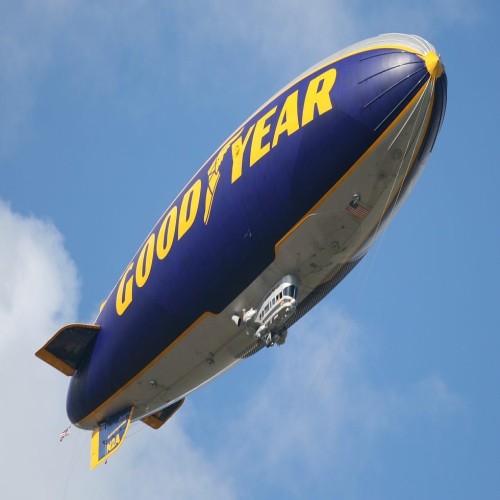
APPOSED
opposed-type engine A reciprocating engine with the cylinders arranged in two horizontal rows, one on either side of the crankshaft. The cylinders are slightly staggered, with the cylinders in one bank slightly ahead of those in the other bank. Staggering the cylinders allows each piston to be connected to a separate throw of the crankshaft. Also referred to as a horizontally-opposed engine.
opposite direction aircraft Aircraft are operating in opposite directions when:
a. They are following the same track in reciprocal directions; or
b. Their tracks are parallel and the aircraft are flying in reciprocal directions; or
c. Their tracks intersect at an angle of more than 135 .
opposite side The leg of a right triangle opposite the reference angle.
optical coupler An optoelectronic device that connects circuits together with no physical electrical connection. Usually consists of a light emitting diode (LED) on the input side connected optically to a light-sensitive electronic device on the output side to reconstruct the electronic input.
optical micrometer A precision measuring device used to measure the depth of scratches or fissures in the surface of a material by measuring the change in focus of a complex lens. The lens is focused on an undamaged surface of the material that is used as a reference, and then it is focused at the base of the damage. The amount of change in the lens focus is converted into a measure of the depth of the damage.
optical pyrometer A temperature measuring instrument used to indicate the temperature of molten metal inside a furnace.
option approach An approach requested and conducted by a pilot that will result in either a touch-and-go, missed approach, low approach, stop-and-go, or full stop landing.
optional equipment Aircraft equipment approved for installation in an aircraft, but which is not required for airworthiness.
OR gate A logic device that will have a voltage on its output any time a voltage appears at any one or more of its inputs.
oral quizzing The most common means of evaluating a student s knowledge. Proper oral quizzing during a lesson promotes active student participation, identifies points that need more emphasis, and reveals the effectiveness of training procedures.
orange peel A defect in a painted surface that resembles the skin of an orange. It can be caused by errors in paint viscosity, air pressure, spray gun settings, or an improper distance between the spray gun and the surface.
orbital electron An electron spinning around the nucleus of an atom; different from free electrons, which are able to move from one atom to another.
ordinate A line parallel to the Y-axis of a graph. A specified distance from the X-axis, used to fix a point.
organic brake linings Organic material reinforced with brass wool and attached to solid metal backings. Used for single-disk brakes.
organic fabric A woven material made of natural origin fibers such as cotton or linen. Used in the manufacturing of aircraft fabric covering materials.
organic fibers Fibers of natural origin such as cotton or linen. Used in the manufacture of aircraft fabric covering materials.
organic lining The friction material used in spot-type, single disk brakes. It is a composition material in which brass-or copper-wool or particles of brass are embedded to control the coefficient of friction.
organized track system 1. A movable system of oceanic tracks that traverses the North Atlantic between Europe and North America the physical position of which is determined twice daily taking the best advantage of the winds aloft. 2. A series of fixed and charted ATS (Air Traffic Services) routes; i.e., CEP, NOPAC; or flexible and described by NOTAM; i.e., NAT Track Message
orientation In composites, the alignment of the fibers (0 , 45 , 90 ) to the baseline set by the manufacturer for a particular component.
orifice A small hole of a specific size that meters or controls the flow of a fluid.
orifice check valve A component in a hydraulic or pneumatic system that allows unrestricted flow in one direction and restricted flow in the opposite direction.
original skin The skin or metal covering originally used in the manufacturing of an airplane.
O-ring A sealing device used in a pneumatic or hydraulic system that has a circular cross section and is made in the form of a ring.
ornithopter An aircraft designed to produce lift by the flapping of its wings.
OROCA (off--route obstruction clearance altitude) An offroute altitude that provides obstruction clearance with a 1,000 foot buffer in nonmountainous terrain areas and a 2,000 foot buffer in designated mountainous areas within the United States. This altitude may not provide signal coverage from groundbased navigational aids, air traffic control radar, or communications coverage.
orographic Relating to mountains. In weather, refers to phenomena caused by mountains, i.e., orographic clouds.
orographic lifting The lifting of an airmass when it encounters a barrier, for example, mountains or a hill.
oronasal oxygen mask An oxygen mask covering only the mouth and the nose of the wearer.
orphaned airplane Slang, for an aircraft that is frequently non-airworthy and spends a lot of time in the hangar. In the military or commercial aviation, these aircraft are frequently robbed of parts to keep other aircraft airworthy, thus prolonging the status of the hangar queen. Also referred to as a hangar queen.
orthographic projection In mechanical drawing, six different views of an object are possible through orthographic projection: front, rear, top, bottom, left side, and right side. Each view is drawn as if the object were placed in a box and only one side of the box opened to reveal one view (either front, rear, top, bottom, left side, or right side) of the object.
oscillate To swing back and forth with a consistent force or rhythm.
oscillator 1. An electronic device that converts DC into AC. 2. An electronic circuit that produces AC with frequencies determined by the inductance and capacitance in the circuit.
oscillograph A device for mechanically or photographically producing a graphical representation of an electric signal.
oscilloscope An electrical measuring instrument with which repeating voltage and current changes can be observed on a cathode-ray tube similar to a small television tube.
Otto cycle A constant-volume cycle of events used to explain the energy transformation that takes place in a reciprocating engine. In this type of engine, four strokes are required to complete the required series of events or operating cycle of each cylinder. Two complete revolutions of the crankshaft (720 ) are required for the four strokes and the spark plug in each cylinder fires once for every two revolutions of the crankshaft.
out The conversation is ended and no response is expected.
out of ground effect (OGE) hover In rotorcraft, hovering greater than one rotor diameter distance above the surface. Because induced drag is greater while hovering out of ground effect, it takes more power to achieve a hover out of ground effect.
out of phase A condition in which two cyclic waves such as voltage and current do not pass through the same point at the same time.
out time In composites, the time a pre-preg is exposed to ambient temperature, namely, the total amount of time the pre-preg is out of the freezer. This can include shipping time as well as the time it takes to cut off a small piece from the roll.
outer area Airspace surrounding a Class C airspace area, extending out to a radius of 20 NM ATC provides radar vectoring and sequencing for all IFR aircraft and participating VFR aircraft.
outer area (associated with class C airspace) Nonregulatory airspace surrounding designated Class C airspace airports wherein ATC provides radar vectoring and sequencing on a full-time basis for all IFR and participating VFR aircraft. The service provided in the outer area is called Class C service and includes: IFR/ IFR-standard IFR separation; IFR/VFR-traffic advisories and conflict resolution; and VFR/VFR-traffic advisories and, as appropriate, safety alerts. The normal radius will be 20 nautical miles, with some variations based on site-specific requirements. The outer area extends outward from the primary Class C airspace airport and extends from the lower limits of radar/radio coverage up to the ceiling of the approach control s delegated airspace excluding the Class C charted area and other airspace as appropriate.
outer compass locator A low power, low or medium frequency (L/MF) radio beacon installed at the site of the outer marker of an instrument landing system (ILS). It can be used for navigation at distances of approximately 15 miles or as authorized in the approach procedure.
outer fix 1. A general term used within ATC to describe fixes in the terminal area, other than the final approach fix. Aircraft are normally cleared to these fixes by an Air Route Traffic Control Center or an Approach Control Facility. Aircraft are normally cleared from these fixes to the final approach fix or final approach course. 2. An adapted fix along the converted route of flight, prior to the meter fix, for which crossing times are calculated and displayed in the metering position list.
outer fix time A calculated time to depart the outer fix in order to cross the vertex at the ACLT. The time reflects descent speed adjustments and any applicable delay time that must be absorbed prior to crossing the meter fix.
outer flame The enveloping, almost transparent flame that surrounds the bluish-white inner flame or cone in oxyacetylene welding.
outer liner The annular and can-annular combustion liner outer shell as opposed to its inner shell. Formerly used to refer to the outer case of a can-type combustion chamber.
outer marker A marker beacon at or near the glide slope intercept altitude of an ILS approach. It is keyed to transmit two dashes per second on a 400 Hz tone, which is received aurally and visually by compatible airborne equipment. The OM is normally located four to seven miles from the runway threshold on the extended centerline of the runway.
outflow boundary The remnant of a gust front that continues to exist long after the thunderstorms that created it dissipates.
outflow valve The valve in a pressurized aircraft cabin that maintains the desired pressure level inside the cabin by controlling the amount of air allowed to flow out of the cabin.
outlook briefing A general overview forecast of the weather for a period 6 to 12 hours in advance.
out-of-rig A condition of aircraft flight control rigging in which the controls are not properly adjusted, thus preventing the aircraft from being flown without the aid of the pilot touching the controls.
out-of-round Eccentrically shaped because of damage or wear.
out-of-track A condition of a helicopter rotor or the propeller of an airplane in which the tips of the blades do not follow the same path in their rotation.

OUT OF TRIM
out-of-trim A condition in an aircraft in which straight-and-level, hands-off flying is impossible due to an aerodynamic load caused by an improperly adjusted trim device.
output The power or energy a device delivers or produces.
output transformer A transformer used to match the high impedance of an electronic circuit to the low impedance of the output device, usually a speaker.
outside air temperature (OAT) The measured or indicated air temperature (IAT) corrected for compression and friction heating. Also referred to as true air temperature.
outside caliper A measuring device having two movable legs. Used to determine the distance across an object. Once the distance has been established, the actual dimension can be made using a steel scale or a vernier caliper.
outside skin The outer surface of an aircraft.
over My transmission is ended; I expect a response.
overall efficiency In turbine engines, the product of multiplying propulsive efficiency and thermal efficiency.
overbalance The adding of counterbalancing weight to the extent that the trailing edge of a control surface is above the horizontal position when performing a static balance test. In a balanced condition, the control surface would rest in the neutral position.
overboost A condition in which the manifold pressure of a reciprocating engine has exceeded the maximum specified by the manufacturer. Can cause damage to internal engine components.
overcompounded motor A compound-wound motor with more series windings than parallel windings. Tends to try to speed up under increased loads.
overcontrol Any movement of a control device in excess of that needed for a given condition.
overcurrent protection device An electronic device that protects a circuit against abnormally high currents.
overhang In meteorology, the anvil of a thunderstorm, under which hail can occur and a turbulent wake can create severe turbulence.
overhaul To restore an aircraft, engine, or component to a condition of airworthiness.
overhead cam The cam of an aircraft reciprocating engine located above the cylinder head. The overhead cam operates the valves directly without the aid of pushrods.
overhead maneuver A series of predetermined maneuvers prescribed for aircraft (often in formation) for entry into the visual flight rules (VFR) traffic pattern and to proceed to a landing. An overhead maneuver is not an instrument flight rules (IFR) approach procedure. An aircraft executing an overhead maneuver is considered VFR and the IFR flight plan is cancelled when the aircraft reaches the initial point on the initial approach portion of the maneuver. The pattern usually specifies the following:
a. The radio contact required of the pilot.
b. The speed to be maintained.
c. An initial approach 3 to 5 miles in length.
d. An elliptical pattern consisting of two 180 degree turns.
e. A break point at which the first 180 degree turn is started.
f. The direction of turns.
g. Altitude (at least 500 feet above the conventional pattern).
h. A Roll-out on final approach not less than 1/4 mile from the landing threshold and not less than 300 feet above the ground.
overhead question In the guided discussion method, a question directed to the entire group to stimulate thought and discussion. An overhead question can be used by an instructor as the lead-off question.
overhead valve A valve located in the upper part of an aircraft reciprocating engine cylinder head.
overheat warning system A system that warns of an overheat condition that could lead to a fire.
overinflation valve A relief valve that opens to relieve excessive air pressure. Used in some of the larger aircraft wheels that mount tubeless tires.
overlapping To lap over or extend beyond.
overload To apply a load in excess of that for which a device or structure is designed.
overlying center The ARTCC facility that is responsible for arrival/departure operations at a specific terminal.
overrunning In meteorology, when a warm, moist, stable airmass moves over a warm front or a stationary front.
overrunning clutch Generally, a pawl and ratchet arrangement used on various types of starters. It permits the starter to drive the engine but not allow the engine to drive the starter. The ratchet on the engine side will slip around within the pawls if normal disengagement does not occur.
overseas air commerce The carriage by aircraft of persons or property for compensation or hire, or the carriage of mail by aircraft, or the operation or navigation of aircraft in the conduct or furtherance of a business or vocation, in commerce between a place in any State of the United States, or the District of Columbia, and any place in a territory or possession of the United States; or between a place in a territory or possession of the United States, and a place in any other territory or possession of the United States.
overseas air transportation The carriage by aircraft of persons or property as a common carrier for compensation or hire, or the carriage of mail by aircraft, in commerce:
a. Between a place in a State or the District of Columbia and a place in a possession of the United States; or
b. Between a place in a possession of the United States and a place in another possession of the United States; whether that commerce moves wholly by aircraft or partly by aircraft and partly by other forms of transportation.
overshoot Overshoot is caused by rapid increase in throttle, which causes the controller to overshoot the requirement for the engine boost, resulting in overboost.
overshooting tops In thunderstorms, very strong updrafts that penetrate the otherwise smooth top of the anvil cloud.
oversize A question with many possible correct answers.
oversized stud A stud having a greater diameter than standard for the portion that is pressed or threaded into the stud boss. The external diameter and thread pitch are the same as original standard stud.
overspeed 1. A condition in which an engine has produced more RPM than the manufacturer recommends. 2. The condition in which the actual engine speed is higher than the desired engine speed as set on the propeller control.
overspeed condition A condition of the propeller operating system in which the propeller is operating above the RPM for which the governor control is set. This causes the propeller blades to be at a lower angle than that required for the desired speed.
overspeed governor A speed-limiting device. Governors regulate speed through the fuel control.
overspeeding Exceeding the maximum RPM limits of the engine. Adjusting pitch stops in the prop governor allow RPM limits to be set.
overtemperature 1. A condition in which a device has reached a temperature above that approved by the manufacturer. 2. Any exhaust temperature that exceeds the maximum allowable for a given operating condition or time limit.
overtemperature warning system A warning system that warns the pilot of an overheat condition. If the temperature rises above a set value in any one section of the overheat sensing circuit, the sensing device turns on a cockpit light indicating the location of the overtemperature.
over-the-top Above the layer of clouds or other obscuring phenomena forming the ceiling.
overview A concise presentation of the objective and key ideas, supplemented with appropriate visual aids, to give students a clear picture of what is to come.
overvoltage protector An electrical circuit protection device used to protect components from damage caused by high voltage surges. If the voltage is excessive, the overvoltage protector opens and protects the component.
oxidation A chemical action in which a metallic element is combined with oxygen. Electrons are removed from the metal in this process.
oxide A chemical combination in which oxygen is combined with another element.
oxide film A layer, coating, or metallic oxide on the surface of a material.
oxidized 1. Combined with oxygen. 2. A substance that causes another to combine with oxygen.
oxidizing flame An oxyacetylene welding flame in which there is an excess of oxygen passing through the torch. An oxidizing flame can be recognized by its sharp-pointed inner cone and a hissing noise made by the torch.
oxyacetylene Gas welding that uses oxygen and acetylene.
oxy-gas welding Gas welding that uses oxygen and a gas such as acetylene.
oxygen One of the basic elements with a symbol of O and an atomic weight of 8. In the free gas state, it is always O2 because two atoms of oxygen must combine to form one molecule of oxygen gas. Oxygen is a colorless, odorless, tasteless, gaseous chemical element that makes up about 21% of the Earth s atmosphere. It will not burn but supports combustion and is essential to life processes.
oxygen bottle Special, high-strength steel cylinder used to store gaseous oxygen under pressure.
oxygen cell corrosion Corrosion that results from a deficiency of oxygen in the electrolyte.
oxygen concentration cell corrosion Corrosion that forms between the lap joints of metal where moisture gets trapped.
oxygen manifold A device for connecting several oxygen masks into one oxygen supply or several oxygen sources into a master manifold.
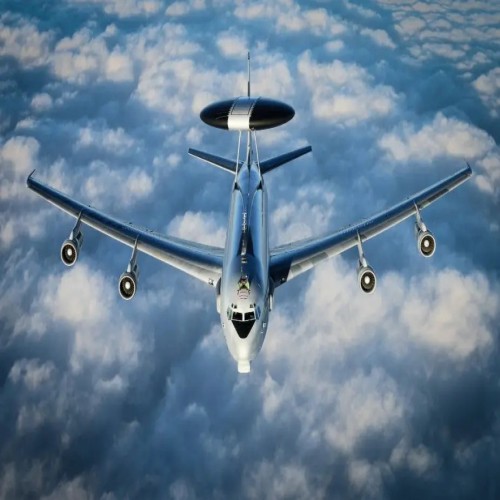
OXYGEN MASK
oxygen mask A small face mask with special attachments for breathing oxygen.
oxygen plumbing Tubing and fittings used in the oxygen system to connect the various components.
oxyhydrogen Gas welding that uses oxygen and hydrogen.
ozone A variety of oxygen that contains three atoms of oxygen per molecule rather than the usual two. The major portion of ozone in the atmosphere is formed by the interaction of oxygen with the sun s rays near the top of the ozone layer. It is also produced by electrical discharges (lightning storms). Ozone is important to living organisms because it filters out most of the sun s ultraviolet radiation.
ozone hole The region of the ozone layer that has a lower than normal concentration of O3.
ozone layer A layer of O3 found in the lower stratosphere. Characterized by a relatively high concentration of ozone, this layer is responsible for the increase of temperature in the stratosphere.
ozonosphere The stratum of the Earth s atmosphere that has a high concentration of ozone and absorbs ultraviolet radiation from the sun. The ozonosphere is approximately 20 to 30 miles above the Earth.